
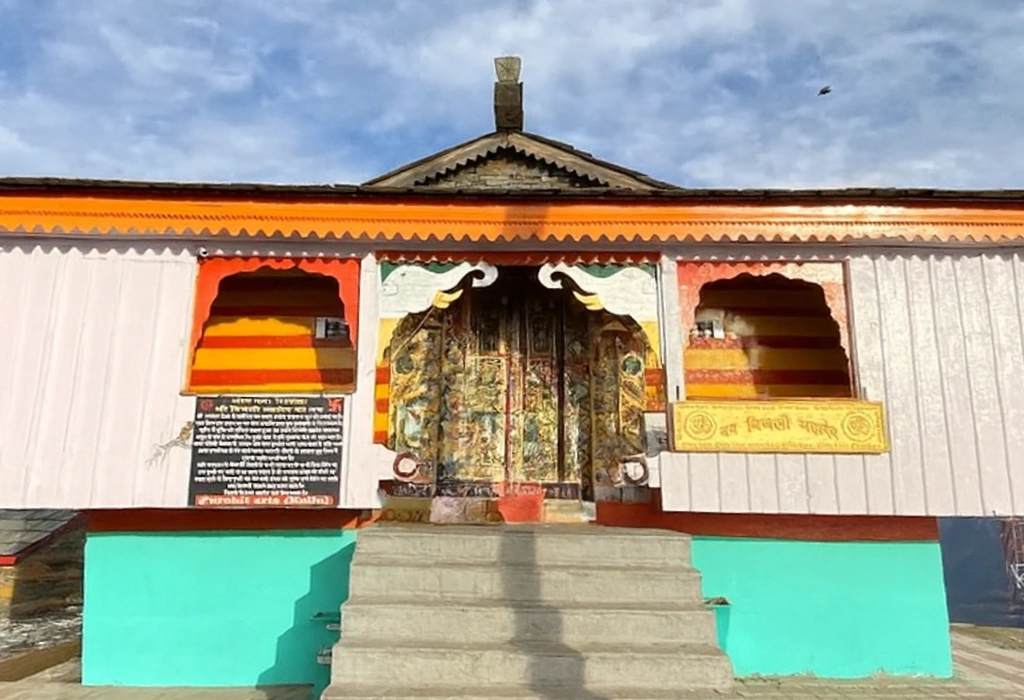

This article is the whole guide to Bijli Mahadev Temple and includes all the information you need to know about Bijli Mahadev Temple such as the reason why Bijli Mahadev Temple is famous, how to reach Bijli Mahadev Temple in Himachal Pradesh.
You will find all the information about Bijli Mahadev Temple hiking, distance, level of difficulty, the best time to go there and the mystery of lightning unique to this holy temple of Lord Shiva.
You are going to Kullu Valley or a full-fledged travel and spiritual guide, this article takes you through the routes to Kullu, Bhuntar and Manali, step by step guides to the trekking, tips on safety and insider tips to help you plan your visit to Kullu Valley flawlessly.
Table of Contents
What is Bijli Mahadev, and where is Bijli Mahadev Temple located in Himachal Pradesh?
Bijli Mahadev is one of the holiest Shiva temples in Himachal Pradesh — and perhaps the most dramatically placed. It is located at the top of Mathan Hill, in Kashawri village, deep inside the Kullu Valley.
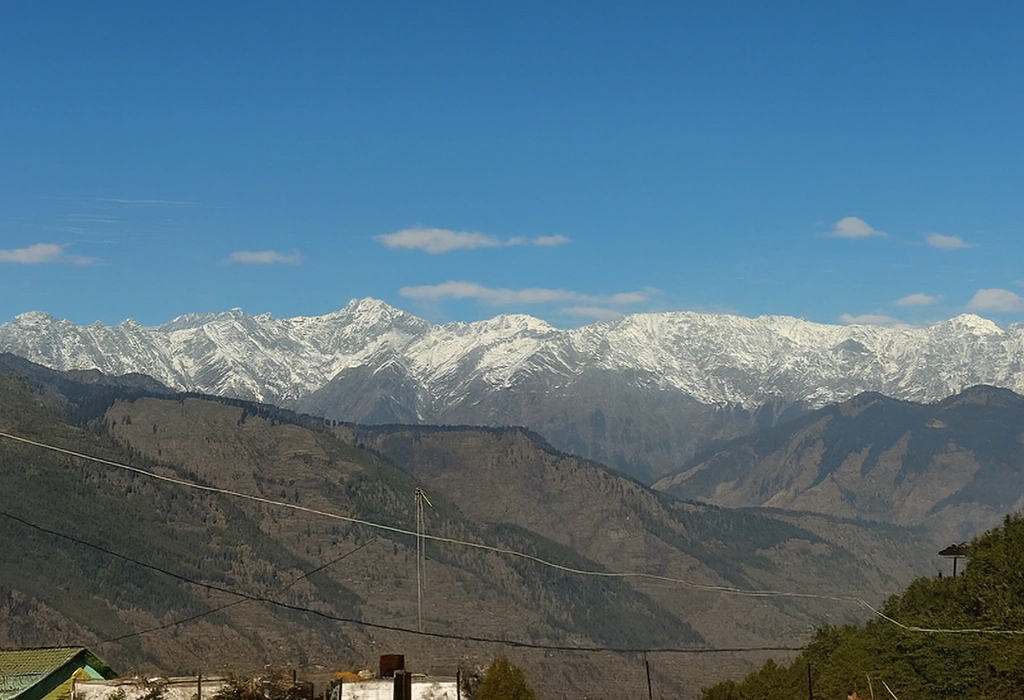
The temple overlooks four river valleys all at once: Kullu, Parvati, Bhuntar and Gorsa. And on clearer days, the snowy-studded ridges of the Pir Panjal and Dhauladhar ranges stretch across the horizon. This region of India does not have any other temple that gives you this view.
It is dedicated to Lord Shiva — worshipped here as “Bijli Mahadev,” or lightning god, thanks to a glamorous local legend involving this very phenomenon. The temple has existed for centuries, and local lore holds that it was built by the Pandavas during their years of exile; however, part visible today dates back to the 20th century.
What “Bijli Mahadev” means (name meaning + why it matters)
The name breaks down simply:
- Bijli = lightning (in Hindi)
- Mahadev = another name for Lord Shiva, meaning “Great God”
Bijli Mahadev together means “Lightning Great God” — or more poetically, “Shiva who holds lightning.”
The name is not a coincidence – this temple has a story and tradition related to lightning strikes that shatter the Shivling of the temple and are followed by restoring it by the priest. This is a continuous process of destruction and rebuilding that gives the uniqueness to this temple among others in the state of Himachal Pradesh.
This is not just a name. It is the entire identity of the place.
Quick facts snapshot (altitude, trek overview, time needed)
| Detail | Info |
| Location | Kashawri village, Kullu Valley, Himachal Pradesh |
| Altitude | 2,460 metres (approximately 8,071 feet) |
| Trek distance | ~3 km from the last motorable road (Chansari) |
| Trek duration | 1.5 to 2.5 hours one way |
| Difficulty | Easy to moderate — suitable for beginners |
| Best season | April–June and September–November |
| Nearest town | Kullu (14 km), Bhuntar (10 km) |
| Temple type | Ancient Shiva temple, Kath-Kuni architecture |
| Total visit time | Half-day trip; full day if combining trek + sightseeing |
Why Is Bijli Mahadev Temple So Famous? The 7 Important Facts
Bijli Mahadev temple, like most other temples in this region, is a sanctuary. Most of them are very old. However, only Bijli Mahadev stands out because of its legend, unusual architectural feature, culture, nature, and even landscape. Below are seven features that make the temple one-of-a-kind.
Fact 1: The lightning-strike legend and the “rebuilt” Shivling
This is the heart of everything.
According to tradition, lightning hits the Shivling within the temple destroying it to pieces. After this occurrence, the temple priest goes around nearby villages asking for chopped butter (chopad) and sattoo (flour made from roasted grains). This mixture is used by the priest to restore the Shivling by means of prayers and hymns.
The Shivling is reportedly restored to its original form.
According to popular beliefs, the whole process happens every twelve years. Some locals state that it takes place annually. The only common point of view about this tradition is the fact that it is taking place continuously and has deep religious significance.
Pilgrims claim that they saw the fragments of the Shivling after the lightning occurred, which has a great spiritual value for people.
Fact 2: The sacred staff/rod on the hilltop and what it symbolizes
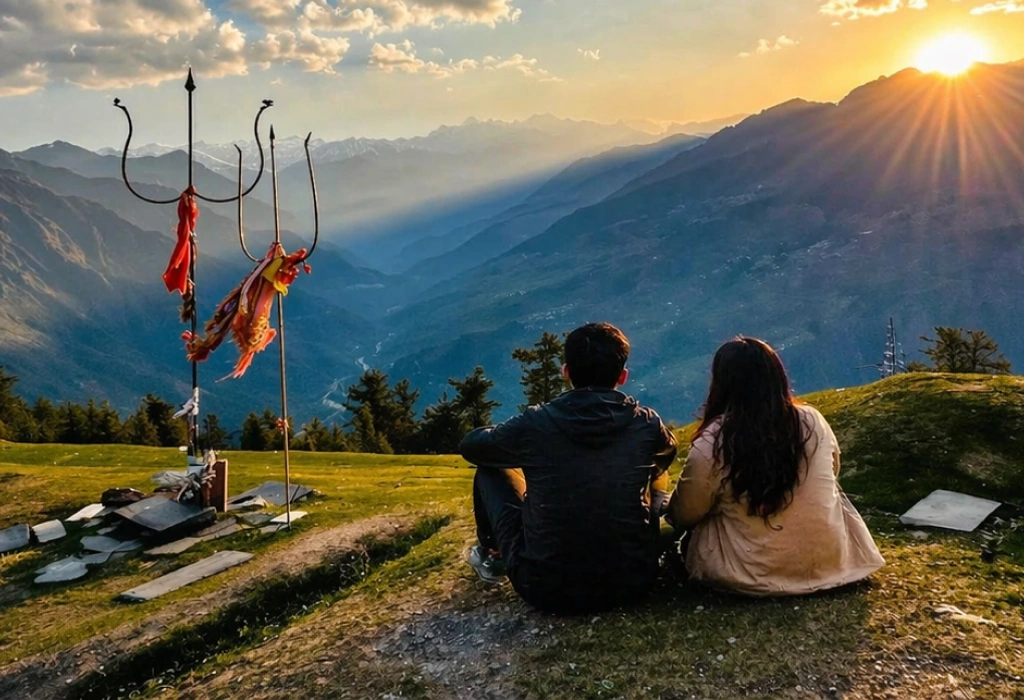
Right in front of the temple is a pole, approximately 60 feet tall, called Dbuj or Dhvaj. It is made of a single trunk of deodar without branches, topped with silver coin wrapped with muslin cloth. The Dbuj has been standing next to the temple since at least the colonial times. According to British explorer A.P.F. Hamilton (1933), the pole was “a tall staff, some sixty feet in height, which stands close to the building and is visible from Sultanpur”.
The role of this pole is to attract blessings of Shiva via lightning, thus functioning as a sort of lightning rod. The Dbuj draws divine energy towards the temple. When lightning strikes and the Shivling falls down, the Dbuj itself is substituted for another pole from the tallest deodar of the surroundings.
Scholars assume that this association of a pole with lightning had a more ancient background rather than Hindu. Some of them suggest the possible influence of Buddhism that existed in the valley since the 7th century AD.
Regardless of whether the tradition dates back to the ancient history or not, when standing before Bijli Mahadev temple and observing the Dbuj amidst Himalayan storm, the visitor realizes the meaning of uniqueness of this sanctuary.
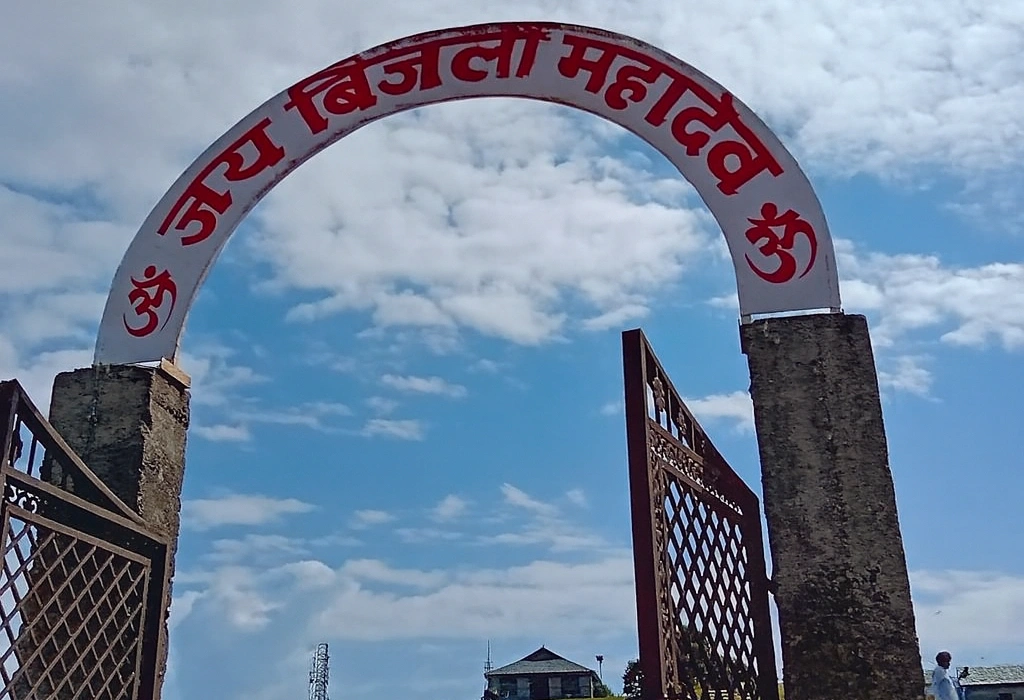
Fact 3: A hilltop temple with panoramic views of the Kullu region
Not many temples in Himachal Pradesh have the distinction of being located on the summit. Bijli Mahadev Temple is such an exceptional site.
From the top of the temple:
- Kullu Valley can be seen spreading out on one side
- Parvati Valley lies open on the other side
- The meeting place of two great rivers, Beas and Parvati, at Bhuntar
- Snow-capped mountains like Parvati, Kullu Pumori and Hanuman Tibba
- Ridges of Pir Panjal and Dhauladhar mountain range seen on the horizon
These are reasons enough for non-religious visitors to take the trek to Mathan Hill which stands at a height of 8,071 feet to get a breathtakingly beautiful 360-degree view of one of the most picturesque valleys in Himachal Pradesh.
With the setting of the sun, the Dhauladhar range takes on a golden hue while the valleys below are seen getting engulfed in darkness. This view is something to look forward to for many trekkers.
Fact 4: A beginner-friendly trek that blends faith and adventure
The trek to Bijli Mahadev Temple is one of the easiest routes among those available in Himachal Pradesh.
From Chansari (one of the starting points of the trek), it is 3 kilometres oneway route. Dense deodar forest, said to be the best in India, is crossed along the trail before reaching the top.
There is no difficult terrain involved. It is not a climb either. There is no fear of altitude sickness at this height.
What makes this trek genuinely special is its universal appeal — a devotee seeking darshan, a family on holiday, and a solo adventure-seeker all walk the same path and leave equally satisfied.
Fact 5: Traditional Himachali temple architecture and craftsmanship
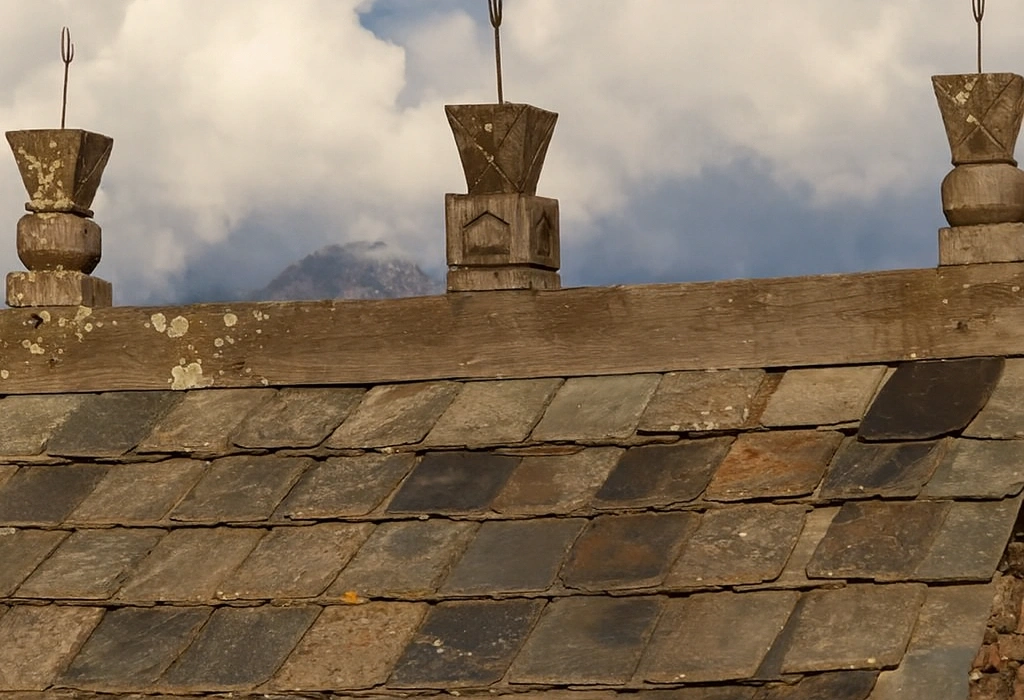
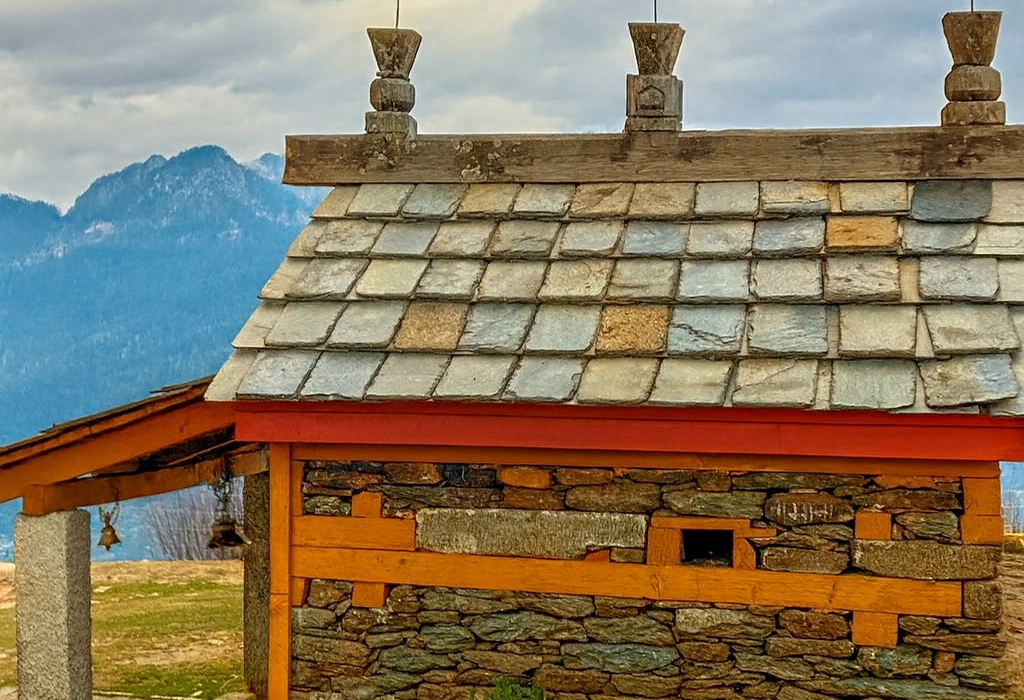
Bijli Mahadev Temple is a perfect example of Kath-Kuni architecture. The Kath-Kuni architectural style employs the technique of using alternated layers of stones and deodar wood in the absence of cement or plaster.
The temple is 36 feet in length and 24 feet in width. Deodar wood-made verandah surrounds the main building of the temple. Sloping roof is covered with deodar planks. Wooden pillars, carrying intricate designs and motifs, mark the entrance to the main temple.
Cultural historian Dilaram Shabab considers the temple’s wood carving to be “an excellent specimen of 18th century hill art”. It has been stated by academics in the International Journal for Multidisciplinary Research that the temple is one of the finest specimens of pent-and-gable roof style among the wooden temples in Himachal Pradesh.
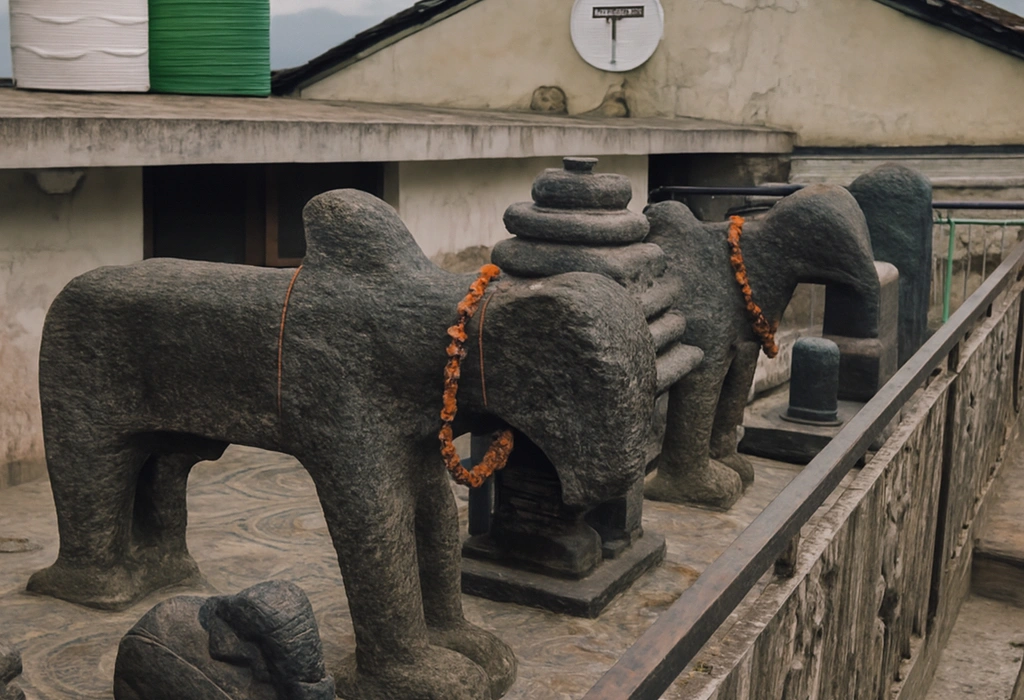
What we see of the temple today is a reconstructed version of the original that was burnt down long ago. The earlier version of the temple was grand and multi-tiered. But even the reconstructed version shows the level of craftsmanship involved in building the temple. Stone-carved images of Shiva and Nandi stand guard at the entrance to the temple while the rectangular corridor built in wooden structure provides the means of circumambulation.
Fact 6: A living part of Kullu’s “Valley of Gods” culture
Kullu is known as ‘Valley of Gods’ with good reason. Here hundreds of devtas (local deities) are worshipped whose relations among each other are like the complex workings of a live culture.
Bijli Mahadev is central to this cultural phenomenon.
Mata Parvati, Bijli Mahadev’s consort, is worshipped at Chong in the Parvati valley. While Bijli Mahadev’s sister goddess, Bhagga Siddh, is located in Pini village. In Shravan month, Bhagga Siddh pays a visit to Bijli Mahadev. She comes to visit in a festive processional mode with silver faces.
Even the mythical background of the region has Bijli Mahadev at its center. According to the myth of Kulant, the demon from Lahaul-Spiti area in the form of a giant serpent was destroyed by Shiva. His body made the watershed of Beas and Parvati Rivers.
The legend of Kulant and his destruction by Shiva is the basis of the local lore in and around the temple.
In effect, what you get when you visit Bijli Mahadev is more than just a pilgrimage site – it is a living mythology of the landscape itself.
Fact 7: Festival energy and peak pilgrimage moments (what changes on big days)
Bijli Mahadev temple receives its maximum number of visitors during:
- Month of Sawan (July-August): This is the most auspicious month dedicated to Lord Shiva. Devotees throng to this temple from Kullu and beyond.
- Mahashivratri: Another major Shiva festival that draws large crowds despite bad weather.
- Auspicious days in Shravan month: It is when Bhagga Siddh, riding the procession with her silver faces, visits the temple.
On all other days, apart from festivals, the temple premises remain deserted.
The Lightning Phenomenon Explained Clearly
What is belief vs what is observed (how to talk about it accurately)
It’s worth drawing a clear line between what devotees believe and what is physically observed — because most accounts blend the two without distinction.
Devotees’ beliefs about Bijli Mahadev Temple: The lightning bolts that strike the hilltop come from the deity of Indra (God of rain and thunder). These bolts are carried to the hilltop by Shiva. He accepts the cosmic bolts of energy so that the valley can stay safe, and every bolt shatters his Shivling in the temple. However, he accepts the bolts as a sacrifice from himself.
Reality about Bijli Mahadev Temple: The hilltop rises to the height of 2,460 metres above sea level. It is known to be prone to lightning strikes during the monsoons. As a result, the Dbuj pole on the top serves as the natural lightning conductor of this area.
The Shivling in the sanctum does sometimes get shattered during the strikes, which is then restored by the temple priest using the traditional technique of making it from butter and sattoo.
How the Shivling is restored (butter + sattoo) and what visitors should expect to see
As mentioned above, the restoration of the Shivling takes place communally. In the event that a strike does shatter the Shivling, the local priest will go around collecting the following ingredients:
- Chopad – butter, usually handmade
- Sattoo – flour made of roasted grains (generally barley, chickpeas, and wheat)
With this mixture of substances, the priest will restore the Shivling by piecing together all the fragments, accompanied by prayers and Vedic mantras. With the process done, the Shivling is believed to have restored its original state, and once again becomes the object of worship.
Most visitors are likely to see only the intact Shivling because restoration is a rare event. However, the very knowledge of such an event makes this Shivling different from other Shivlings.
How often does lightning strike Bijli Mahadev Temple?
According to various accounts from locals and pilgrims:
- Dbuj pole gets regularly struck by lightning during monsoon rains
- Lightning strike that breaks the Shivling is rarer; probably takes place every few years
- The notion of the lightning strike every 12 years was mentioned in several books but most likely refers to particularly significant strikes
Monsoon in the Himalayas happens between July and August. Afternoon thunderstorms are regular at the hilltop during monsoons.
Lightning safety precautions while in the area
If you notice a storm approaching, start descending right away without waiting for it to begin raining
- Don’t stand anywhere close to the Dbuj pole, especially if it’s active at the moment
- Stay away from trees, particularly those standing alone
- Never use an umbrella with a metal tip in case of lightning
- Remember to check the weather report before coming to avoid morning starts in the valley
- Take a raincoat with you; even morning skies can be deceiving at high altitudes
Local people know that storms tend to develop in the afternoon. So on days they know that there’s going to be a storm in the afternoon, they set off before sunrise and return back to the bottom before noon.
How to Reach Bijli Mahadev Temple
Getting to Kullu/Manali/Naggar first (best starting hubs)
First step is to get to the area where you are going to start your trek. You’ll need to get to the Kullu Valley before anything else. Major centers that provide access to Bijli Mahadev Temple include the following:
- Bhuntar – The closest town with Kullu-Manali Airport. The distance to the temple from there is about 10 kilometres
- Kullu – 14 km away from the temple. Easily accessed by land from cities like Shimla, Chandigarh, and Delhi
- Manali – about 45–50 kilometres away. Usually combined with a tour to Manali
- Naggar – slightly more secluded base city. The trek from Jana Village near Naggar goes through magnificent deodar forest.
By road, Kullu is around 500 kilometers away from Delhi; journey duration is 10–12 hours on overnight Volvo buses. Flying to Bhuntar from Delhi takes one hour.
Choosing your trailhead (Chansari vs other starts) and what each route feels like
Three main ways to reach the site:
- Chansari Village (from Kullu Valley side). This is the standard access point. To get to Chansari from the cities listed above, go to Bhuntar by bus or car. From there, a 3 km hiking trail leads to the temple.
- Jana Village (from Naggar side) – the most picturesque way. This trek starts from Naggar and passes by deodars on the way. Takes roughly 6-8 km, the forest walk is incredible.
- Parvati Valley (less visited side) – rarely chosen by first-timers. Starting from the Parvati valley. The route is less described in literature.
For novice hikers, Chansari Village is recommended. Shared taxis and jeeps are available to get to Chansari from Kullu/Bhuntar.
Step-by-step: Bijli Mahadev Temple trek plan for beginners
Step 1: Reach base camp and verify the trail locally.
- Arrive at Kullu or Bhuntar a day before and get sufficient rest.
- Depart early next morning by car to reach Chansari within half an hour.
- Verify the trail and weather condition from local people.
- Be careful while choosing trails especially when trail might be affected by monsoon.
Step 2: Start trekking early and keep a steady pace.
- Start trekking early in the morning and maintain a slow pace.
- Have at least 1.5-liter water and some snacks.
- Take frequent short intervals after every 30-40 minutes.
- It will take 1.5 – 2.5 hours to reach temple.
Step 3: Reach the destination i.e., the temple.
- After reaching the destination, take sometime to see around before entering the temple.
- Enter the temple by following the queue and then taking off your shoes.
- Sanctum is not very big so it takes less time for darshan.
- See valley views around after darshan.
Step 4: Return home safely.
- It may take 1.5 hours or more to come back.
- Use a trekking stick for support if possible.
- Keep an eye on weather condition; try to return if clouds appear.
- Return Chansari as early as possible especially if there is danger of rain in the afternoon.
Best Time to Visit Bijli Mahadev
Season-by-season comparison (spring, summer, monsoon, autumn, winter)
| Season | Months | Conditions | Recommended? |
| Spring | March–April | Cool, fresh, light crowds | ✅ Yes |
| Summer | May–June | Warm, clear skies, busy | ✅ Best for views |
| Monsoon | July–August | Lush but stormy; lightning risk | ⚠️ Caution needed |
| Autumn | September–November | Clear skies, pleasant; excellent views | ✅ Ideal |
| Winter | December–February | Heavy snow; trail often blocked | ❌ Not recommended |
Expert Tips and Best Practices for a Smooth Visit
Weather strategy: what locals do differently (and why it works)
However, people who hail from nearby Kullu and Chansari villages have only one thing in mind – leave early in the morning and be back home by noon.
This is because they are aware of the fact that Himalayan climate always sticks to a definite routine – mornings will be clear while afternoon times will see clouds covering the sky, possibly leading to storms.
This practice works well during the month of July and August when Bijli Mahadev hilltop witnesses severe afternoon lightning storms. While such storms contribute to the unique climatic feature of this temple, the hilltop is dangerous if you are still up there by 2 PM.
Local saying: If you hear thunder while still ascending, head back down immediately.
Other famous temples in Himachal include Bhagsu Nag and Masroor Rock Cut Temple
Bijli Mahadev Temple in 2026: how to check for access changes or closures before you go
Trail accessibility and temple timings may vary depending on weather disturbances, landslide activities, and local celebrations. However, before visiting the shrine in 2026:
- Contact your hotel or a nearby guest house in Kullu or Bhuntar one day before – this is the fastest and most accurate way to get information about trail condition.
- Visit the official website of Himachal Pradesh Tourism (himachaltourism.gov.in) for any updates.
- Talk to drivers of shared taxis at Kullu bus stand – they are well informed about the road and trail conditions compared to any online source.
- Check out the weather conditions in Windy.com or Weather Underground for Kullu region; set the elevation to 2,400–2,500 metres for accurate hilltop weather forecast.
- Avoid going during the peak monsoon season (late July to mid-August) if multiple days of rain have already occurred – chances of afternoon lightning are high in such cases.
Note:- Local knowledge is invaluable. Spend five minutes with a local taxi driver or guest house owner rather than wasting time on websites.
Bijli Mahadev is one of those rare places that rewards you on every level — through its landscapes, its history, and something harder to name but impossible to miss once you’re standing at the summit.
Frequently Asked Questions — Bijli Mahadev Temple
What is Bijli Mahadev Temple famous for?
The Bijli Mahadev Temple is known as the place of the uncommon lightning effect, in which lightning strikes the temple, and breaks the Shivling. It is also characterized by scenic hill top location and panoramic views of Kullu Valley.
What is the way to get to Bijli Mahadev Temple?
The Bijli Mahadev Temple can be approached with the first stop at Kullu or Bhuntar in Himachal Pradesh. Then proceed to Chansari village, and do a 3 km walk to the temple, which takes about 1.5 to 2.5 hours.
How far and how difficult is the trek of Bijli Mahadev Temple?
The Bijli Mahadev Temple walk is approximately 3 km away, Chansari village and is an easy to moderate trek, which can be enjoyed by the beginners, families and those who are alone as well.
What is the reason of lightning strike of Bijli Mahadev Temple?
Lord Shiva, it is believed, takes in lightning to guard the valley. The high altitude of the temple and the tall pole with a metal top are scientific reasons that predispose the temple to lightning.
What is the best time to visit Bijli Mahadev Temple?
The ideal period to visit Bijli Mahadev Temple is March to June and September to November when the weather is clear and trek is safe. Something to avoid is monsoon season, which is dangerous in lightning.
How many hours does the Bijli Mahadev Temple trek take?
The walk to Bijli Mahadev Temple will take you 1.5-2.5 hours one way, depending on your speed, and will last approximately half a day to visit.


