

This Bagalamukhi Temple Guide helps you understand the power, meaning, and importance of Baglamukhi Mata, one of the ten Mahavidyas in Hindu belief. Known as the goddess who stops negativity and protects devotees, Maa Baglamukhi is worshipped for victory over enemies, peace of mind, success in court cases, and removal of obstacles.
In this article, you will learn about the legend of Baglamukhi Mata, why devotees visit a Baglamukhi Temple, and what makes these temples spiritually powerful. It also covers the three most famous Baglamukhi temples in India—Bankhandi (Kangra), Pitambara Peeth Datia, and Nalkheda—with details on darshan timings, rituals, travel tips, and the best time to visit.
Whether you are a devotee or a first-time visitor, this guide will help you plan a peaceful and meaningful Baglamukhi darshan.
Table of Contents
Bagalamukhi Mata: The Legend and Divine Power
Mata Baglamukhi (or Maa Baglamukhi) is among the ten Mahavidyas – the powerful tantric goddesses of wisdom. She is worshipped in Hindu legends as the “Crusher of Evil and an icon of divine Stambhana Shakti (the power to paralyze negativity). Two of the ancient stories emphasize her supernatural strength: In one, a devastating storm was threatening the universe until the goddess appeared in a lake of turmeric (Haridra Sarovar) and pacified it at the bequest of Lord Vishnu.
In another she suppressed a raging demon Madan by seizing his tongue, and making his magical speech useless, a common dramatic iconography frequently depicted in her idols. The followers believe that Baglamukhi brings success in court, shield against bad omen and triumph over adversaries. Wearing her auspicious yellow garments (she is commonly referred to as Pitambara Devi, the Yellow-robed Goddess), Baglamukhi Mata is the personification of the victory of truth and dharma, and her devotees go to her with great faith to gain strength and protection.
What is the reason to visit a Bagalamukhi Temple? (Significance & Beliefs)
Going to Baglamukhi Mata mandir is a personal and spiritual experience to the devotees. It is said that these temples are Siddha Peethas -energy centers where the power of the goddess is highly concentrated. The pilgrims arrive to receive the blessings of Baglamukhi in order to conquer a number of problems: legal problems, bad karma of others, economic problems, and health problems. Everyone knows that by doing yagyas (havan fire ceremonies) and reciting the Baglamukhi mantra at the temple, one can freeze his or her problems and receive peace and success.
A temple is filled with devotion, the air is filled with incense and Sanskrit chants of Om Hreem Baglamukhi… Visitors tend to say that they have a strong, protective energy when they enter, that Maa Baglamukhi is hearing their prayers. In addition to problem-solving, devotees go there to experience spiritual development and inner calm. The temples are open to all, both the religious saints who carry out tantric sadhanas and ordinary individuals who seek hope.
Simply put, a visit to a temple is made with the assumption that the divine grace of Maa Baglamukhi has the ability to freeze the bad in life of a person and give the devotee the courage, confidence, and positive change in life.

The 3 most renowned Baglamukhi temples in India (Siddha Peethas).
Although Maa Baglamukhi has numerous shrines spread all over India, three of the temples are the most renowned Siddha Peethas (seats of power) of the goddess:
- Maa Baglamukhi Temple, Bankhandi -Kangra, Himachal Pradesh: An ancient temple which is believed to be of the Dwapara Yuga is associated with the legend of the Pandavas. It is located in the Kangra Valley and is famous due to its mighty havan kund and uninterrupted worship since times immemorial.
- Shri Pitambara Peeth (Baglamukhi Temple), Datia, Madhya Pradesh: A major tantric temple complex that was constructed in the middle of the 20th century by a saint. It is called Pitambara Peeth and has Maa Baglamukhi and other gods, which attract politicians, litigants and devotees who want to have powerful blessings.
- Maa Baglamukhi Mandir, Nalkheda, Madhya Pradesh: A special temple on Lakhundar River, with Trishakti idol (Baglamukhi with Mahalakshmi and Mahasaraswati). It is a central location of tantric practices and Navratri festivals that are related to the Mahabharata period.
These three are usually included in the list of places that Baglamukhi devotees must visit. We discuss each of them below, along with their legends, access, and expectations.
Baglamukhi Temple, Bankhandi -Kangra (Himachal Pradesh)

One of the ancient shrines is the Maa Baglamukhi Temple at Bankhandi in Kangra district, which is a Siddha Peeth of the goddess that is regarded as living. The temple is located in a scenic environment amidst the grandiose Dhauladhar Himalayan ranges. The Pandavas, in their exile, according to local legend, erected this temple in the middle of the night and conducted a strong yajna here to call the protection of Baglamukhi. The center of interest is the old havan kund (sacred fire pit) before the sanctum – which is believed to still have the spiritual energy of those epic rituals.
Devotees indicate that even now, prayers and offerings in this havan kund have increased effects and that is why so many people visit this place to do havans to fulfill their wishes and get rid of troubles. The goddess, Maa Baglamukhi, is adored in a sanctum that is painted in bright yellow, which is the favorite color of the goddess. The interior aura is strong; the walls are filled with the constant chanting of mantras and sounds of bells, and it is possible to experience goosebumps because of the energy of devotion.
The temple of Bankhandi has become popular among pilgrims and even spiritual seekers and Tantriks who regard it as a center of divine power where special rituals are performed under the supervision of skilled priests.
Location and Reaching Bankhandi Temple
The Maa Baglamukhi Temple, Bankhandi is situated in the village of Bankhandi on the NH-503 (Chandigarh-Dharamshala highway), approximately 30-40 km before the Kangra town on the Chandigarh side.
Bankhandi Darshan Timings and Rituals.
The temple at Bankhandi is conducted on a strict time-table to suit the constant flow of worshippers:
- Temple Opening: The day starts around 5:30 AM daily, and Mangala Aarti (morning prayer) is offered at 5:00 AM. It is best to attend in the early morning when hymns and conches greet the dawn.
- Mid day Bhog: The goddess receives Bhog (food) at approximately 11:00 AM, and the temple doors can be closed temporarily (approximately 11:00 – 11:30 AM) to enable Maa to eat and take a rest. The devotees who are present during this period are given Prasad of the bhog when the temple is reopened.
- Evening Shringar and Aarti: In the late afternoon, the priests conduct Shringar (dressing up the deity with fresh clothes, flowers and ornaments). This occurs at Bankhandi at about 5:00-5:30 PM. The temple is then reopened to the worshippers and Evening Aarti is conducted at around 7:00-8:00 PM (this may change depending on the season, usually earlier during winter).
- Night Closure: The temple closes to darshan after the last rituals (also known as Shaiyan Aarti where the deity is symbolically put to rest) and is usually closed by 9:30 PM (may be as late as 11:30 PM on special occasions or during peak days). During regular days, by midnight the premises are silent.
Special Rituals: Chola Rasam is a beautiful ritual that is done every morning at 5:00 AM at Bankhandi in which a fresh yellow sari (chola) and turmeric, bangles and flowers are offered to Maa Baglamukhi. It can be sponsored by the devotees as a sign of devotion or as a wish (they often book it in advance as manokamna, a prayer of fulfillment of a wish).
During some special days (such as full moon, Ashtami, etc.), an evening Jhanda Rasam (flag ceremony) is held, during which a new ceremonial flag is raised in the temple complex to pay homage to the goddess – a sign of victory and spiritual elevation. The other notable ritual here is the Ratri Havan (midnight havan) on special nights; the participants and Tantrik practitioners sit around the havan kund after 9:00 PM and pour ghee and herbs into the fire and recite powerful Baglamukhi mantras up to midnight.
Shri Pitambara Peeth, Datia (Madhya Pradesh)
One of the most famous Baglamukhi temples in India is the Shri Pitambara Peeth in Datia, simply known as Pitambara Devi Temple. Baglamukhi Mata is also known as Pitambara, which emphasizes her connection with yellow clothes. This temple complex is a special place in the heart of the devotees as a tantric power center. In contrast to the antiquity of Bankhandi, Pitambara Peeth was founded not so long ago, in the early 20th century (c. 1920s – 1935) by a sage called Swami Ji (Brahmaleen Shri 1008 Swami ji Maharaj). Goddess Baglamukhi instructed him to place the idol here and make the place a spiritual refuge.
The ashram-like complex was later extended to other shrines, the most prominent of them being a temple of Goddess Dhumavati (another Mahavidya), a Shiva temple (Vankhandeshwar Mahadev, which is believed to date back to Mahabharata times) and meditation halls. Pitambara Peeth is now full of religious activities: daily havans, constant recitation of the Baglamukhi Beej Mantra, and the learned pandits who instruct the devotees in special pujas. The principal Baglamukhi idol in Datia is usually covered with yellow silk and may be seen by the worshipers through a doorway or window in the sanctum (no direct access is allowed to preserve the sanctity).
Devotees even with that glimpse testify that they experience the grace and power emanating out of Maa. The temple is known to have followers who want to succeed in court proceedings, politics and business, there is no secret that most of the people in the public office visit Pitambara Peeth quietly to do rituals to win and be safe. The respect here is so great that one comes to the goddess with the highest humility; it is not allowed to touch the idol, and the rituals are performed in strict accordance with tradition. This Peeth has actually become a synonym of the miraculous power of Baglamukhi, and Datia has become a busy pilgrimage town throughout the year.
Place and Accessibility in Datia.
Shri Pitambara Peeth is situated in the center of Datia city in Madhya Pradesh between Gwalior and Jhansi.
Special Pujas and Rituals at Pitambara Peeth
The day is spent in rituals of tantric tradition at the Baglamukhi temple of Datia:
- Daily Worship: The temple is open in the morning (approximately 5:00 AM) and the initial aarti and closes in the evening (approximately 9:00 PM). The Aarti times are generally 7:00 AM (morning) and 7:00 PM (evening) -in case you can, go to one of these to have an experience of the soul with the conch shells blowing and the devotees singing together. Meanwhile, the worshippers wait in line to have a darshan of Maa Pitambara using a small window. The idol is hypnotizing – normally dressed in a glowing yellow garb with glittering jewelry. You will find that devotees usually place yellow sweets (such as ladoos) and yellow flowers at the altar via the priests.
- Havan and Anushthaan: Havan ceremonies are especially popular in Pitambara Peeth, which is performed on behalf of the devotees. Proficient priests conduct havans to achieve a number of things- triumph in court, defeat of foes, prosperity, etc. These special pujas are offered by the temple administration (some of the devotees reserve a Baglamukhi Anushthan that lasts a few days of mantra recitation and havans).
- Tantric Worship: Due to the tantric importance of Baglamukhi, special tantric worships are conducted on the Amavasya (new moon) nights or during Navratri. Although these are not generally open, you may find groups of sadhaks (practitioners) sitting in meditation or chanting at midnight in the temple complex.
- Dhumavati Temple: This is a rare temple of Goddess Dhoomavati (a form of the Divine Mother in widow form). Note: According to custom, married women are not permitted to enter the Dhoomavati shrine at any time, except at particular times.
- Dhumavati Temple: There is a rare temple of Goddess Dhoomavati (an incarnation of the Divine Mother in a widowed state) in the Pitambara campus. Remark: According to custom, married women are not permitted to enter the Dhoomavati shrine except at certain times.
Maa Baglamukhi Mandir, Nalkheda (Madhya Pradesh)
Nalkheda is a small town in Madhya Pradesh situated on the banks of the Lakhundar River and houses an interesting temple of Maa Baglamukhi commonly known as Trishakti Mata Mandir. This temple is particularly important in that it houses a self-manifested (swayambhu) idol of the goddess – an idol which was not created by humans but appeared by itself. What is even more interesting is that this single stone idol represents three goddesses in one: in the middle of it is Goddess Baglamukhi, and on one side is Goddess Lakshmi and on the other side is Goddess Saraswati.
It is this uncommon nature that makes the locals refer to the deity as Triguna Swarupa (embodiment of three powers). The inclusion of Lakshmi (giver of wealth) and Saraswati (giver of knowledge) and Baglamukhi (giver of strength and victory) implies that the devotees get the three together, which is indeed unique to Nalkheda. The Pandavas were led by Lord Krishna to this place in the Mahabharata era according to legend. The first Pandava, Yudhishthira, is reported to have built the first shrine here and paid homage to the Trishakti Mata in order to acquire the power and divine favor to win the war of Kurukshetra.
Following their prayer, it is believed that the Pandavas were blessed and this enabled them to defeat their exile and foes. This is an epic relationship that makes the temple of Nalkheda a highly sacred place; most people call it a temple of Mahabharat-kalin meaning its mythical age. The temple is frequently referred to as mystical and powerful by the devotees who visit Nalkheda, the atmosphere of the place is raw and ancient. Saints (sadhus) of Shaiva and Shakta traditions will be seen visiting this temple to do tantric sadhanas, particularly at midnight or during eclipses and Navratris, because it is believed to be the best place to do so.
Although it is not on the usual tourist route, the temple of Maa Baglamukhi in Nalkheda attracts huge numbers of people during festivals and the small town is brightened by processions and celebrations in honor of the goddess.
Getting There: Road, Rail & Air Links to Nalkheda
Nalkheda is in the district of Agar Malwa in Madhya Pradesh.
Tip: In case you are visiting several holy places in MP, you might consider visiting Nalkheda and Ujjain (where the famous Mahakaleshwar Jyotirlinga is located) as it is not very far away. Direct buses between Ujjain and Nalkheda are also available during the festival seasons because of pilgrim demand.
Darshan Schedule & Festival Days in Nalkheda
The darshan schedule at the Baglamukhi temple of Nalkheda is similar to the schedule of Hindu temples, but with certain local variations:
- Daily Darshan: The temple typically opens at 5:00-5:30 AM to perform Mangala Aarti, which is in line with the Brahmamuhurta (auspicious pre-dawn hour). This morning aarti can be attended by the devotees so that they can begin their day with the blessings of the goddess. Darshan is offered by people throughout the morning, and people bring their puja items (mostly yellow flowers, turmeric, sweets) to the priest who in turn offers it to the Trishakti idol. The temple probably has a brief shutdown in the afternoon (probably around 1:00 PM) following the midday offering to the god. It later re-opens at 3:00 -4:00 PM and remains open until sunset. The evening aarti is performed at sunset (6:30 – 7:00 PM). As Nalkheda is a small town, by 9:00 PM everything is over and the temple is closed at night. Inquire in the area, since small temples occasionally adjust their hours according to the time of year (e.g. may close a little earlier in winter).
- Special Days: Thursdays are believed to be particularly auspicious to Baglamukhi (Thursday is Guruvar, which is a planet of yellow). Thursdays are full of devotees who come to the temple in yellow attires and additional rush is experienced on this day. Besides, Sundays are local favorites.
- Navratri: The Chaitra Navratri (spring) and Sharad Navratri (autumn) are both celebrated with a lot of passion. The temple in Nalkheda holds long rituals during these nine nights of the Goddess, daily havans, special aartis, and even all-night vigil with bhajans. The temple is lit and a fair like environment is created in the surrounding where vendors sell prasad and religious goods. Big crowds, particularly on Ashtami and Navami (the 8th and 9th days of Navratri).
- Baglamukhi Jayanti: This is the appearance day of Goddess Baglamukhi which is celebrated on the full moon night of Vaishakh month (around April May). It is a festival that Nalkheda observes as one of the most significant festivals of the year. The followers of every corner come to attend special pujas and havans that continue throughout the night of Baglamukhi Jayanti. The priests recite the 1000 names of the goddess and give the idol abhishekam (holy bathing) with turmeric water and other holy materials. The energy is at its peak and those who are unable to reach Datia or Himachal, visit Nalkheda to celebrate Baglamukhi Jayanti due to the Trishakti presence. In case you intend to pay a visit during this period, then book a place to stay because of the number of pilgrims.
Distinctive Characteristics (Pandava Legend and Tri-Devi Idol)
The Nalkheda Baglamukhi Mandir is distinguished by a few peculiarities in comparison with other temples:
- Pandava Legend: As stated, the myth of Yudhishthira constructing the shrine makes this temple have a mythological meaning. You do not come across a temple every day that is bound to directives of Lord Krishna! This legend uplifts the spiritual level of the location – the worshippers tend to remember the belief of the Pandavas in Baglamukhi when they want to win in their respective battles of life.
- Trishakti (Tri-Devi) Idol: The main object of this temple is the three-faced idol: in one stone carving, you can see Maa Baglamukhi in the center, Maa Lakshmi on the right and Maa Saraswati on the left. Baglamukhi in this case is basically considered to be a part of Parvati/Durga and her two divine sisters.
- Renovation History: The structure of the temple is very ancient, however, it has undergone renovations, especially in the year 1815 (according to an inscription). The present temple construction, with its elaborate designs of pillars and the unique shikhar, is a result of that renovation.
Darshan Guide: Rituals, Timings & What to Expect
A visit to a temple can be an effective experience. The following is a useful darshan guide so that you know what to expect and how to get the best out of your visit, be it to Bankhandi, Datia, Nalkheda or any Baglamukhi Mata mandir.
Daily Darshan Timings
- Morning: 5 or 6 AM to 12 PM (and possibly a brief break during the Bhog offering in the middle of the morning).
- Afternoon break: Most temples are closed around 12 PM to 2 PM (some such as Datia reopen at 2 PM, others at 4 PM).
- Evening: between 4 PM and 9 or 9.30 PM (some, such as Nalkheda or Kangra, may be open a little later on special days until 11 PM).
When visiting a particular temple, always look at the timings (they are usually posted at the entrance or announced). Temples will occasionally extend the hours of the doors in the event of special occasions or busy days.
Notable: Baglamukhi temples usually have special timings of special rituals. As an example, on some days, Bankhandi has Chola ceremony at 5 AM and a havan at 9 PM. In case you want to see or be part of it, you can ask the temple office not to miss them. And even when you are not an early bird, at least attend one evening aarti, it is a spiritually charged experience that you will have in your heart.
Planning Your Visit: Travel, Stay & Best Time
With an appropriate planning, your pilgrimage to Baglamukhi temples can be an enjoyable experience. We discuss how to visit these temples, the most appropriate time of the year to visit, accommodation and other amenities that pilgrims need to know.
Best Time to Visit (Seasonal Weather & Festival Highlights)
The time of the year can significantly improve your temple experience in regards to weather and celebrations:
- Kangra (Himachal Pradesh): This is located in the foothills of the Himalayas. The best season is March to June (good spring/summer, 20-30C) and September to November (autumn, post-monsoon greenery). It can be cold in the winter (Dec-Feb) (5-15C) but in case you do not mind cold, the snow on Dhauladhar peaks provides a beautiful background.
- Datia & Nalkheda (Madhya Pradesh): These are in the plains of central India. Best time is October to March. The weather in these months is cool to slightly warm (10-27C) and is comfortable to visit the temples. Summers (April-June) are very hot- day temperatures may exceed 40 C with intense sunshine which may be very tiresome to move around and wait in queues.
Our Recommendation: Plan October or February, in case it is your first time and you want to have a good weather and active temple atmosphere. The climate is nice in October (immediately after monsoon); and you may also be able to attend Sharad Navratri celebrations at the beginning of the month. It is right before summer, and it is comfortable, and you may overlap with Magh Gupta Navratri (a minor Navratri that some Baglamukhi followers celebrate, typically Jan/Feb) and Vasant Panchami.
My Personal Experience of visiting Baglamukhi Temple in Kangra (Bankhandi).
Visiting the Baglamukhi Temple at Bankhandi in Kangra was one of the most spiritually intense experiences of my life. Nestled amidst the calm beauty of the Kangra Valley with the Dhauladhar mountains in the background, the temple feels deeply powerful the moment you step inside.
I reached the temple early in the morning to attend the Mangala Aarti, and the atmosphere was absolutely divine. The sound of bells, conch shells, and continuous chanting of “Om Hleem Baglamukhi Namaha” created a vibration that instantly calmed the mind. The ancient havan kund in front of the sanctum truly stands out — you can sense that this place has absorbed centuries of intense sadhana and devotion.
What touched me the most was the simplicity and discipline followed in the temple rituals. The priests were focused, humble, and deeply rooted in tradition. During darshan, the bright yellow sanctum and the powerful form of Maa Baglamukhi filled me with a sense of protection and inner strength. It honestly felt as if all worries paused for a moment.
I also noticed many devotees performing havan and special pujas for court cases, family disputes, and personal struggles. Speaking to a few locals, I realized that many people visit this temple repeatedly after experiencing positive changes in their lives.
Leaving the temple, I felt lighter, calmer, and more confident — as if Maa Baglamukhi had silently reassured me. If you are seeking spiritual strength, mental clarity, or relief from negativity, I genuinely recommend visiting the Temple in Kangra at least once in your lifetime.
Religious Rituals and Cultural Understandings.
A Baglamukhi temple is not merely a tick-mark tourist experience, it is an experience of being absorbed in a web of devotional practices and local traditions that have developed around the worship of Maa Baglamukhi. Here we explore some cultural and spiritual knowledge: the well-known Baglamukhi Chalisa, the mystical Baglamukhi Yantra, the local peculiarities of the local culture, such as the use of yellow color, and the way the devotees practice mantra sadhana in the temple.
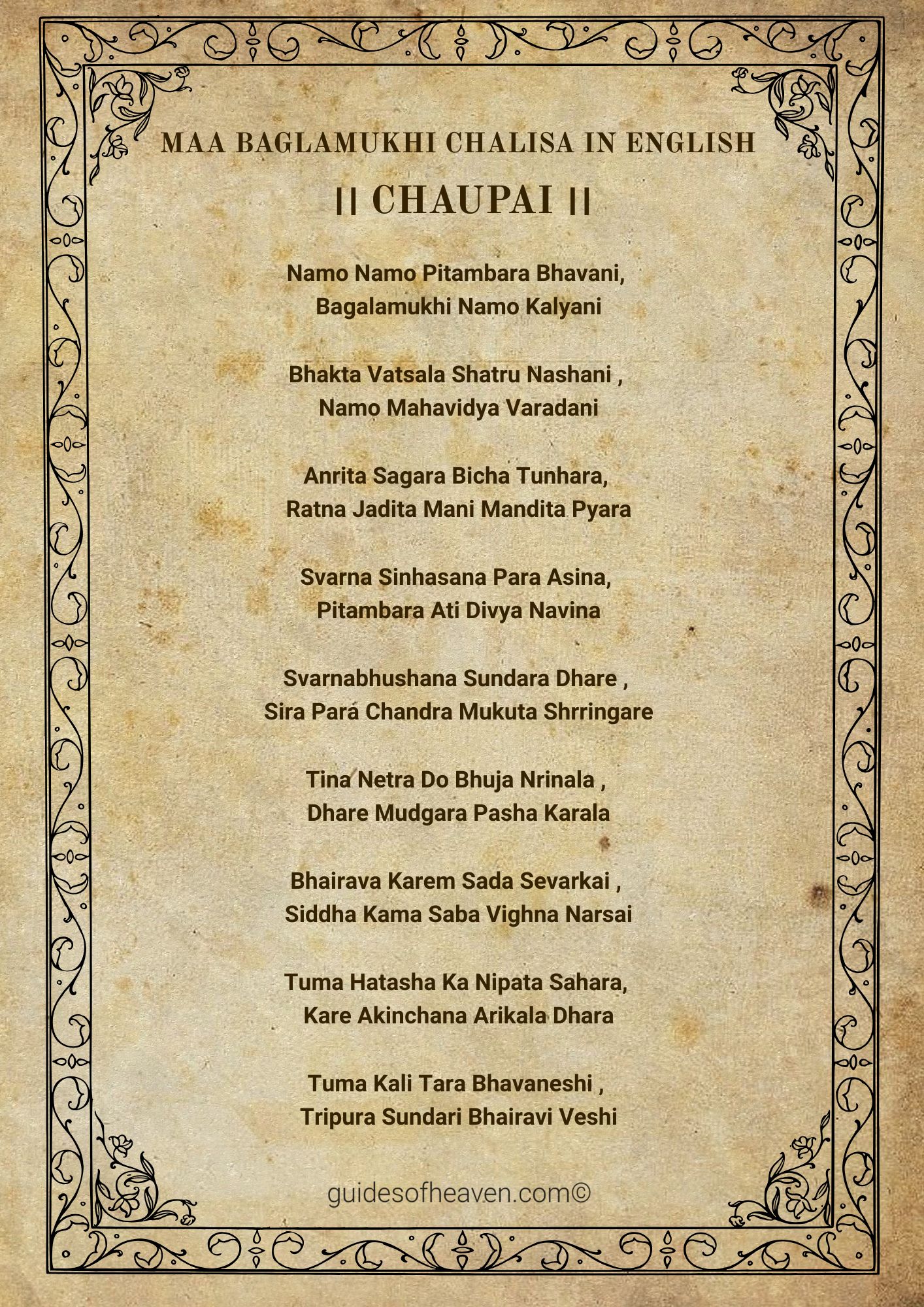
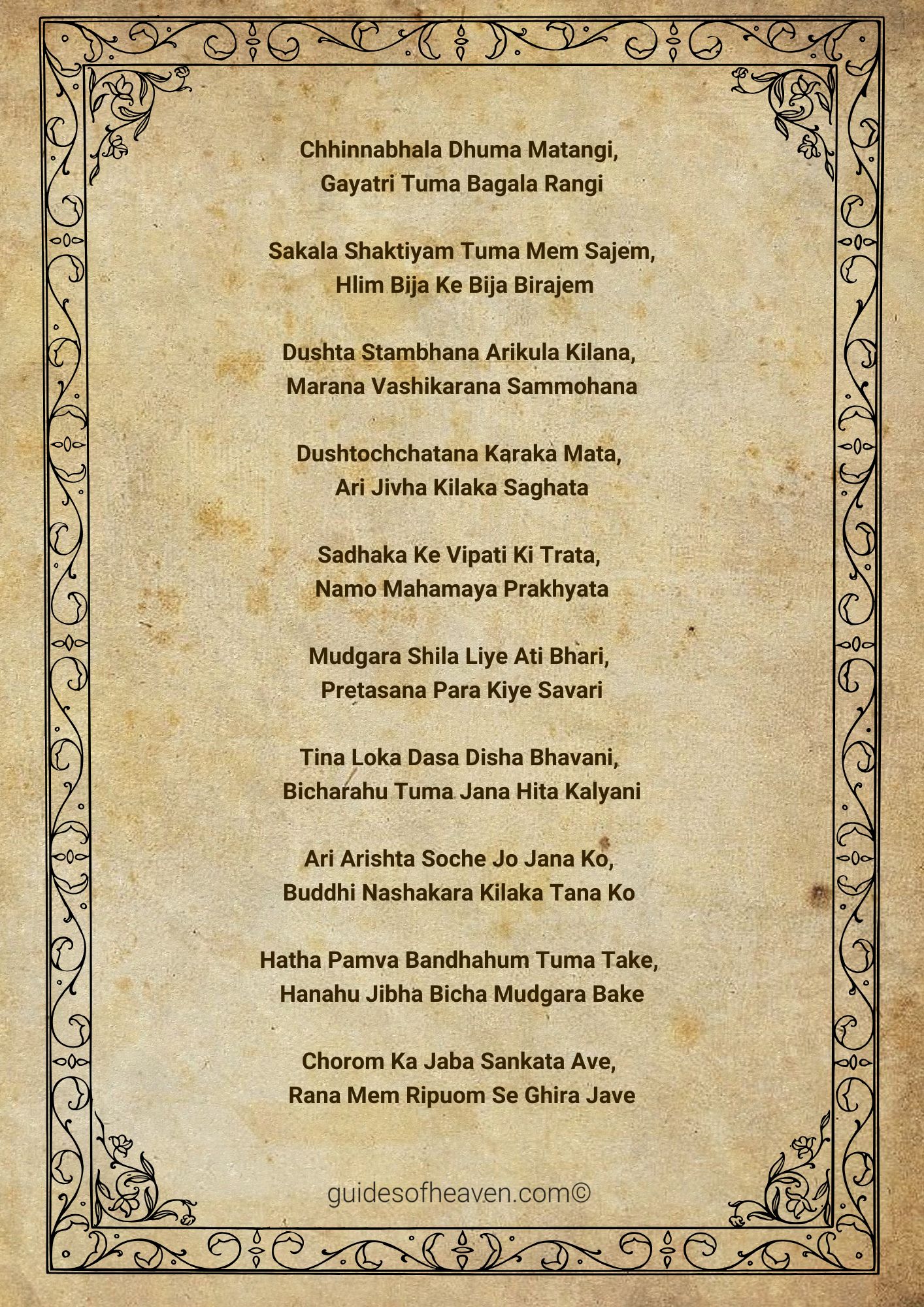
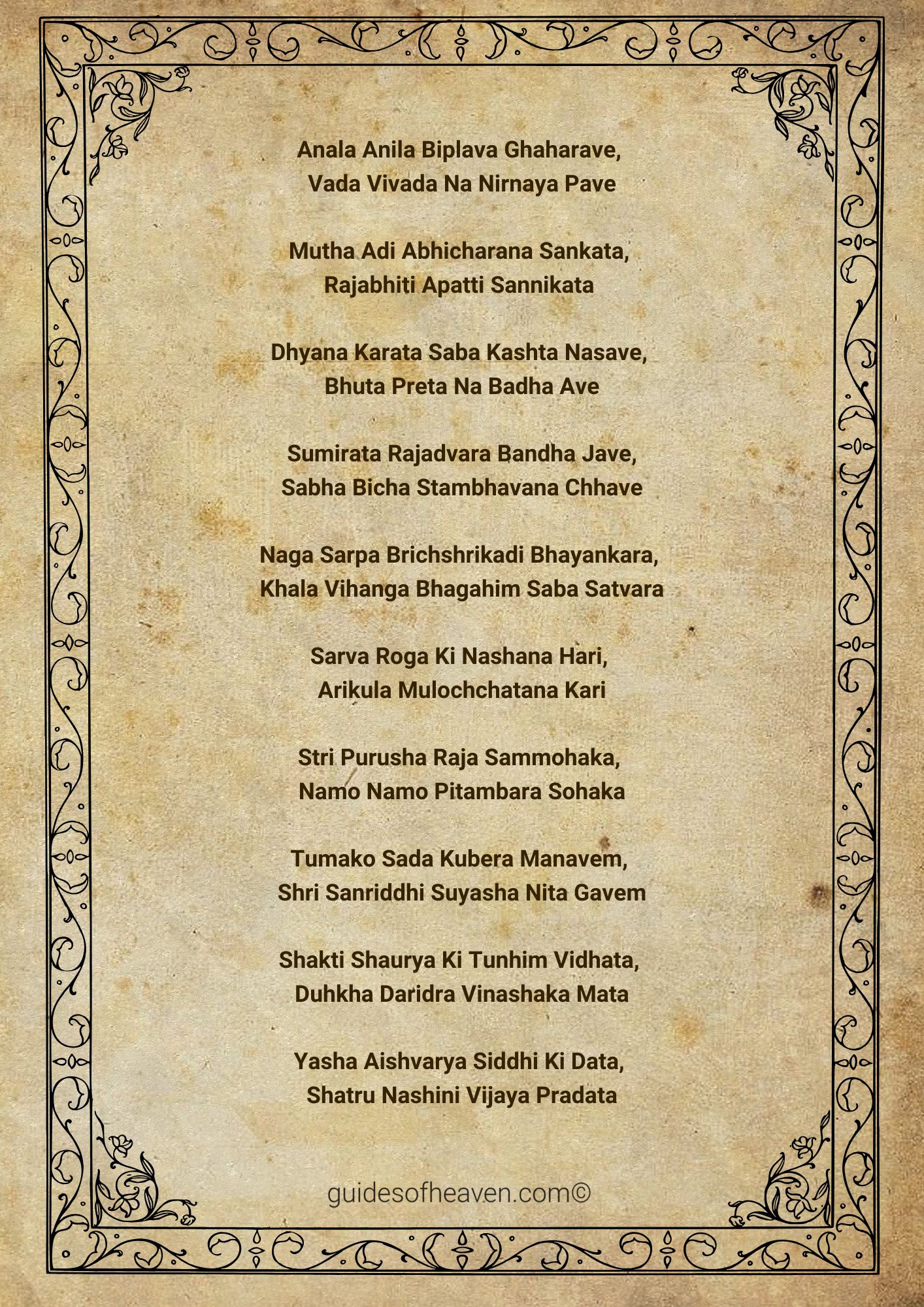
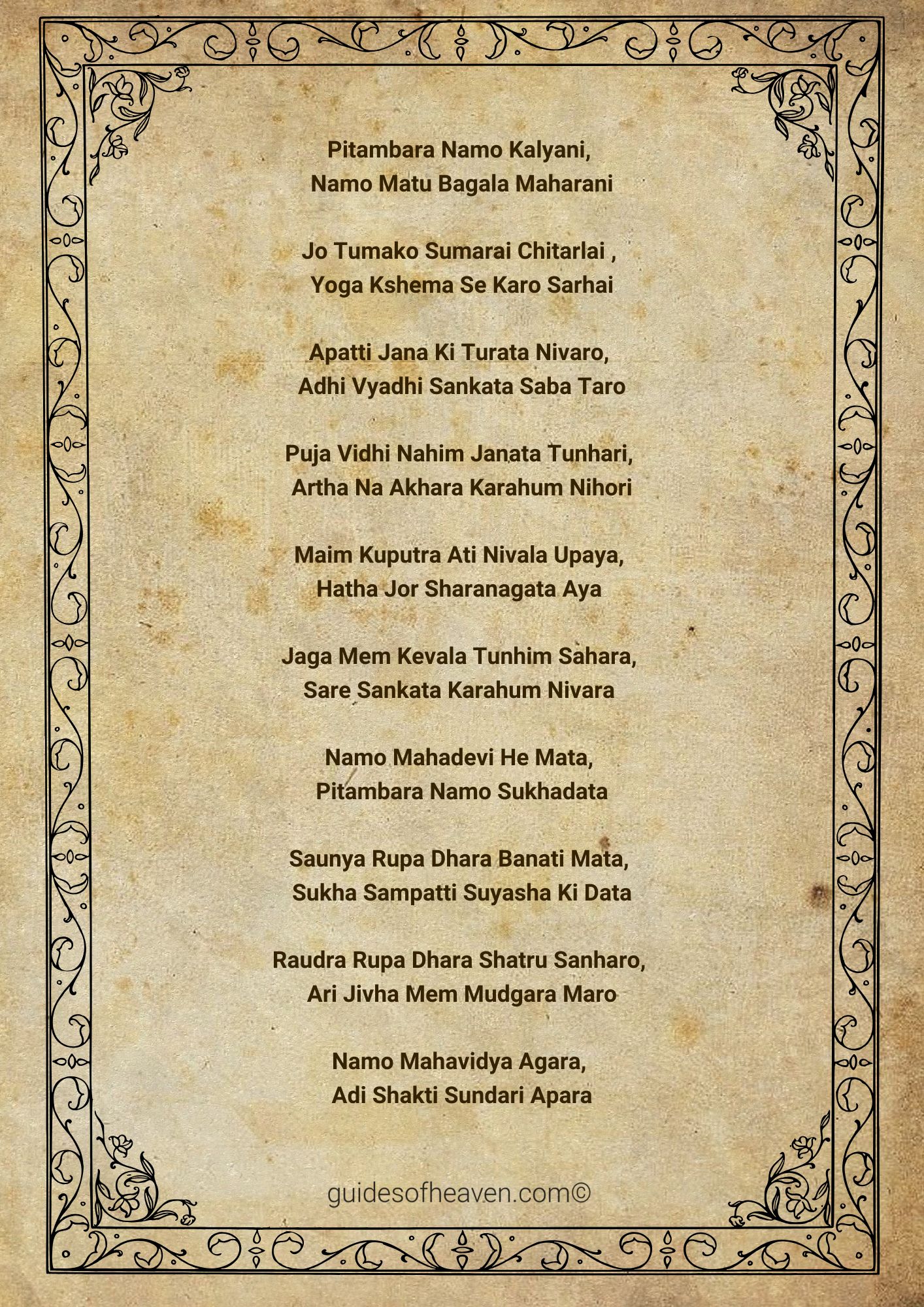
The Baglamukhi Chalisa – 40 Verses of Devotion
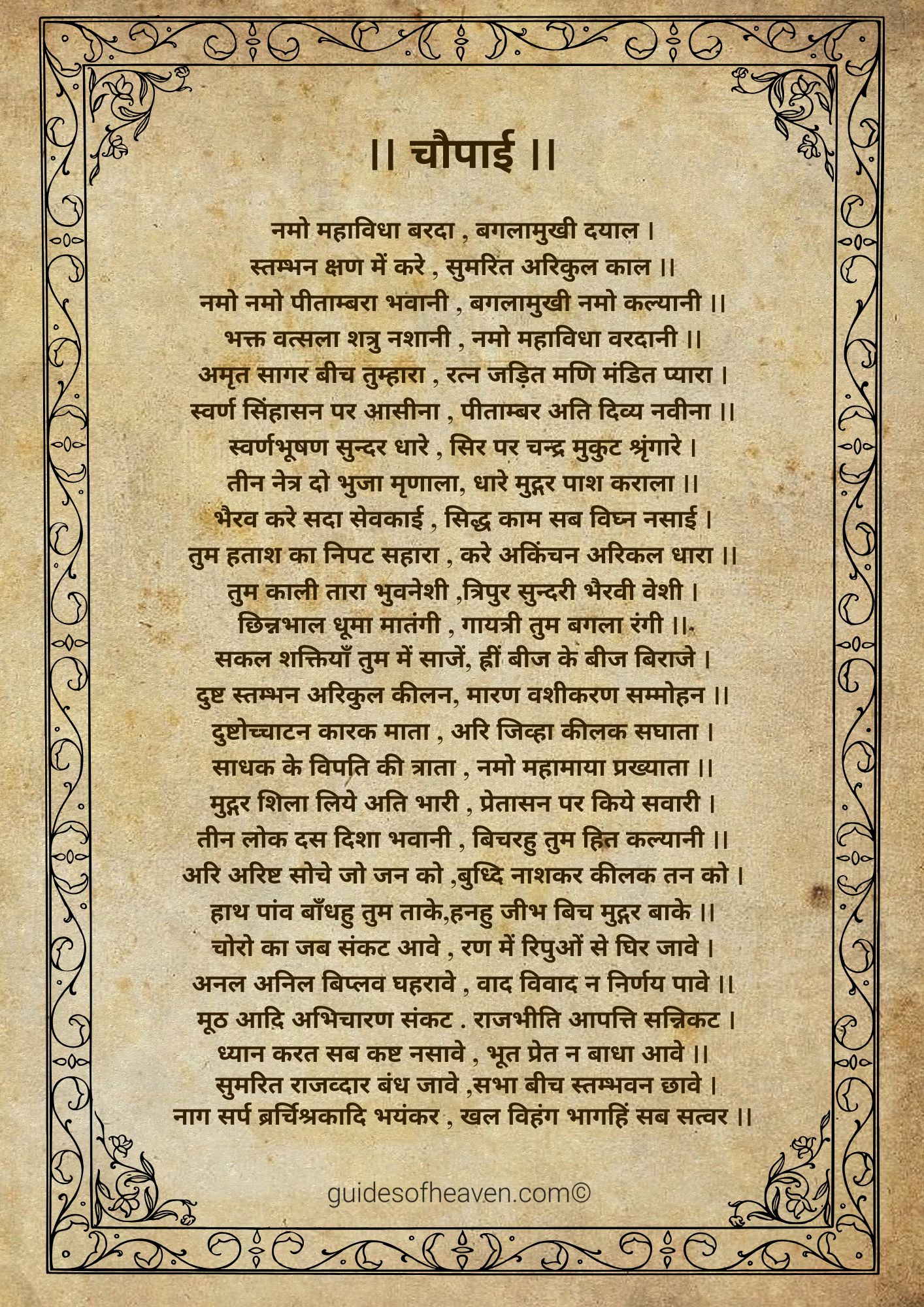
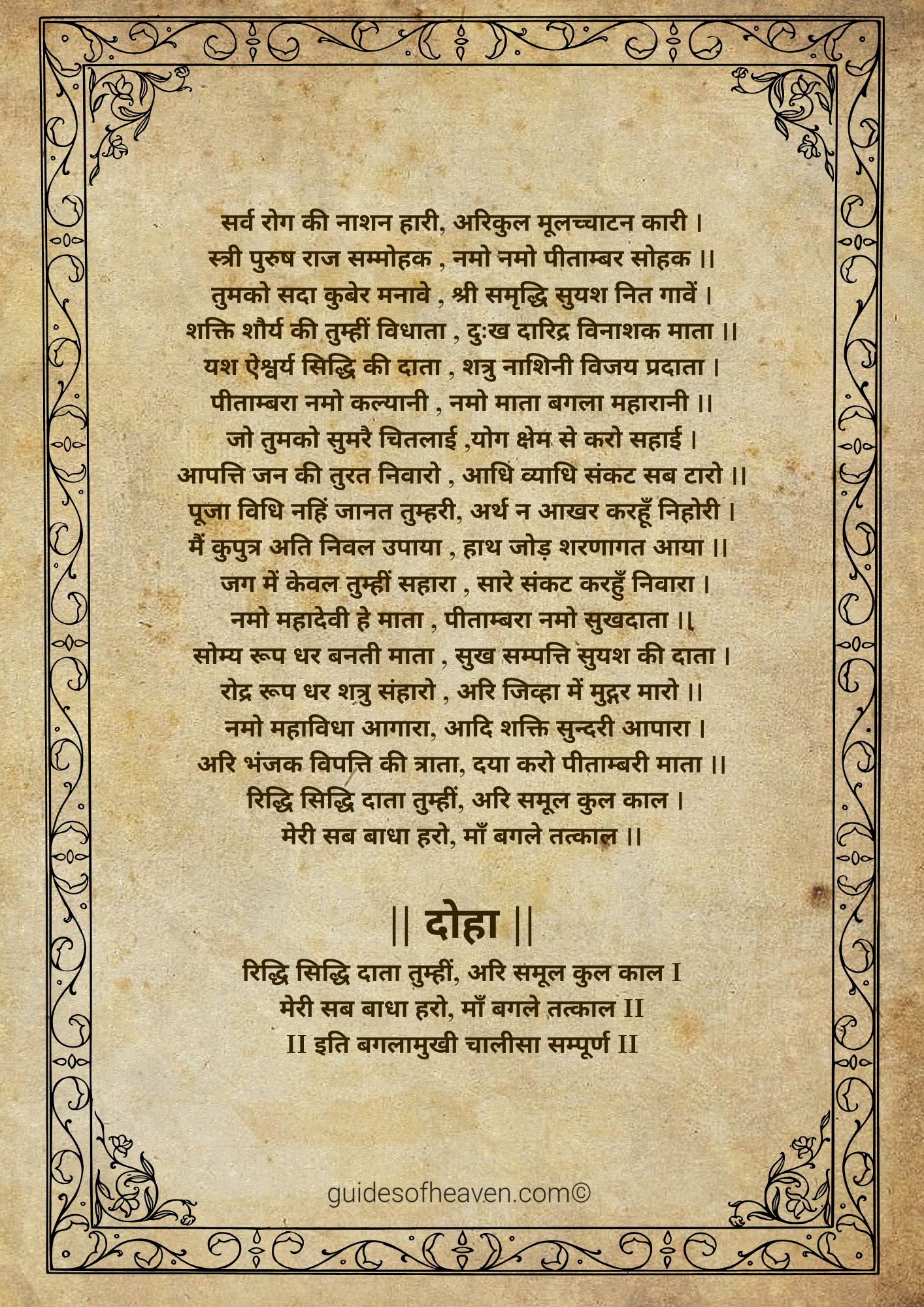
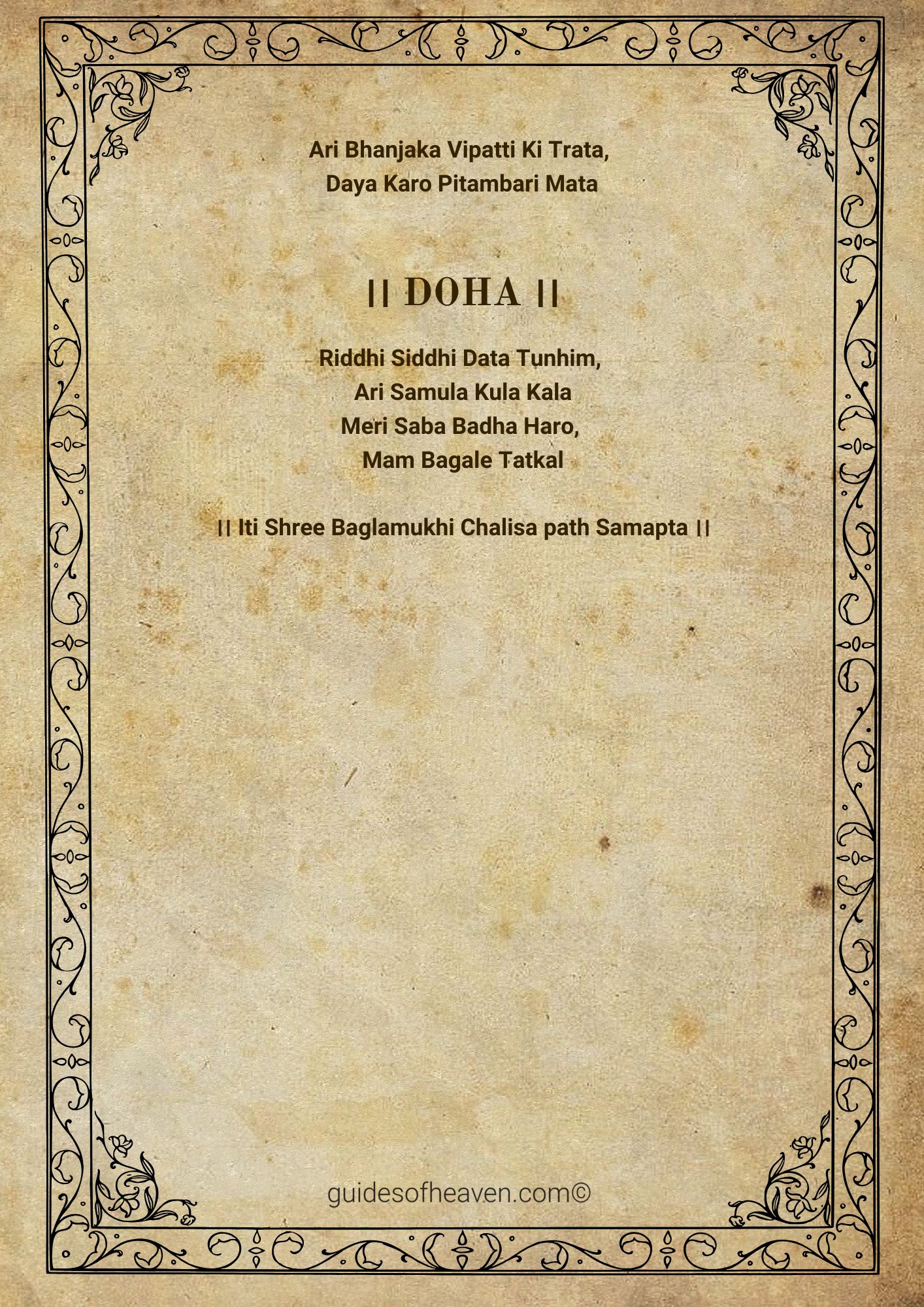
Similar to most Hindu gods, Maa Baglamukhi is glorified in a Chalisa, a hymn of 40 verses (chaupais) that is sung in her honour. The Baglamukhi Chalisa is a beautiful prayer which summarizes the stories, virtues and blessings of the goddess in simple Hindi poetic verses. The believers are of the view that by reciting the Chalisa regularly they can attract the protection and grace of Mata in their lives.
Obtaining the Chalisa: The Chalisa is usually given away in small pamphlets or books in most Baglamukhi temples (in some cases, both in Hindi and English). The counter in the temple literature can provide one, normally free or nominal howsoever Rs. 10-20. Online resources are available to those who either desire it in advance or later. The Baglamukhi Chalisa is even available in PDF version that can be downloaded to your phone in case you want to use it or even print it to carry around.
Baglamukhi Chalisa in Hindi:-
Baglamukhi Chalisa in Enghlish:-
Baglamukhi Yantra: A Mystical Symbol of Protection
A Yantra in Tantra and sacred geometry is a potent illustration of energy that enclosed the power of a god. In the case of Maa Baglamukhi, the Baglamukhi Yantra is a sacred worship and defensive item. This Yantra is made of triangles which interlock and the lotus petals and the beej mantra syllables in a specific precise symmetric design, usually etched on copper or printed on yellow paper. It could pass as a beautiful piece of geometric work, but to those who believe in it, it is Maagamukhi in diagrammatic form and it is a device to focus prayers and concentrate on her power.
By the Yantra: Worshipped by the Yantra is normally made by putting it on a clean altar either on a Thursday or an auspicious muhurta. The followers then lay yellow flowers, lit a diya (oil lamp) and Chalisa ( Baglamukhi Mantra of Beej ) before it. One simple practice is:
- In the morning sit face east (or north) on a yellow cloth, and lay the Yantra on another of the same colour, or on a pedestal.
- Chant 108 times (or less) ”Om Hleem Baglamukhi Namaha” or the complete mantra Om Hleem Baglamukhi Sarva-dustanam vacham mukham padam stambhaya Hleem Om Swaha a few times.
They say that the continuous practice of veneration of the Yantra may create an energy fencing. You do not even need to have the Yantra in a ritual, simply holding it in your house or in your work place is said to cancel out the bad vibrations in a subtle way.
Interactive Map and Direction to Every Baglamukhi Mandir.
Making travel arrangements easier, the direct Google Maps links to the three temple locations are given below. These interactive maps will guide you by precise navigation, distance and routes alternatives to your location:
Maa Baglamukhi Temple, Bankhandi (Kangra, HP) Google Maps:
Maa Baglamukhi Temple, Nalkheda (MP) Google Maps:
Shri Pitambara Peeth, Datia (MP) – Google Maps:
Frequently Asked Questions (FAQs) about Baglamukhi Temple
1. Where is the famous Baglamukhi Temple located in Kangra?
The Baglamukhi Temple is found in the village of Bankhandi, Kangra district, Himachal Pradesh along the highway NH-503.
2. What is Baglamukhi Mata famous for?
Baglamukhi Mata is worshipped for stopping negativity, defeating enemies, success in legal matters, and protection.
3. What are the darshan timings of Baglamukhi Temple Bankhandi?
Baglamukhi Temple Bankhandi usually works since early morning at 5:30 AM until the night.
4. Which is the most powerful Baglamukhi Temple in India?
The strongest temples which are said to be the Baglamukhi temples are Bankhandi, Datia Pitambara Peeth, and Nalkheda temples.
5. What should devotees offer at a Baglamukhi Temple?
The worshippers normally present yellow flowers, turmeric, sweets, bangles, and dress in yellow garments.

Very helpful and well-written guide on Baglamukhi Temple. The details about Bankhandi, Datia, and Nalkheda temples are explained clearly and make planning a visit much easier. I especially liked the darshan timings, rituals, and travel tips, which are often hard to find in one place. The personal experience section also adds a real touch to the article. A must-read for anyone planning Baglamukhi darshan or learning about Maa Baglamukhi temples in India.
I visited the Bankhandi temple last year during Navratri, and your article explained everything exactly as I experienced it. The havan kund energy is truly powerful. Thank you for sharing practical details like timings and rituals. It helped me plan better.
Bahut hi detailed aur helpful article hai. Maine recently Maa Baglamukhi Temple, Bankhandi visit kiya tha aur jo aapne havan kund aur morning aarti ke baare mein likha hai, bilkul waise hi experience mujhe bhi feel hua. Planning ke liye darshan timings ka section kaafi useful laga.
Very detailed and genuinely helpful article. The way you explained the significance of Maa Baglamukhi along with practical details like darshan timings, rituals, and travel guidance makes it very easy for devotees to plan their visit. I especially liked how you covered all three major temples — Maa Baglamukhi Temple, Bankhandi, Shri Pitambara Peeth, and Maa Baglamukhi Mandir, Nalkheda — in one place. The personal experience section adds a real and trustworthy touch. Great work!
Bahut hi informative aur well-explained article hai. Maa Baglamukhi ke baare mein itni clear aur simple language mein information milna mushkil hota hai. Darshan timings, rituals aur travel tips ka section planning ke liye kaafi helpful laga.
Bahut hi clear aur helpful article hai. Darshan timings aur rituals ka section planning ke liye perfect hai. Maa Baglamukhi Temple, Bankhandi ke baare mein detailed info padhkar kaafi clarity mili. Great work, keep sharing!