
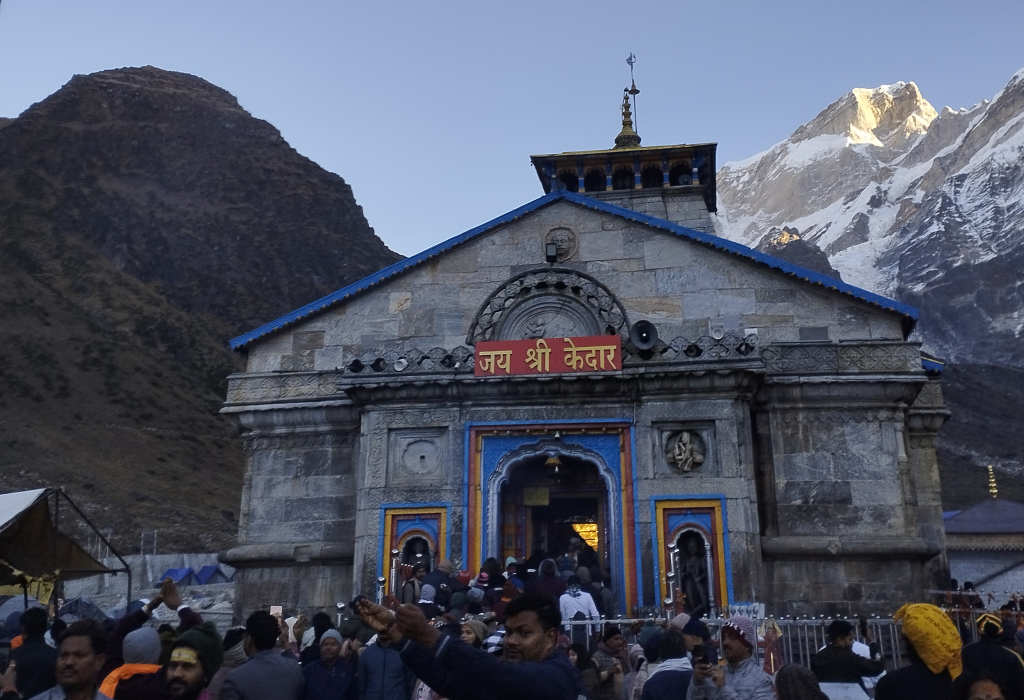

This paper is a comprehensive guide to Kedarnath Temple in Uttarakhand. It provides an in-depth examination of why the temple is regarded as one of the most sacred places in India, and why it is located, at what altitude, and in what geographic location.
The guide informs you of who is to visit the temple, pilgrims, trekkers, and tourists, and provides the history, legends and myths of the temple. It describes the relationship between the Pandavas of the Mahabharata and Lord Shiva to the temple, the revival of the temple by Adi Shankaracharya and its reference in biblical and Puranic texts.
The article discusses the religion and rituals in Kedarnath. It contains the daily puja, abhishek, aarti times, how to see the deity (darshan) and significant festivals. It also describes the five holy Shiva temples (Panch Kedarnath), their spiritual significance and the order in which they should be visited during the Panch Kedar Yatra.
In the case of traveling, the guide provides step by step instructions on how to visit the temple. It displays the road, rail, airport, information, helicopter services, trekking guide with distance, difficulty, breaks, and pony or palkis options.
On the whole, this article is a complete travel and pilgrimage guide to Kedarnath. It assists you in making a safe, spiritual and well prepared trip to the temple at the beginning to the end.
Table of Contents
Kedarnath Temple in Uttarakhand Introduction.
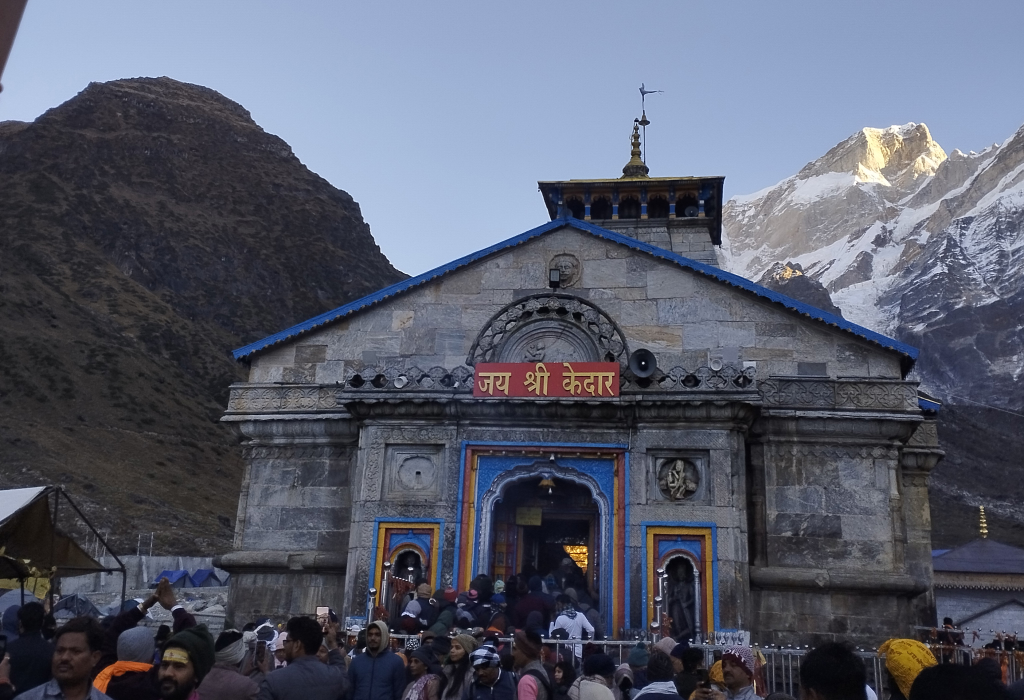
Kedarnath Dham is a holy temple of Shiva in the Garhwal Himalayas of Uttarakhand at an altitude of approximately 3,584 meters (11,755 feet). It is a Jyotilinga and a major destination of the Char Dham pilgrimage. The stone temple, which was reconstructed in the 8th century by Adi Shankaracharya, opens every year in late April or early May and closes in October or November during the winter.
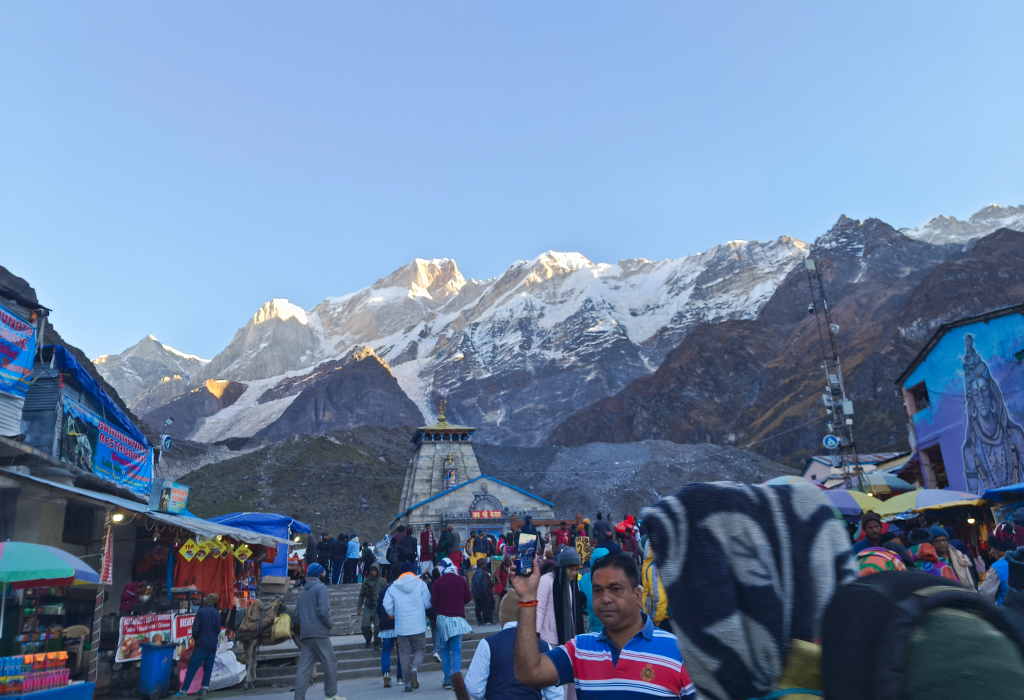
It is surrounded by snow-white mountains and the Mandakini River, which makes it have a strong spiritual impression. Individuals may access the temple either through a 16 kilometer walk or by flying to this place.Adventurers can take pleasure in the mountain tour, yet the visitors must be fit or take a helicopter due to the elevation.
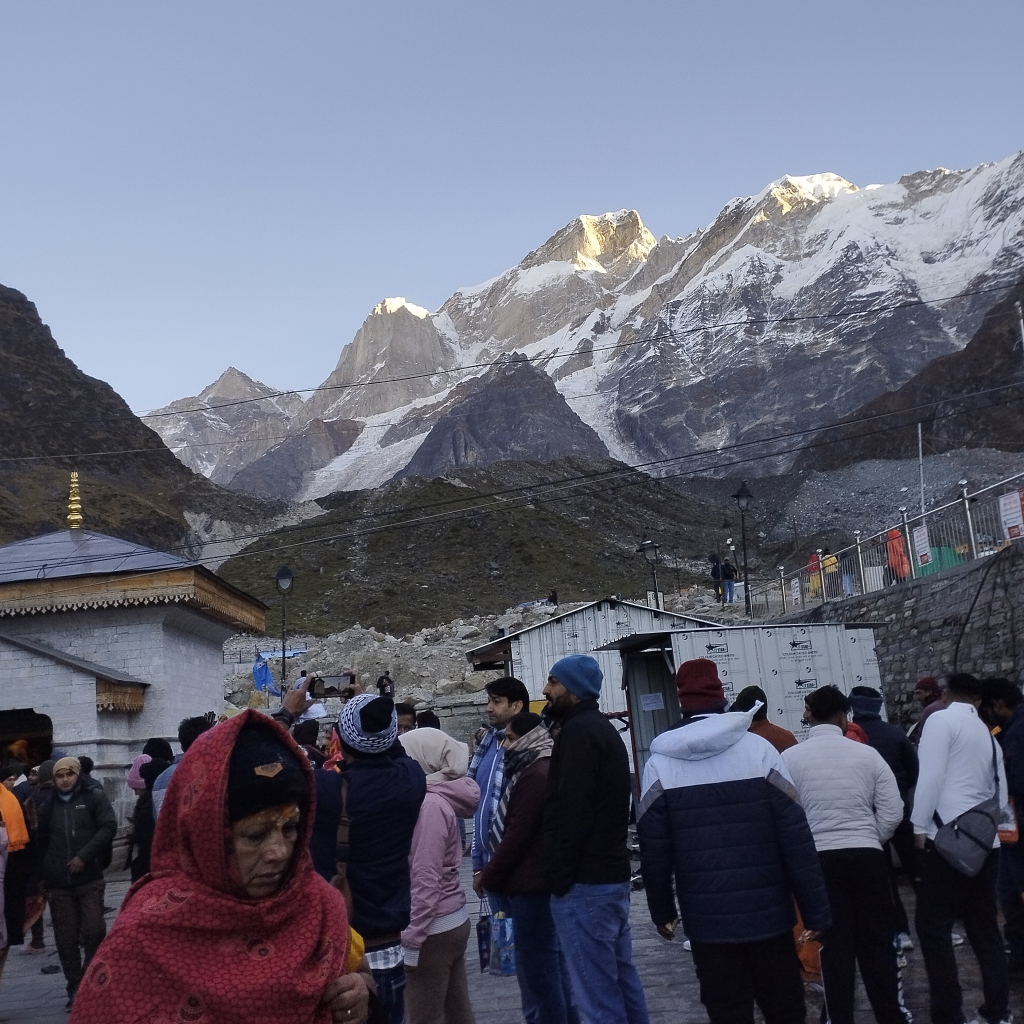
Why Kedarnath Dham Mandir is among the most sacred Temples in India.
Kedarnath is regarded as very sacred due to its myth and position. Following the war of Mahabharata, the Pandava brothers sought Lord Shiva. He manifested himself as a bull and his hump (keda) appeared at Kedarnath. There a shrine was erected by the Pandavas. Kedarnath is also a 12 Jyotirlinga, and this implies that Shiva is present here. A visit to Kedarnath is an effective spiritual performance by the worshipers.
Location, Altitude, and Geographical Significance.
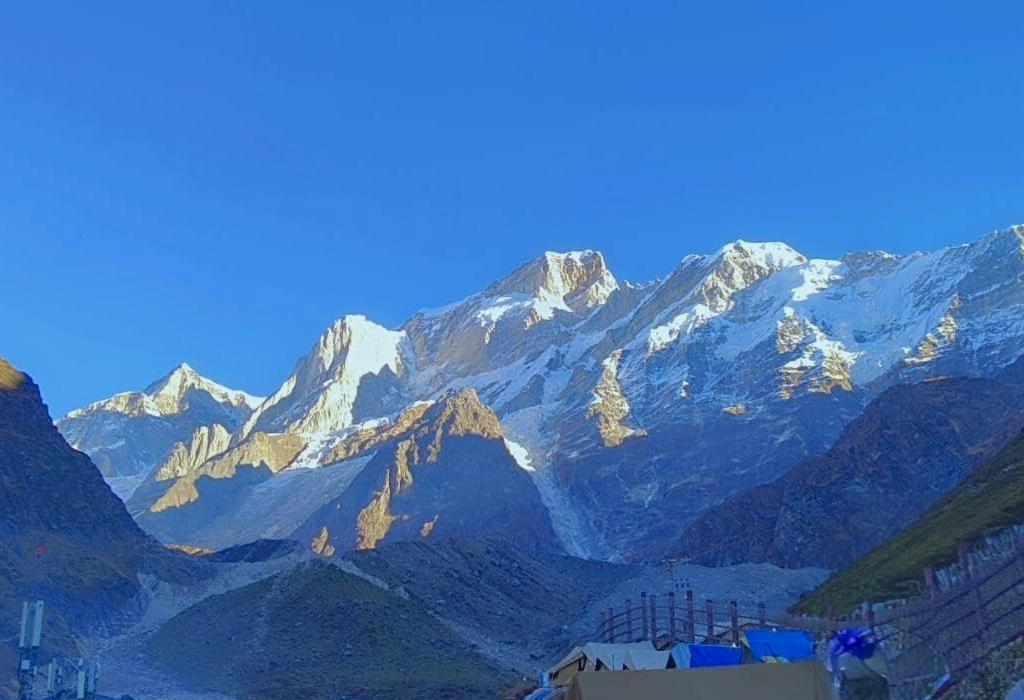
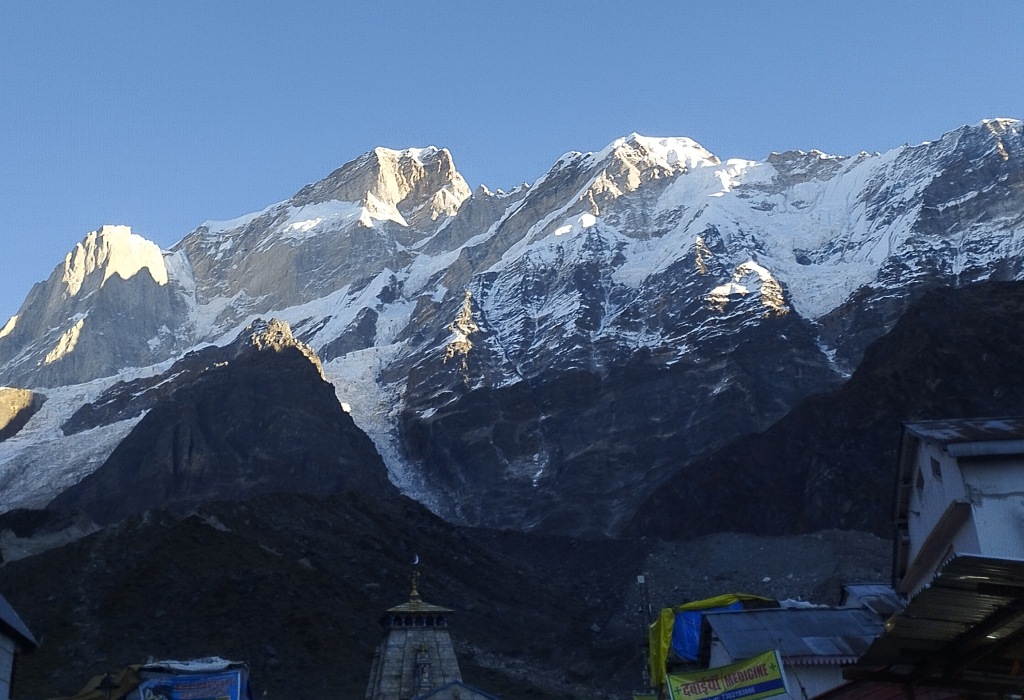
Kedarnath temple lies on a plateau in the Rudraprayag district of Uttarakhand on a river valley. It has a height of approximately 3,584 meters which is the highest among the Char Dham shrines. It is located along the Mandakini River and is enclosed by high mountains including the Kedar Dome and Chaukhamba (more than 6,000 meters). Kedarnath is the name of the place that translates to Lord of the Marshy Ground, the summer meadows surrounding it. The pilgrimage is difficult and gorgeous due to the high mountainous terrain, clear spring skies, and heavy winter snow.
Who are supposed to visit Kedarnath Temple (Pilgrims, Trekkers and Tourists)
- Devotees: Shiva devotees visit the pilgrimage to get the spiritual fulfillment.
- Trekkers and Nature Lovers: The trail will lead you through the rhododendron forests and alpine meadows with glaciers in sight and this is good to the hikers and photographers.
- Fitness: It is a tough hike, and healthy adults are the way to go. Children over the age of approximately 8 and fit seniors up to approximately 70 can attempt the journey at a slow pace with rest stops. In case you are not able to walk, there is a helicopter service between Phata or Sitapur between May and October.
People must learn to be at the altitude and carry essentials, as the high altitude may be challenging.
History, Legends and Mythology of Kedarnath Temple.
Mahabharata Relation – Pandavas and the Legend of Lord Shiva.
It is said that Kedarnath is associated with the Mahabharata Pandavas. The five brothers took Lord Shiva as the place of repentance after their war. Shiva was in disguise as a bull named Nandi in the Himalayas. The Pandavas discovered the bull in the area of Guptkashi, yet it buried itself underground leaving behind the hump at Kedarnath. They constructed a temple there about that hump. This tale reveals why individuals go to Kedarnath to seek forgiveness and experience the divine.
The Revival of Kedarnath Temple and Adi Shankaracharya.
The temple that we have today was constructed during the 8th century by the Hindu sage Adi Shankaracharya. He discovered the concealed Shiva lingam of the Pandava legend and restored the shrine. There is a small shrine behind the temple that indicates the place where Shankaracharya sat to meditate. Kedarnath was a significant pilgrimage site because of him.
Biblical and Puranic allusions to Kedarnath Temple.
In Hindu scriptures, Kedarnath has been referred to a number of times. Other texts such as the Skanda Purana discuss Kedareshvara (Kedarnath) and associate it with Shiva and the Ganges. It is said that Sage Vyasa dispatched pilgrims to Kedarnath in order to purify them. These sources demonstrate that the temple has long been sacred in Hindu culture.
Kedarnath Temple as a Jyotirlinga of Lord Shiva.
Kedarnath is a Jyotilinga, one of the twelve sacred shrines of Shiva as a divine light. It is said that the main Shiva lingam in the temple just manifested itself (svayambhu). Adoration of this Jyotirlinga is the most important method of worshiping Shiva and it brings immense blessings to the devotees. This cosmic perception of Shiva is echoed in the design of the temple a stone sanctum topped by a conical tower.
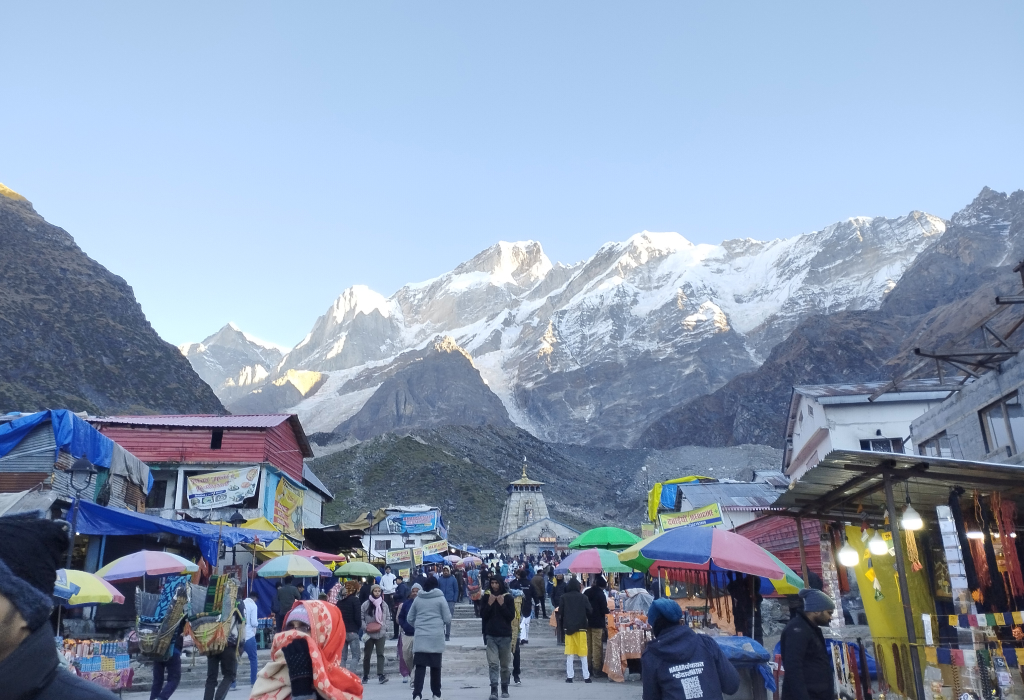
The Role of Kedarnath in Char Dham and Panch Kedar Yatra.
Kedarnath belongs to the Chota Char Dham (Yamunotri, Gangotri, Kedarnath, Badrinath) in Uttarakhand. It is commonly visited by pilgrims who visit the Shiva shrine and the Vishnu temple at Badrinath when they are doing the Char Dham. It is also the chief location of the Panch Kedar pilgrimage with the other four temples being Tungnath, Rudranath, Madhyamaheshwar and Kalpeshwar. Tourists tend to visit Kedarnath and then the other temples and it is thought that by doing so they will cleanse sins and gain spiritual merit.
Kedarnath Floods and Post-Disaster Restoration 2013.
Massive flash floods struck the Kedarnath valley in June 2013. The temple itself was practically intact. The floodwater was held back by a large rock known as Bhimshila behind the temple. Majority of other structures were swept and thousands of pilgrims saved. The temple was shut down one year and roads, bridges and camps were restructured with enhanced safety. Kedarnath is now operating normally under strict supervision and new infrastructure is being used to ensure the safety of pilgrims.
Architecture and Structural Wonder of Kedarnath Temple.
Temple Design, Materials of Construction and Engineering Techniques.
The Kedarnath Temple is constructed using huge granite blocks which are cemented using iron bolts, no mortar. It is placed on a firm stone foundation, and the plan of the ground is a square, and the tower is a pyramid, approximately 15 metres in height.
Garbhagriha, Mandapa and Sacred Lingam.
The sanctum (garbhagriha) contains the principal Shiva lingam a large triangular stone on a circular pedestal. It is bathed in water, milk, honey and other sacred substances by priests every morning (abhishek). The lingam is viewed by the devotees through the sanctum door. In front of the lingam is a carved stone Nandi (the bull). The hall (mandapa) in front of the sanctum is carved with pictures of gods and sages and has pillars. This interior design preserves the ancient Himalayan Shiva temples style.
Distinct Architectural Characteristics that survived natural catastrophes.
The plain, concrete structure of Kedarnath enabled it to withstand the 2013 flood. Its level top and its massive stone slab allowed the flood water to go round and over it, rather than carry it away. The immense rock at the back of the temple absorbed the greater part of the force of the water. The stones were very tight and therefore the temple remained intact.
Religion and Rituals in Kedarnath Dham.
Timings of Daily Puja, Abhishek, and Aarti.
Kedarnath is very strict in his daily schedule. Priests also do a big abhishek before sunrise, washing the lingam with milk, honey, ghee, and water. Then they perform a morning aarti (lamp ritual). The temple is open to pilgrims between 6-7 AM. It shuts down early in the afternoon and re-opens in the evening shayana aarti at around 6 -7 PM before night. Devotees are allowed to attend morning and evening. The temple is not open to the people outside those periods.
Darshan Process and Spiritual Experience.
Pilgrims have to take their shoes off and creep in to receive darshan (view of the deity). Priests enter the sanctum; worshipers are only outside, looking towards the dark lingam. The pilgrims go round the sanctum in a clockwise direction, presenting flowers and mantras. Then, priests serve blessed prasad (holy food) to the devotees. The experience is very peaceful and uplifting, according to many pilgrims, and they feel that they are in direct contact with Shiva at this distant peak.
Significant Festivals at Kedarnath Temple.
- Akshay Tritiya (April/May): Special pujas and havans on the opening day of the grand temple.
- Maha Shivaratri: Night of worship (fasting and chanting) in honor of Lord Shiva.
- Somvati Amavasya and Shravan Somvar: New-moon Mondays (particularly in Shravan month) attract additional devotees to blessings.
- Kartik Purnima/Diwali: The final festival, during which the Shiva lingam is taken in procession to the Ukhimath temple.
During festival days, the rituals are more elaborate and crowds are huge. Most pilgrims schedule their visit to these auspicious events to gain extra spiritual merit.
Panch Kedarnath – The Five Sacred Shiva Temples.
What Is Panch Kedarnath and Why It Is Spiritually Significant.
Panch Kedar are five ancient Shiva temples whose connection is based on legend. The body parts of Shiva (in his form of a bull) are reported to have manifested in these locations after vanishing underground. It is said that visiting all five of them – Kedarnath, Tungnath, Rudranath, Madhyamaheshwar, and Kalpeshwar – will cleanse sins and bring blessings. The pilgrimage is done by walking across the high Himalayan areas, which is a sign of the presence of Shiva across the mountains.
Full list of Panch Kedarnath Temples and their importance.
- Kedarnath (3,584 m): the hump of Shiva – the main and the highest shrine.
- Tungnath (3,680 m): Shiva arms – top Shiva temple (Chopta).
- Rudranath (3,559 m): Face of Shiva – lonely forest shrine (until dawn).
- Madhyamaheshwar (3,490 m): The belly/navel of Shiva – serene temple between villages.
- Kalpeshwar (2,200 m): Shiva hair – lower cave shrine with spring.
They are usually visited by pilgrims in the following sequence (Kedarnath – Tungnath – Rudranath – Madhyamaheshwar – Kalpeshwar) and are usually terminated at Badrinath. The terrain and atmosphere of each temple are unique, yet all of them worship the divine presence of Shiva.
Spiritual Order and Suggested Path to Panch Kedar Yatra.
A common route is:
Kedarnath: Accessible by trek or helicopter (base Gaurikund, 1,981 m).
Tungnath: Drive to Chopta (2,680 m), and then walk 3.5 km to Tungnath Temple.
Rudranath: Trek to Rudranath at Sagar village (Multi day forest trek).
Madhyamaheshwar: Trekking in Ransi village (Multi-day trek).
Kalpeshwar: 2 km walk (short) Urgam village (2,200 m).
Once the pilgrims have seen all the five Kedars, they visit Badrinath (25 km of Joshimath) to complete the Char Dham. The trip is usually completed in 7-10 days, depending on the speed and the destinations.
Kedarnath vs Other Panch Kedar Temples – Major Differences.
All Kedar temples are different. The most popular and the highest (3,584 m) is called Kedarnath and it takes the longest walk. Tungnath is a little higher (3,680 m) and has a shorter approach. Rudranath is deep into the woods and very isolated. Madhyamaheshwar is located in the middle of the alpine villages. Kalpeshwar is a lot lower and more accessible. All are built in local stone and Nagara-type towers, however, sizes and locations differ. Although the starting point is Kedarnath, each of them has its own sacred landscape and ambiance.
How to visit Kedarnath Temple – Travel Guide.
Rishikesh to Kedarnath – Step-by-Step Tour.
Rishikesh / Haridwar to Guptkashi or Sonprayag
🚗 Road Journey: Start early from Rishikesh or Haridwar and travel by bus or taxi to Guptkashi or Sonprayag (approx. 220 km, 10–12 hours).
🛣️ Route: The journey goes via Devprayag and Rudraprayag, following scenic mountain roads along river valleys.
🛏️ Overnight Stay: Halt at Guptkashi (1,319 m) or Sonprayag (1,560 m) for rest and acclimatization.
Sonprayag to Gaurikund – Kedarnath Trek
🚙 Drive to Gaurikund: From Sonprayag, take a shared jeep or taxi to Gaurikund (14–16 km). The road is well maintained.
♨️ Gaurikund: This is the trek starting point and has lodges and a natural hot spring.
🥾 Trek to Kedarnath: Begin the 16 km uphill trek to Kedarnath (3,584 m).
📍 Trek Route:
- Rambara (5 km)
- Phata (8 km – end of motor road)
- Adi Kedar shrine (11 km)
- Singhdul / Koteshwar (14 km)
- Kedarnath Temple
⏱️ Duration: Most trekkers complete the trek in 6–8 hours.
🐎 Optional Support: Ponies can be hired up to Rambara or Phata if required.
🛏️ Overnight Stay: Stay near Kedarnath Temple.
Kedarnath Darshan and Return to Gaurikund / Sonprayag
🙏 Morning Darshan: Visit Kedarnath Temple early for darshan.
🥾 Return Trek: After darshan, trek back down the same 16 km route to Gaurikund.
🚙 Drive: From Gaurikund, travel by jeep or taxi to Sonprayag.
🛏️ Overnight Stay: Stay at Sonprayag or Guptkashi.
Sonprayag / Guptkashi to Rishikesh or Haridwar
🚗 Return Journey: Drive back to Rishikesh or Haridwar via Rudraprayag and Devprayag (10–12 hours).
🏞️ Views: Enjoy river confluences and Himalayan landscapes on the return journey.
🏁 End of Kedarnath Yatra
Closest Railway Stations and Airports.
Railway: The closest ones are Rishikesh or Haridwar (linked to Delhi and other cities). Then by road to Sonprayag/Gaurikund.
Air: The nearest airport (approximately 240 km to Kedarnath) is Dehradun (Jolly Grant Airport). It flies to Delhi and other large cities. Dehradun to Sonprayag/Gaurikund via Rishikesh.
Road Accessibility and Transport Facilities.
The mountain roads in Uttarakhand link the Kedarnath route. National highways run out of Rishikesh to Srinagar (UK) and Rudraprayag, and then to Guptkashi/Sonprayag. There are state and privately operated buses that travel between Rishikesh/Haridwar and Rudraprayag. Shared taxis and jeeps are widespread at Sonprayag/Gaurikund (e.g. Sonprayag to Gaurikund is around ₹50-100 per person). Only day traveling is recommended because of narrow roads. In rain or fog, journey times may be twice.
Helicopter Services to Kedarnath – Routes, Booking and Cost.
Helicopters are used to Kedarnath during pilgrimage season (Apr-Oct). Helibads are used to fly between Phata (near Guptkashi) and Sitapur (near Sonprayag). The distance between Phata and Kedarnath is approximately 6-10 minutes by air. Register and book online on the official IRCTC portal. The round trip fare between Phata and ₹8,800 per person. Always reserve early (particularly in May/June). Helicopters are only flown during the day and in favorable weather.
Kedarnath Trekking Guide – Routes, Difficulty and Preparation.
Distance, Duration and Terrain of Gaurikund to Kedarnath Trek.
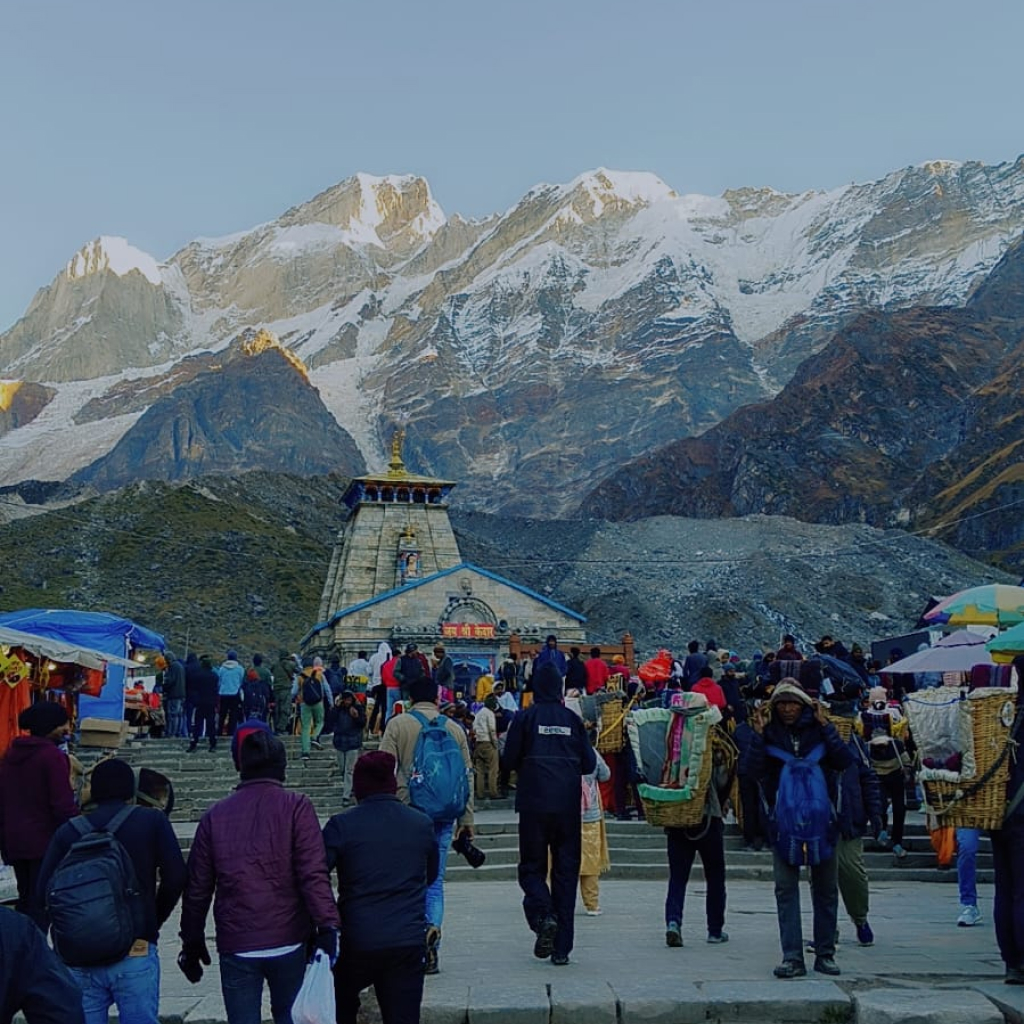
The Gaurikund-Kedarnath trek is approximately 16-18 km in length, with an elevation of approximately 1,980 m to 3,584 m. The path begins in fertile pine and rhododendron woods, passes to high meadows, and is rocky towards the summit. A majority of trekkers finish it within a day (6-8 hours). It is prudent to begin early enough, bring at least 2-3 liters of water, and some high-energy snacks. Rest spots and plain restaurants at Rambara and Phata assist in the ascent.
Challenges of Level and Altitude of Beginners.
This is a moderate to challenging trek. Challenges include:
- Steep Sections: The final 3-4km contains numerous stone steps and steep slopes.
- High Altitude: Oxygen is approximately 40 percent lower than that of the sea level. Healthy individuals can experience breathlessness, light-headedness, or experience headaches.
Novices are to train on hikes or stair exercises. Travel slowly on the path and rest frequently. Stay hydrated and eat well. In case a person experiences serious signs of altitude sickness (nausea, extremely strong headache, confusion), the best thing to do is to descend immediately. To allow their bodies to acclimatize, many new trekkers divide the trip into two days and spend the night at Rambara.
Breakdown and Key Stops of Kilometer-Wise Trek.
- Rambara (5 km): First big station with a small temple and stores. Good for a rest and snacks.
- Phata (8 km): The terminus of the motor road and helicopter pad. Up to this point ponies and porters may be employed.
- Adi Kedar (11 km): A small Himalayan shrine (shikhara) has a rest shed.
- Koteshwar (13 km): Hindu temple on a crossroad; final resting place.
- Singhdul (14 km): Final set of shops/dharamsalas before the final climb.
- Kedarnath (16 km): The temple at 3,584 m.
At every point, there is a plan break to eat, drink, and rest. The last ascent above Singhdul is the hardest; maintain a steady pace.
Pony, Palki and Doli Options- Advantages and Disadvantages.
Animals or porters may be employed by pilgrims:
- Ponies/Mules: Up to Rambara/Phata. Pros: give your legs a break. Cons: they can only go to very steep areas and can carry one person and a small amount of luggage. Always make use of authorized operators.
- Palki/Doli (Chair Car): A covered chair, which is transported by 6-8 porters, can be found at Gaurikund to Kedarnath. Advantages: you sit as porters carry you. Cons: very costly (₹3000-5000) and bumpy; also painful to the backs of the porters. Frequently not permitted in tight areas.
Walking is the best among healthy trekkers. Transport should only be used when it is necessary (e.g. extreme fatigue or health issues), and only with legitimate services.
Other Trekking Routes to the Experienced Trekkers.
In addition to the usual trail, there are some more difficult paths:
- Triyuginarayan-Kedarnath: Triyuginarayan temple (marriage of Shiva and Parvati) to Kedarnath (approximately 15 km).
- Chaumasi Path: An isolated road between Chaukhamba peaks and Kedarnath.
These options are more marked, longer and require best fitness and good navigation skills. They include camping and river crossing. They are only suitable to very experienced trekkers. Normal pilgrims are not to take the shortcut.
The best time to visit Kedarnath Temple in Uttarakhand.
Kedarnath Temple Opening and Closing Dates.
There are only six months in a year when Kedarnath is open. It begins on a propitious day in late April or May (Akshay Tritiya) and ends around mid-October or Diwali. The precise dates vary with every year based on the Hindu calendar. Once closed, it is impossible to access it because of heavy snow. The Shiva lingam is then transferred to the Omkareshwar (Ukhimath) Temple where it is worshiped during winter.
Monthly Weather Conditions.
- May–June: Stable weather. Days 10°C-18°C; nights still cold. Good trekking conditions. In April there might be some snow patches.
- July-August (Monsoon): Low clouds, heavy rain. The trails get muddy and slippery; landslides may occur. Majority of pilgrims do not travel during these months.
- September-October: It is clear with cool and pleasant days. It is the ideal season to trek in this post-monsoon season (peak season).
- November-April: It is snowing all over; the temple is shut down. The temperatures become much lower than freezing.
To be safe and comfortable, May-June and September-October are the most appropriate months to visit. It is better to avoid the main monsoon months (July-August) unless there is an absolute necessity.
Peak Season vs Off-Season Crowd, Cost and Experience.
- Peak Season (May- June, September- October): The weather is perfect and all facilities are available. Anticipate huge attendance at the temple, long queues, and increased cost of accommodation. Reserve book hotels and helicopters.
- Off-Season (Monsoon/Shoulder Months): The pilgrims are few and the prices are low, yet most of the services (lodges, shops) are shut. Driving is dangerous due to rain and landslides. It must be thought of by only experienced adventurers, and then with care.
Stay during the high season in case you want safety and amenities. A late-monsoon (September) trip can be rewarding, though you will need to put up with rain.
Monsoon Risks, Landslides, and Travel Advisory.
The Kedarnath route is susceptible to:
- Sudden blockage of roads by landslides.
- Mandakini river valley flash floods.
- When the rains are severe, authorities can halt travel (road or helicopter). Always monitor weather predictions and official warnings before and during traveling. The government of Uttarakhand recommends that trekking should not be done during heavy rain. In case it rains during the trek, seek shelter and do not continue.
Winter Closure and Where the Idol Is Worshipped.
Between November and April, Kedarnath is covered with heavy snow. The temple remains shut down during winter. The principal Shiva lingam is taken to the Omkareshwar Temple in Ukhimath (115km away) during this period. During winter, those who wish to pay homage to the deity of Kedarnath go to Ukhimath, where the lingam is stored and venerated until Kedarnath opens again in spring.
Hotels and Restaurants around Kedarnath Temple.
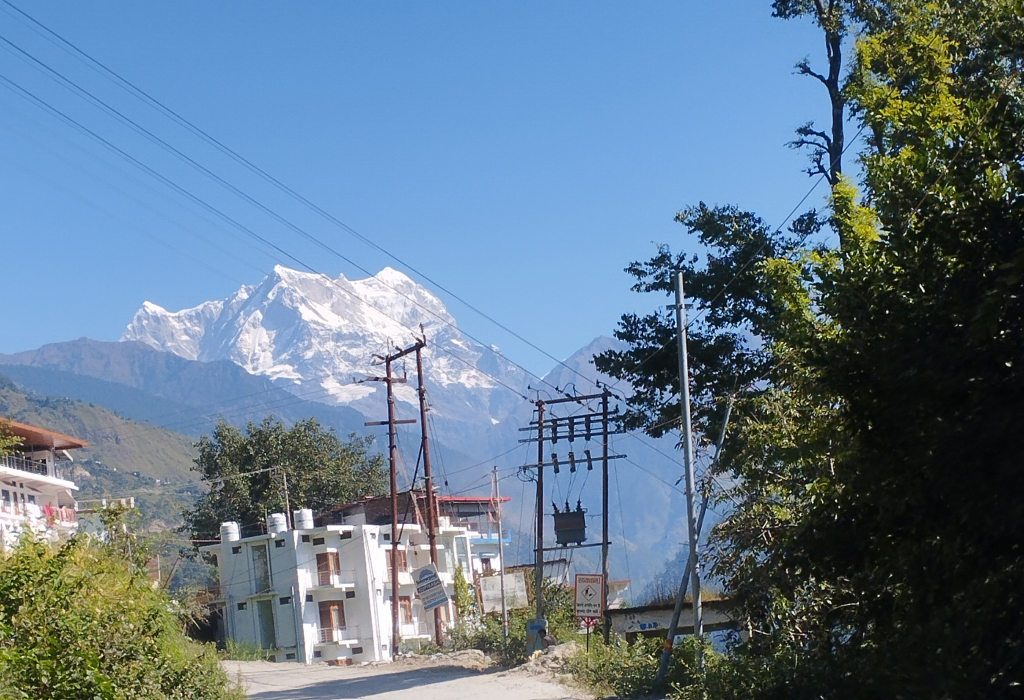
Where to stay Kedarnath vs Gaurikund vs Guptkashi.
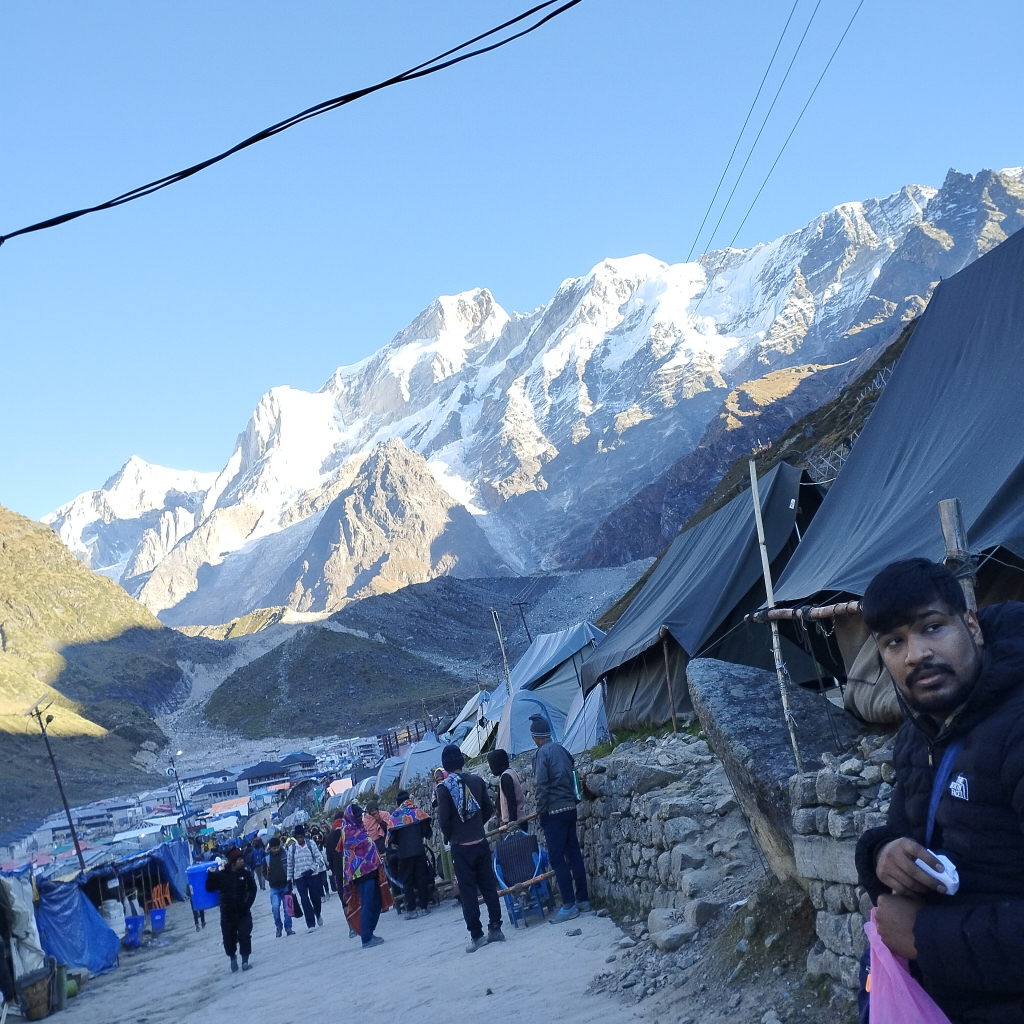
- Kedarnath (3,584 m): There are very few accommodation facilities. There are GMVN (government) guesthouses and simple dharamshalas. The rooms are plain, usually dormitory-like, with cold water and minimal heating. Reserve these months early (they are booked early).
- Gaurikund (1,981 m): There are a number of guesthouses and small hotels. They provide personal rooms, hot water and electricity. Gaurikund is a good base in case you are going to climb up and down within the same day.
- Guptkashi (1,319 m): A bigger town that has numerous hotels and guesthouses (budget to mid-range). Has the principal registration office. This is where one can rest most comfortably before going higher.
The camps at higher altitudes are very primitive; the towns at lower altitudes are more comfortable.
GMVN Guesthouses, Hotels, and Dharamshalas.
There are three types of accommodations:
- Dharamshalas: Extremely cheap pilgrim inns (some include a dormitory). Often crowded and communal.
- GMVN Guesthouses: Uttarakhand Tourism. Normal rooms, clean, and modest. Reservation is recommended through the internet or telephone.
- Hotels/Lodges: There are primarily the ones in Guptkashi and Gaurikund. Rooms are basic (₹1,500-3,000 per night, two). Add food and basic amenities.
Food, Drinking Water, and Toilet Facilities.
Food is easy to find. Simple vegetarian food such as lentil soup, cooked vegetables, bread, and rice is available in local restaurants on the mountains and costs about ₹150-300 rupees. The temple trust operates a free community kitchen which serves khichdi to pilgrims at designated times. Bring snacks like nuts or cookies to keep you going.
Water is provided in the camps and lodges and is normally boiled or filtered. Bottled water is sold at a high price, and it is better to carry a reusable bottle and purifying tablets.
The toilets at Gaurikund, Rambara and Kedarnath are mostly squat toilets. They are simple and may be tight. There may be long queues particularly during peak seasons. Stuff hand sanitizer and toilet paper. The trail only has a few enclosed bathrooms.
Healthcare, Oxygen Stations, and Ambulance.
- Medical camps are temporary clinics established in such locations as Rambara, Bhimbali, and Kedarnath. They possess physicians, first-aid kits, oxygen, and essential medicines.
- Kedarnath Hospital is a small seasonal hospital with approximately 10 beds close to the temple. It provides simple emergency services and oxygen.
- Major stops have the option of renting portable oxygen cylinders. Small oxygen canisters are also carried by many trekkers.
- In case of an emergency, the Indian Army or NDRF helicopters are capable of transporting patients to the hospitals at a lower altitude.
Keep a first-aid kit in your pocket. Common products include bandages, painkillers, altitude sickness medication such as acetazolamide, and rehydration salts. The most effective remedy of altitude sickness is to descend to a lower altitude, but oxygen can be used until assistance is provided.
Registration and Documents needed in Kedarnath Yatra.
Registration Process Online and Offline.
Before starting, all pilgrims have to enroll in the Kedarnath Yatra. Registration is possible online, which is preferable, or at Uttarakhand counters in such locations as Haridwar or Rudraprayag. You will receive a registration ID – have a printed or electronic copy. At the checkpoints and temple, they will scan your ID and a photo ID like Aadhaar or passport. Registration allows the authorities to monitor pilgrims to provide safety and assistance.
Biometric Registration and Health Screening.
On reaching Gaurikund or Sonprayag, the officials will verify your biometric information with your registration by using your Aadhaar fingerprint. They will also record your pulse, blood pressure and oxygen levels. This ensures that only healthy registered pilgrims proceed. Individuals above 75 years and with heart or lung issues are advised to carry a fitness certificate or be prepared to answer medical questions.
Helicopter Reservations and Permits.
Only after completing the registration of yatra, you can book a helicopter. Carry your registration ID and the same photo ID with which you booked the flight on the day of the flight. Before boarding, staff will verify your identity. Unregistered individuals are not able to fly. Foreigners require a valid passport and typically an Uttarakhand Inner Line Permit, which is normally facilitated by tour agents.
Significant Guidelines and Rules.
- Permits: No special forest permit is required in addition to your yatra registration.
- Plastic Ban: Uttarakhand bans disposable plastic. Instead, use cloth bags and metal utensils.
- Dress Code: Wear modest clothes at the temple; shoulders and knees covered.
- Demeanor: Be silent in the sanctum. One is not allowed to smoke, drink loud music or alcohol near the shrine.
- Travel Regulations: Do not use mountain roads at night. Take the orders of police and temple authorities.
These rules will ensure that your pilgrimage is respectful and safe.
Full Preparation Checklist of Kedarnath Yatra.
High-Altitude Trekking: What to Pack.
Only pack what is important in high-altitude trekking:
- Warm clothes: thermal tops, fleece jackets, down jackets.
- Rain jacket and pants (waterproof).
- Wool cap, gloves, warm socks.
- Waterproof hiking shoes which are already broken in and walking sticks or poles.
- Sunglasses, high SPF sunscreen.
- 1-2 liter water bottles, and water purifying tablets.
- Fast foods like nuts, chocolate or protein bars.
- Your drugs, a first-aid kit, and altitude sickness medicine in case you have it.
- Power bank, flashlight or headlamp, and additional batteries.
- Registration, photo ID, permits or passport, a few passport-size photographs.
- Plastic bags to transport garbage and a little toilet paper.
Always carry a light pack, additional weight increases the burden of the hike. Test your bag weight on a test hike.
Physical Fitness, Acclimatization, and Health Precautions.
- Train: Walk every day, a few weeks before the trek, climb stairs or ride a bicycle. Develop cardiovascular and lower limb strength.
- Acclimatize: To the extent possible, spend one or two days in a moderate altitude place like Srinagar or Guptkashi before proceeding to a higher place.
- On the trek: Walk slowly, take frequent breaks to rest and have a drink of water, and drink plenty of water-3-4 liters a day.
- Eat: Eat high carbohydrate foods. Avoid alcohol and smoking as these slow down the acclimatization.
- Health: In case you have a health condition, visit a doctor first and carry all the required prescriptions.
Pay attention to the symptoms of altitude sickness headache, nausea, fatigue. When they come, rest, apply oxygen, when they become severe, descend.
Budget Estimate- Basic Travel Costs (per person, excluding luxury)
- Transport: ₹2000- 3000 rupees by bus or taxi between Delhi and Sonprayag. Jeep Sonprayag to Gaurikund ₹100 rupees. You can have a helicopter round trip at ₹8000-12000 rupees.
- Accommodation: ₹1000-2000 rupees per night in a mid-range lodge in a double room. A budget dorm will cost ₹200-500 rupees per night. For 3‑4 nights, expect ₹4000‑8000 rupees.
- Food: ₹300-500 rupees per day on basic meals. The temple langar conserves finances.
- Permits and Fees: Registration costs approximately ₹300 rupees. A special puja may cost ₹500-1000 rupees.
- Extras: Hiring a pony or a porter will be expensive. Tips, spare batteries, and other minor things should also be planned.
- Total: The cost of a simple independent pilgrimage could be about ₹10,000-15,000 rupees.
Travel Insurance, Safety Tips and Emergency Contacts.
- Travel Insurance: Check that your insurance includes high-altitude trekking and helicopter evacuation, since most policies do not include adventure activities.
- Group Travel: It is safer to walk in a group. Watch out for each other.
- Check Weather: Check the weather daily. When it may rain or storm, delay the trek.
- Emergency Numbers: The emergency number in Uttarakhand is 112. Record local police or disaster hotline numbers which you receive at registration.
- Altitude Sickness: If you experience severe symptoms such as confusion or vomiting, descend immediately; even a 500-metre drop can help.
- General: Get up early to avoid storms in the afternoon. Do not trek after dark.
Stay alert and careful. The mountains need respect.
Kedarnath Pilgrimage Expert Tips and Best Practices.
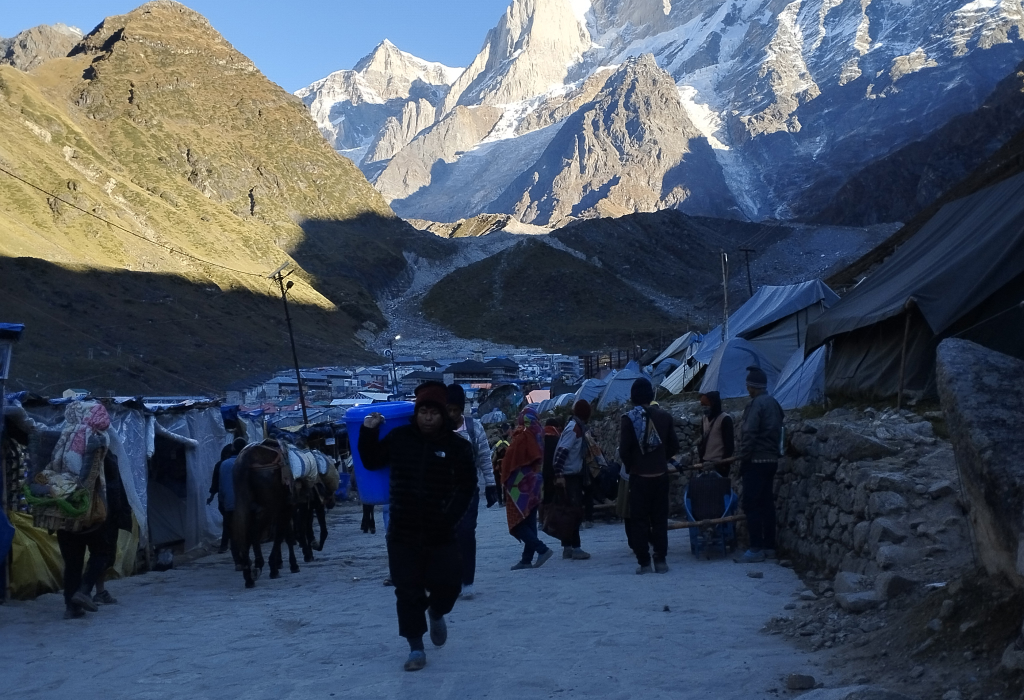
- First-time visitor tips: Trekking early in the morning. Stabilize with trekking poles. Carry your registration numbers and hotel reservations. Pace yourself – it’s not a race.
- Mistakes to avoid: Overpacking; not paying attention to weather variations; not taking time to climb the trail. And never litter, take up all rubbish.
- Altitude sickness tips: Climb gradually. Consume a lot of fluids and rest. Take medication (Acetazolamide) when prescribed by your doctor. In case somebody is extremely ill, apply oxygen or go down.
- Photography etiquette: No cameras or cell phones in the sanctum (they are stored in a locker). Drones are strictly banned. You may take pictures of the scenery outside the temple, but not to the inconvenience of other pilgrims.
- Green tourism: Refillable bottles and cloth bags. Stick to marked trails. Help the locals by purchasing tea, snacks or crafts with the villagers. Give respect to wildlife and vegetation – the environment of Kedarnath is delicate.
These tips can be followed to make the pilgrimage smoother and meaningful.
Close-by Attractions and Prolonged Itinerary.
Tourist Destinations around Kedarnath Temple.
- Triyuginarayan Temple (16 km): Mythical place of marriage of Shiva-Parvati. Its highlight is a burning holy fire (Akhand Dhuni).
- Vasuki Tal: A 4,135 m (approximately 8 km above Kedarnath) lake in the Alps, which involves camping and an additional 2-day hike.
(Other places such as Deoria Tal are adjacent to the Chopta-Tungnath circuit which is described below.)
Kedarnath and Badrinath Dham.
A large number of pilgrims visit Kedarnath and Badrinath within a single trip. Drive via Rudraprayag and Joshimath to Badrinath (approx. 200 km) after trekking Kedarnath. On the way back, there is Badrinath Temple (devoted to Vishnu). This is a full circle of Char Dham of Shiva (Kedarnath) and Vishnu (Badrinath). Before the last darshan, the travelers usually spend the night at Joshimath (the base of Badrinath).
Chopta, Tungnath and Chandrashila Trek Extension.
Chopta (2,680 m) is a meadow plateau commonly referred to as mini Switzerland of India. Chopta has a 3.5 km hiking trail to Tungnath Temple (3,680 m), the highest Shiva temple in the world. Going 1.5 km further past Tungnath is Chandrashila Peak (4,000 m) which has breathtaking 360deg Himalayan views during sunrise. This 2-day trek is usually undertaken by many travelers before or after Kedarnath. It offers a contrasting hiking experience (green fields and conifer forest) and stunning mountain scenery.
(Sample 3-day itinerary of Kedarnath)
- Day 1: Delhi/Haridwar – Sonprayag/Guptkashi (by bus/car); stay at Sonprayag/Guptkashi.
- Day 2: Sonprayag – Gaurikund (drive) – Kedarnath Temple (trek) – back to Gaurikund.
- Day 3: Gaurikund – Rudraprayag/Haridwar (by road back).
Additional days in case you are planning to visit Chopta/Tungnath or Badrinath.
Prefer reading in Hindi?
Read our Kedarnath Temple Complete Guide in Hindi, covering darshan details, history, trekking routes, helicopter services, best time to visit, and travel tips for pilgrims.
Frequently asked questions about Kedarnath Temple.
Does Kedarnath Temple remain open all year round?
No. The temple is open since the end of April or May and closes in October or November. Between November and April it is snow-covered and hence people worship lingam at Ukhimath.
What is the level of difficulty of the Kedarnath trek?
It is of moderate difficulty. The hike covers 16 km to 3,584 m. It needs good stamina. Novices are advised to train, take it slow and stay hydrated. There is a possibility of altitude sickness; oxygen is recommended when necessary. You can use a helicopter in case you cannot walk.
What are the number of days needed between Rishikesh and Kedarnath?
About three days. Day 1: Delhi/Haridwar to Sonprayag/Guptkashi by road. Day 2: Sonprayag to Gaurikund by road, trek to Kedarnath, and back to Gaurikund. Day 3: Rishikesh or Haridwar to Gaurikund. You can add days when you need a rest or you want to see other sites.
Is Kedarnath safe following the 2013 floods?
Yes. The temple has survived the floods of 2013. Since then, the area has been restructured with more robust roads and safety. It is safely visited by thousands of pilgrims every year under strict control.
Is it possible to visit Kedarnath Temple by senior citizens and children?
Yes, with care. Healthy seniors to approximately 70 years old and children over 8 years old can attempt the trek at a slow pace. They ought to acclimatize to the altitude, take water, and take frequent rests. Children of very young age or those with severe health conditions are not supposed to climb and can use a helicopter instead.
Is Kedarnath Yatra online registration compulsory?
Yes. Before going, all pilgrims have to enroll in the Char Dham Yatra. Registration ID and photo ID will be verified at the entrance and temple. No one is allowed to enter without being registered.
How can one get to Kedarnath Temple in the shortest time possible?
The quickest route is through helicopter. A helicopter will take less than ten minutes to Kedarnath, bypassing the trek, Phata or Sitapur. In case you do not fly with a helicopter, the fastest way to go by land is to drive to Gaurikund and walk up (or ride ponies).
Does it have helicopter services that are reliable?
Yes, they are in place and can be counted on April to October. When it is good, they operate on a daily basis. Book in advance online. Flights are cancelled in case of bad weather such as rain or fog. In general, helicopters are safe and convenient in the season.


What I really appreciated was how this guide didn’t sugarcoat the difficulty level like most travel blogs do. The detailed warning about altitude sickness and the steep final 3-4 km climb prepared us mentally for what was coming.
Around the 14 km mark near Singhdul, my wife Priya started complaining about mild headaches and felt a bit dizzy. For a moment, I panicked because we were so close to the temple but she wasn’t feeling well. But then I remembered the acclimatization tips from this guide – rest frequently, drink plenty of water, take deep breaths, and don’t rush.
The guide’s advice about carrying 2-3 liters of water per person saved us that day. We had 3 liters between us and it was just enough. Many trekkers around us were struggling because they underestimated how much water they’d need at high altitude. I saw people buying small bottles for ₹40-50 each at those shops.
Thank you for sharing your experience, Rajesh. 🙏
I’m glad the guide’s notes on Kedarnath trek difficulty, altitude awareness, and hydration helped you and Priya manage the symptoms near Singhdul. High altitude can affect anyone, so pacing well, resting when needed, and carrying enough water are genuinely important.
I appreciate you adding this practical update—it will be helpful for other Kedarnath pilgrims planning their yatra.