

Last Updated: January 2026
This article was updated after my recent visit to Hatu Peak and Hatu Temple. Route conditions, facilities, and travel tips are based on firsthand experience.
Hatu Peak is a lovely hill in the Shimla district of Himachal Pradesh. It is a perfect place for people who love nature, adventure, and peace. Standing at about 3,400 meters, this peak offers amazing views and a peaceful peak. The Hatu Peak Trek is simple, fun, and full of beauty. You can see tall pine trees, green hills, and cool mountain air all around.
At the top, you will find the famous Hatu Temple, a holy place where many people come to pray and feel calm. If you love trekking, biking, or just want to enjoy the natural beauty of the Himalayas, Hatu Peak is a must-visit spot. You can ride your bike up the winding mountain roads or walk through the forest trails to reach the top.
When you stand at the peak, you can see snow-covered mountains, green valleys, and the blue sky all around. It’s a peaceful place where you can relax and feel close to nature. Hatu Peak in Shimla, Himachal Pradesh is truly a perfect mix of adventure, spirituality, and natural beauty.

Difficulty Level
Easy to Moderate
Duration
1–2 Days
Highest Point
11,150 ft (3,400 m)
Total Distance
10–14 km (depending on route)
Base Camp
Narkanda, Shimla District, Himachal Pradesh
Stay Type
Camping near Hatu Peak/ Homestays in Narkanda
Table of Contents
Hatu Peak Trek – Overview, Location & Significance
The Hatu Peak Trek is a short but exciting adventure in Himachal Pradesh. The trek is about 7 kilometers one way from Narkanda to the top, making it a 14-kilometer round trip. Most people can complete it in 6 to 8 hours. Hatu Peak is just 8 kilometers from the beautiful apple town of Narkanda, which is around 65 kilometers from Shimla. It is a popular high-altitude peak offering wide Himalayan views and offers amazing views of the Himalayan mountains. Unlike crowded tourist spots, Hatu Peak is calm and peaceful, filled with the fresh smell of pine trees and the sound of the wind.
For many, Hatu Peak is more than just a trek. It’s a place of faith and nature together. The Hatu Temple on the top is believed to be linked with ancient legends, and many pilgrims visit it to pray and feel blessed. For adventure lovers, the trek offers an exciting mix of easy paths, steep climbs, and sometimes snow during spring. Bikers also enjoy the beautiful mountain roads that twist through apple orchards and green valleys.
Large wildlife generally stays deep inside the forest, away from the main trekking route. The forests here are full of oak and rhododendron trees. Even in 2025, Hatu Peak is less crowded than many popular Shimla viewpoints, which helps preserve its natural charm.
The Hatu Peak Trek is not just a walk—it’s a beautiful journey that connects you with the mountains, the fresh air, and your inner peace.
My Recent Visit to Hatu Peak & Temple (January 2026 Update)
I returned to Hatu Peak and Hatu Mata Temple at the end of January 2026 to monitor the current situation on the ground, the number of people, and the regulations of the temple. Amazingly, there was no snowfall this year and thus the whole route was easily accessible. The fact that there was no snow meant that the number of visitors was significantly less than normal and the place was quiet and peaceful even in the daytime.
The Narkanda to Hatu Peak road was all motorable and the trekking conditions were not difficult with no slippery roads. The climate was not that bad and could be handled with the right winter attire. The walk was not as difficult as it used to be during winter seasons because there was no snow.
The Hatu Mata Temple has strict rules that are observed in order to maintain the sanctity of the place.
- No leather items inside the temple (belts, wallets, shoes)
- Photography not allowed inside the shrine
- No entry fee
- No prasad distribution (carry your own offerings if needed)
Hatu Temple has no prasad distribution system and visitors are not supposed to expect any food or offering within the facility. Here, it is all about prayer, silence and devotion.
A special attraction on this visit was the small lake on the road to the temple, which was totally frozen due to low temperatures. Ice skating was the only activity that was going on in the frozen surface and locals and visitors were enjoying it. There is no boating or other activity in this lake – skating can only be done when it naturally freezes in winter.
In general, my visit to Hatu Peak in January 2026 proved that the mountain is a serene and uncongested place when the snowfall is minimal, and it is ideal for people who want a peaceful mix of spirituality and nature without big crowds.
This information is based on my personal visit and observations made in January 2026.
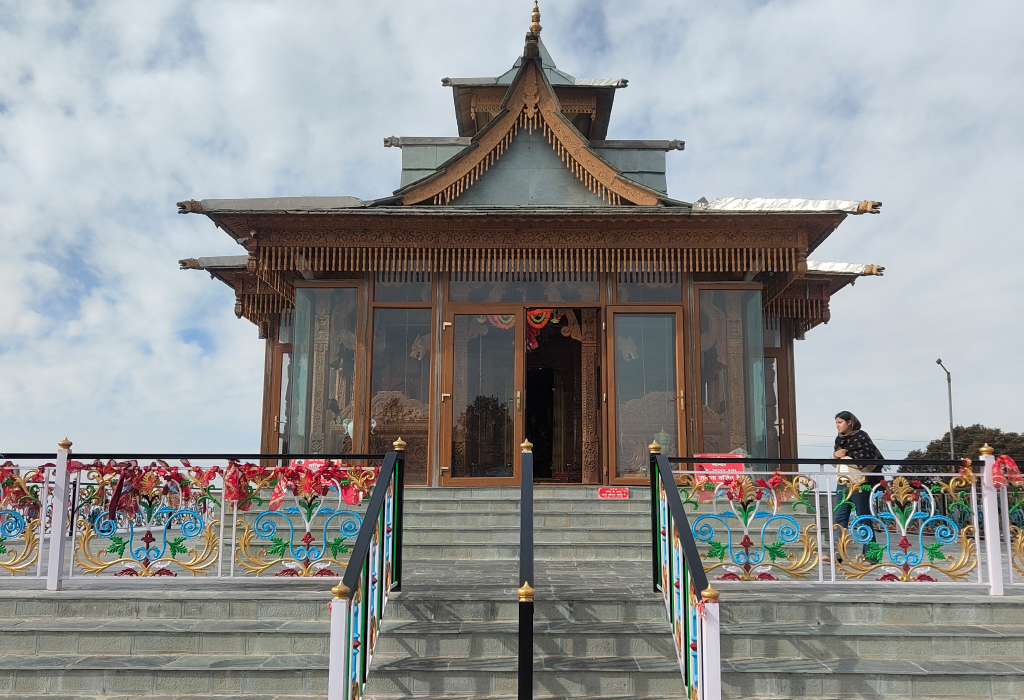 Hatu Temple main view during winter in Himachal Pradesh
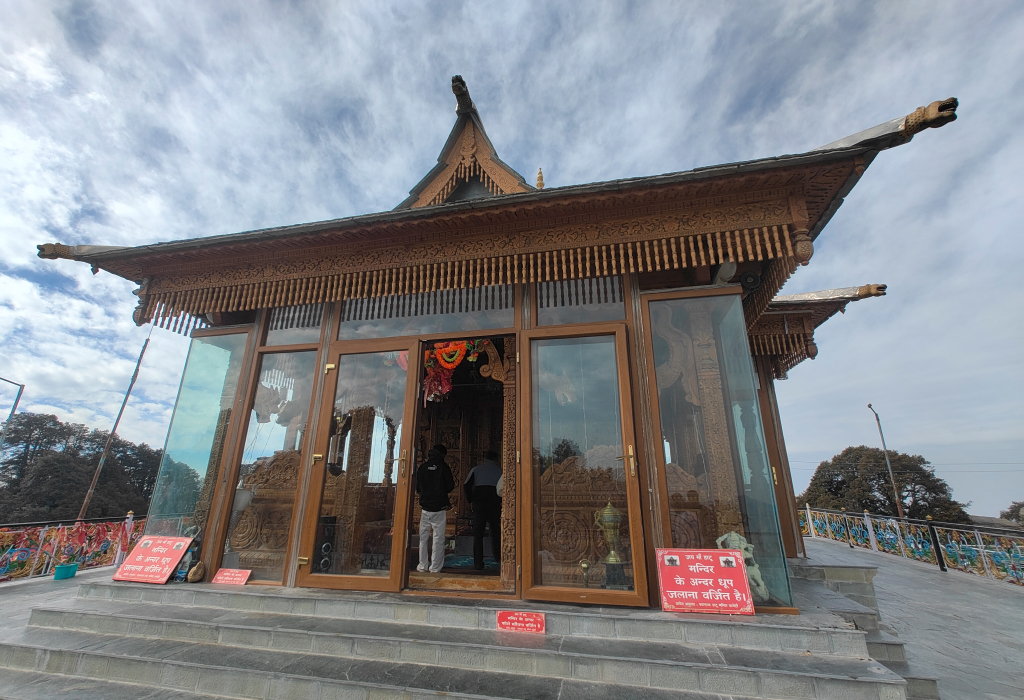 Side view of Hatu Temple campus at Hatu Peak Shimla Himachal Pradesh
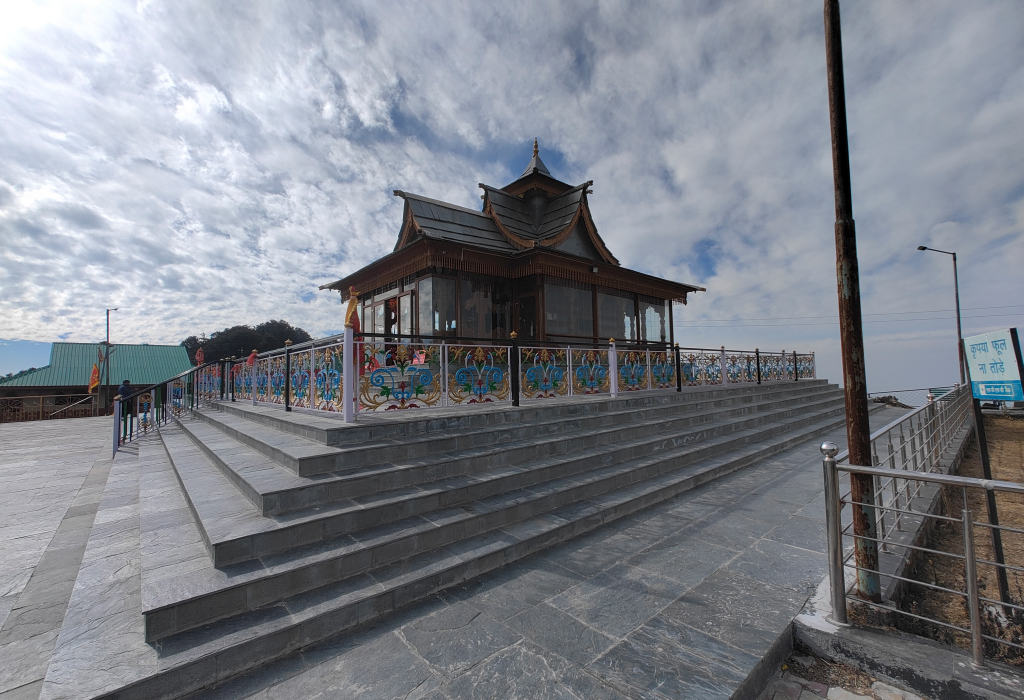 Side view of Hatu Mata Temple showcasing wooden Himachali architecture
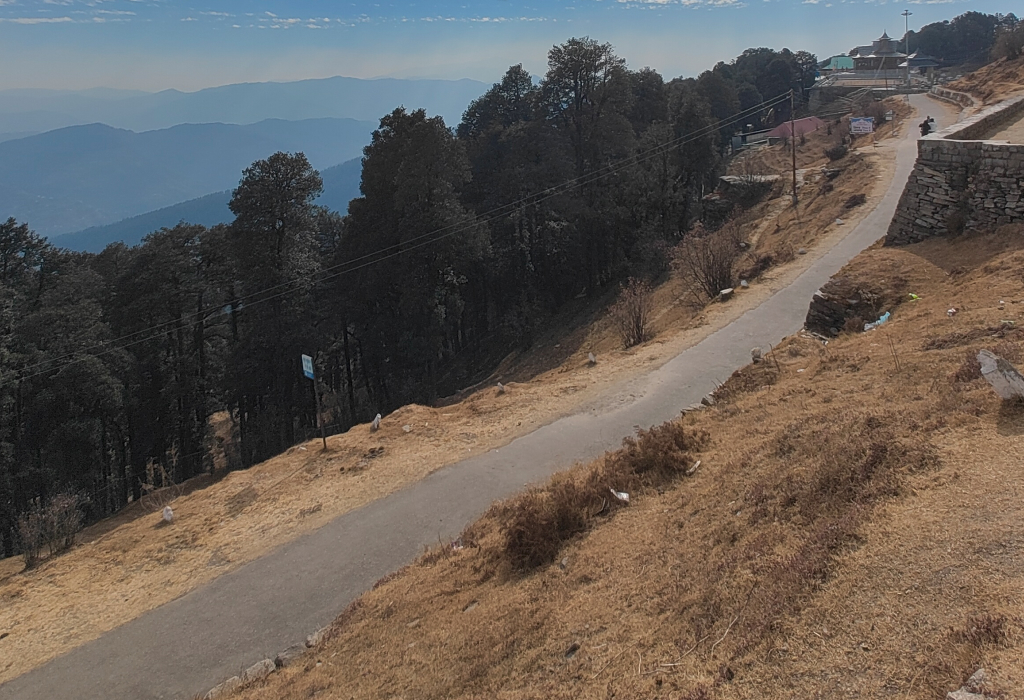 Hatu Mata Temple campus side view surrounded by pine trees
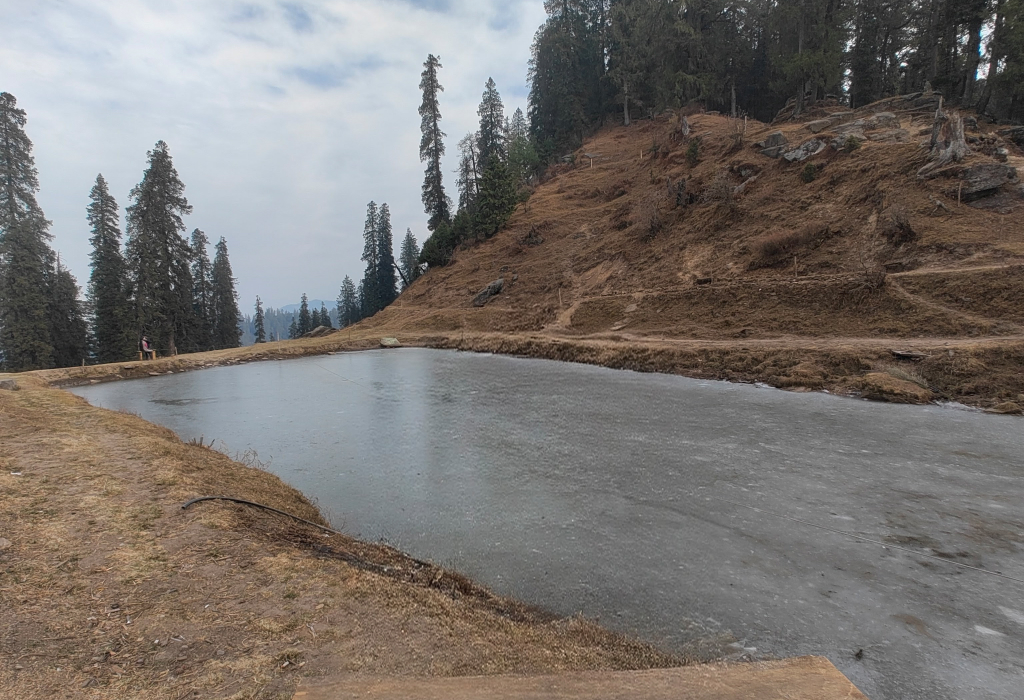 Frozen lake near Hatu Peak in Himachal Pradesh during winter January 2026
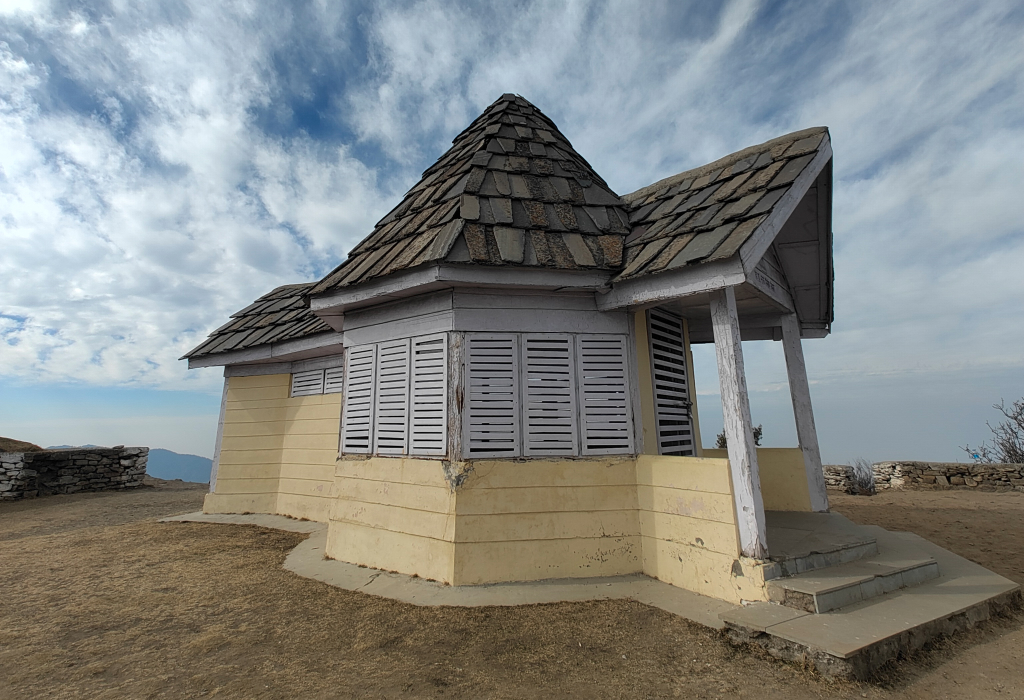 Bheem Chulha room near Hatu Temple associated with Pandava legends
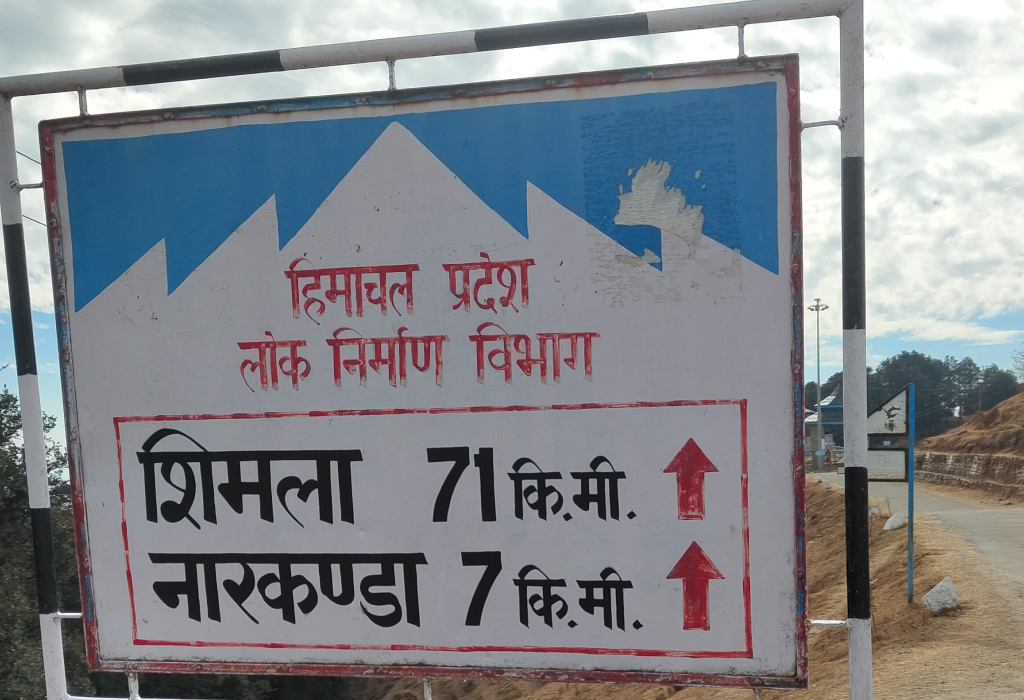 Distance board showing Hatu Peak to Shimla and Narkanda
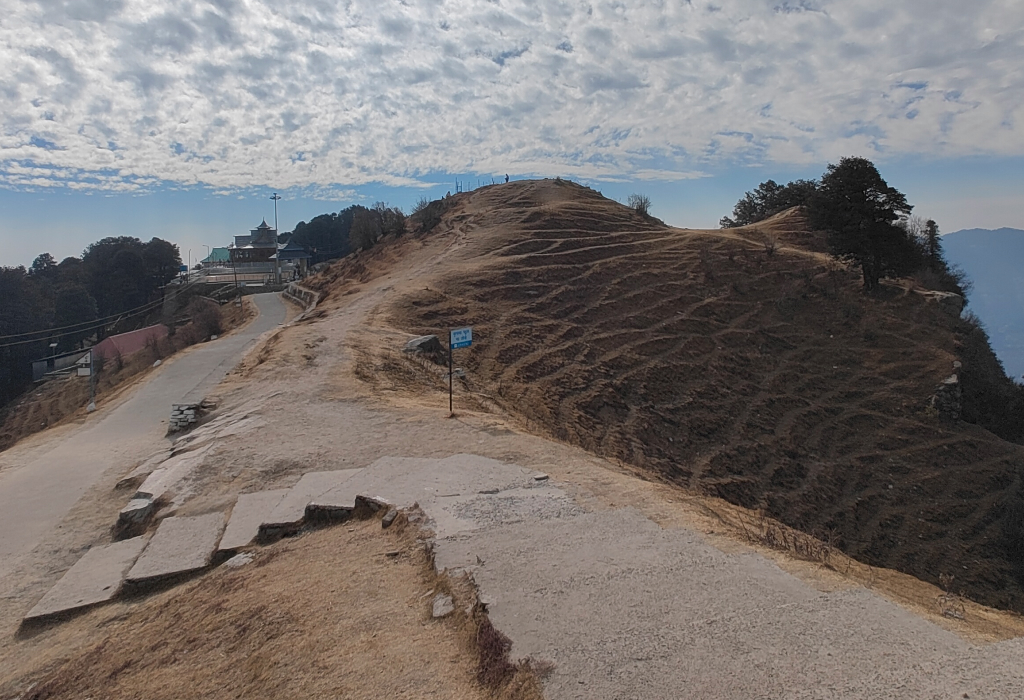 Top view near Hatu Peak Shimla district Himachal Pradesh
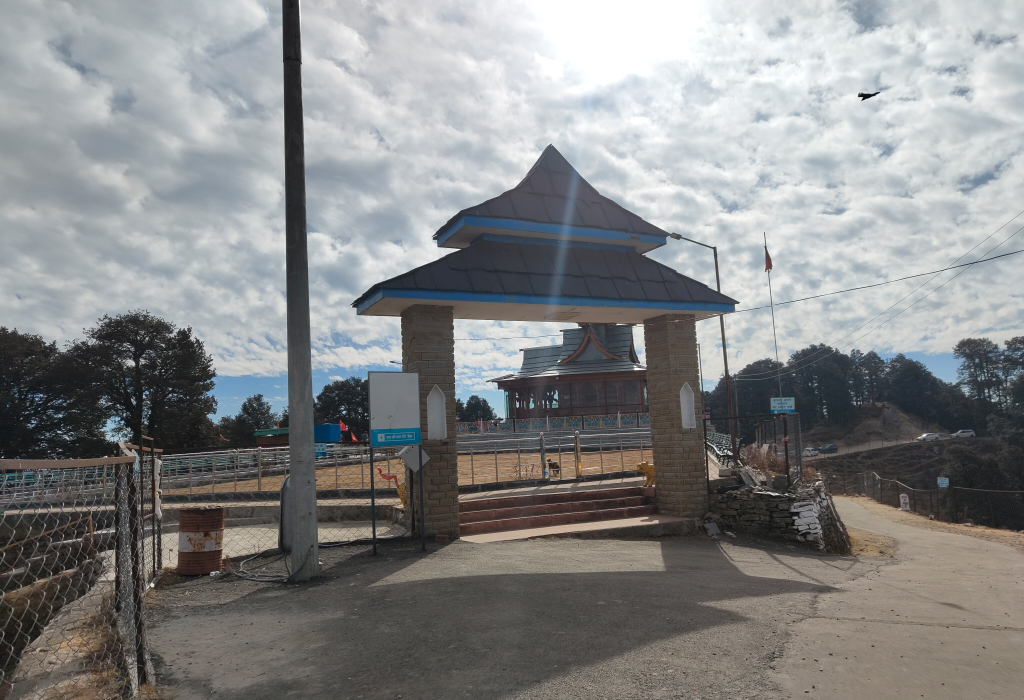 Main entry gate of Hatu Mata Temple at Hatu Peak Himachal Pradesh
History of Hatu Temple – Ancient Legends and Cultural Significance
On top of Hatu Peak stands the beautiful Hatu Temple, a small wooden wonder that is more than 400 years old. Built completely from deodar wood without using a single nail, it shows the amazing skill of Himachali craftsmen. The temple has survived many rainy seasons and snowstorms, yet it still stands strong and peaceful.
The Hatu Mata Temple is dedicated to Hatu Mata, believed to be an avatar of Goddess Kali or Durga. Many local stories connect this temple with the Mahabharata and Ramayana. It is said that the Pandavas stayed here during their 13 years of exile and used a big stone oven called Bheem’s Chulha to cook food. You can still see this stone near the temple, though it is now protected to keep it safe.
Another legend says that Mandodari, the wife of Ravana, came here to pray and find peace after the war in Lanka. For people living in Narkanda and nearby Rohru valleys, Hatu Temple is not just a holy place but a part of their culture. Every year in May, locals celebrate a big fair called Jatra, where people hike up to the temple with offerings of barley, ghee, and flowers. The day is full of music, dance, and devotion under the bright apple blossoms.
When you step inside the temple, the air feels calm and powerful. You can smell incense, hear the gentle sound of bells, and see the fine wooden carvings that tell old stories. Even in 2025, the Hatu Peak Temple has been left mostly untouched to protect its original beauty.

Best Time to Visit Hatu Peak – Weather & Season Guide
Planning your Hatu Peak Trek at the right time makes all the difference. Each season gives this beautiful place in Shimla, Himachal Pradesh, a different charm.
April to June is the best time to visit Hatu Peak. The weather stays pleasant, between 10°C to 20°C, and the mountain turns green with fresh grass and colorful rhododendron flowers. The skies are clear, giving amazing 360° views of the Himalayas. It’s the perfect season for families, trekkers, and pilgrims who want a safe and peaceful hike to the Hatu Temple.
September to November brings cool autumn weather, with temperatures around 5°C to 15°C. The apple orchards turn golden, and the roads stay dry—great for bikers and adventure lovers. This is the best time for photography, especially at sunset when the hills glow under the soft evening light.
Winter, from December to March, turns Hatu Peak into a snowy wonderland. The temperature can drop to -5°C, and snow covers the last few kilometers of the trail. If you love snow trekking, visit between February and March, but make sure to carry warm clothes and crampons for safety. In early November, snow can block the roads, so you might have to walk a few extra kilometers.
Avoid the July and August monsoon season, as the trails get slippery and there’s a risk of landslides. Still, if you love misty forests and quiet walks, this season has its own wild beauty.
In 2025, weather patterns have become a bit unpredictable, so it’s smart to check the IMD forecast before your trip. Visiting Hatu Peak on weekdays is a great tip—it’s much quieter, and you can enjoy the peace of nature without the crowds.
How to Reach Hatu Peak – Via Shimla & Narkanda
Reaching Hatu Peak is a beautiful journey through the hills of Himachal Pradesh. The route takes you from Shimla, also called the Queen of Hills, to Narkanda, a quiet town known for its apple orchards and mountain views.
By Road (Car or Bike)
The Shimla to Narkanda route is about 65 kilometers and takes around 2 to 3 hours by car or bike. The drive on NH-5 is full of stunning mountain curves and scenic spots. You’ll pass through Solan’s pine forests and Theog’s green fields before reaching the apple-covered slopes of Narkanda.
If you’re coming from Chandigarh, the distance is around 170 kilometers. The trip takes 5 to 6 hours, whether you drive or ride a bike. The roads are in good shape after upgrades in 2024, but drive carefully during the monsoon season. Small tea stalls and dhabas along the way are perfect for short breaks and hot chai.
From Narkanda, Hatu Peak is just 8 kilometers away. You can take a jeep or SUV (around ₹1,500 round-trip) or rent a bike (about ₹800 per day). The final stretch is a little steep and rough, but the view and thrill are worth it—especially if you love biking in the Himalayas.
By Train and Air
The nearest airport is Shimla’s Jubbarhatti Airport, about 70 kilometers from Narkanda, and it takes around 2.5 hours to reach by road. You can also fly to Chandigarh International Airport, which is about 190 kilometers or 5 to 6 hours away.
From both airports, you can hire a taxi (₹2,500–₹3,000) or take an HRTC bus (₹200–₹300) to Narkanda. Buses run regularly till about 8 PM.
Another fun option is to take the toy train from Kalka to Shimla. This UNESCO World Heritage route offers amazing views through tunnels and pine-covered hills. From Shimla, you can continue to Narkanda by bus or taxi.
The local government and tourism board have been encouraging more sustainable travel options in recent years.
Hatu Peak Trek Difficulty – Preparation & Fitness Tips
The Hatu Peak Trek is rated easy to moderate, making it a great choice for both beginners and regular trekkers. The trail is about 7 kilometers long one way, with an elevation gain of around 600 meters. On average, it takes 4 to 5 hours to reach the top, walking at a steady pace of 2 to 3 km per hour.
Most of the trail passes through quiet pine and oak forests before opening up into grassy meadows near the summit. During winter, snow can make the path a little slippery, so proper shoes and trekking poles really help. For pilgrims, the walk feels peaceful and spiritual; for trekkers, it’s a good fitness test; and for bikers, it’s the perfect cool-down after a long ride.
How to Prepare for the Hatu Peak Trek
Before your trip, do a bit of fitness training. Start by walking briskly for 30 minutes, three times a week, aiming to cover 5 kilometers in under an hour. Add simple strength exercises like squats, lunges, and planks to build leg and core strength. Some light yoga or stretching helps prevent muscle pain.
Spend a day in Narkanda (2,700 meters) to get used to the altitude before starting the trek. A few people—around 1 in 10—may feel light headaches due to the thin air, so take it easy.
Pack smart: wear layers (a light wool base, a warm fleece, and a windproof jacket). Carry trekking poles to reduce strain on your knees. Drink plenty of water (3 to 4 liters a day) and eat small snacks like nuts or dates to keep your energy up.
You can hire a local guide for around ₹500 per day—a good choice if you’re trekking alone. Guides often share local stories and help spot edible plants or safe routes. In 2025, trekking apps like AllTrails and Trek Planner India now show real-time trail updates, helping you plan safely and avoid surprises.
Hatu Peak Trek Itinerary – Day-by-Day Route Plan
This 2-day Hatu Peak travel plan helps you enjoy the best of the trek, the Hatu Temple, and the peaceful beauty of nature. It’s perfect for a full weekend trip, but can easily be adjusted for day visitors too.
Narkanda → Gujjar Kotha (Forest Trek & Camping)
- 📍 Start Point: Narkanda (2,700 m)
- 🏕️ Destination: Gujjar Kotha Campsite (approx. 2,900 m)
- 🥾 Trek Distance: ~7 km round trip
- ⏱️ Trek Time: 2–3 hours (easy trail)
- 🌲 Route Highlights: Jeep road through deodar and blue pine forests, gentle climb of 200 m, lively forest sounds, and scenic views.
- 🍴 Food Stop: Dhaba breakfast in Narkanda (parathas ₹50) + momo stalls near Gujjar Kotha (₹100/plate, seasonal).
- 🏕️ Camping Spot: Gujjar Kotha – pondside meadow with wildflowers, sheltered from wind.
- 🌌 Evening: Bonfire and stargazing — clear skies reveal the Milky Way above the ridges.
Gujjar Kotha → Hatu Peak Summit → Narkanda (Temple Visit & Return)
- 📍 Start Point: Gujjar Kotha (early morning, 5 AM)
- 🏔️ Destination: Hatu Peak Summit (3,400 m)
- 🥾 Trek Distance: ~10.5 km round trip
- ⏱️ Trek Time: 4–5 hours total
- 🌄 Trail Highlights: Oak and rhododendron forests leading to open meadows; sunrise ridge views.
- 🛕 Main Attraction: Visit Hatu Temple, see Bheem’s Chulha, and enjoy panoramic Himalayan views — Churdhar, Kinner Kailash, and Shimla hills.
- 🍱 Meals: Packed aloo sabzi or light lunch at summit; descend via motor road for variety.
- 🚶♂️ Return: Reach Narkanda by 4 PM.
My Personal Experience – Reflections from the Trail
October still shines bright in my memory — the month I rode my bike to Hatu Peak. I started early from Chandigarh, just as the fog was lifting and the sun was rising. The road twisted through Solan’s pine hills, past Shimla’s old colonial charm, and into Theog’s warm tea stalls and Narkanda’s apple orchards. It took me about five and a half hours to reach the base, riding my little Splendor 100cc, the cool mountain wind washing away every bit of city stress.
At the Hatu Peak trailhead, a light layer of snow hinted that winter was near. I parked my bike, tied my boots, and began the 5-kilometer trek to the top. The forest was quiet—just the sound of my footsteps, my heartbeat, and a lone eagle gliding in the clear blue sky.
When I reached the summit, the air felt sacred. The Hatu Temple stood tall and calm, built of old wood that creaked softly in the breeze. The smell of pine and marigolds filled the air. According to local stories, this place is connected with the Pandavas, and the stone near the temple is referred to as ‘Bheem ki Chulha’ by residents. to as ‘Bheem ki Chulha’ by residents.
There were hardly any people around — just silence, wind, and the whisper of nature. That night, I camped near the temple under a sky full of stars. The view was so beautiful it didn’t feel real. When the first light of dawn touched the mountains, it felt like a blessing. My legs were tired, my heart was full, and I knew this Hatu Peak Trek had changed something in me.
The mountains always speak — you just have to be quiet enough to listen.
Estimated Trip Budget for Hatu Peak Trek
To help you plan, here’s a breakdown of typical expenses for a 2-day Hatu Peak trip from Shimla (per person basis, in INR):
|
Expense Category |
Approx. Cost (INR) |
Details |
|---|---|---|
|
Travel (Shimla to Narkanda) |
₹70 – ₹150 (bus)or ₹2,000 (taxi) |
Shimla to Narkanda bus fare ~₹70 (2.5–3 hrs). Private taxi ~₹2000 one-way (split if in group). |
|
Local Transport (Narkanda to Hatu) |
₹0 – ₹800 |
Trek on foot (₹0) or local taxi/jeep to trailhead ~₹500–₹800 round trip. Bike rental Shimla ~₹1000/day (fuel extra). |
|
Accommodation (Narkanda) |
₹1,000 – ₹1,500 (budget) ₹2,500 – ₹4,000 (mid-range) |
Budget guesthouse or homestay per night. Mid-range hotel (e.g. Hotel Hatu HPTDC or resort). Prices for double room – can be shared. |
|
Camping Equipment |
₹500 – ₹800 |
Tent rental ~₹500 per night sleeping bag & mat ~₹300 if needed. (Bring your own to save this cost.) |
|
Food (Meals & Snacks) |
₹500 – ₹800 |
Narkanda dhaba meal ~₹150, tea/snacks ₹50. Carry dry snacks for trek (~₹100). 2 days of meals ~₹600. |
|
Guide (Optional) |
₹800 – ₹1,200 |
Local guide for a day’s trek (optional, per group). Not required for most, but budget if you plan to hire one. |
|
Miscellaneous (Permits, Tips) |
₹0 – ₹200 |
No trek permit fees. Temple donation or tips to guide/porter at your discretion (₹100-200). |
Hatu Mata Temple – Sacred Summit Shrine
The Hatu Temple on top of Hatu Peak is not huge or flashy — but that’s what makes it so special. Its pagoda-style wooden roof, beautiful carved windows, and brass idols show the simple yet strong spirit of Himachali art. Built from local deodar wood, the temple stands quietly against the wind, carrying stories from hundreds of years ago.
The temple is open from dawn to dusk, and there’s no entry fee. It becomes most lively on Tuesdays and during Navratri, when devotees come with prayers and offerings. The sound of bells and conch shells echoes across the mountains, creating a powerful yet peaceful feeling.
Inside the shrine, Hatu Mata — believed to be an avatar of Goddess Durga — sits in her calm but strong form. Many locals believe she protects travelers and villagers from natural disasters. Records from the old Bushahr kingdom mention this temple as a sacred place since the 17th century.
You can also see old silver-plated bells, donated by devotees in the 1800s, and faded wall paintings showing scenes from the Pandavas’ time. These details add to the temple’s charm and sense of history.
For me, what makes the Hatu Mata Temple truly divine is the silence after prayers — when the chants fade, and all you can hear is the mountain wind. It’s a moment of deep peace that stays with you long after you leave.
In 2025, the temple has added solar-powered lamps, allowing visitors to stay for quiet evening prayers while keeping the area eco-friendly. It’s a beautiful blend of tradition and sustainability — just like Himachal itself.
Hatu Peak Camping – Overnight Under the Stars
Hatu Peak Camping is one of the most peaceful and magical experiences in Himachal Pradesh. With no city lights around, the night sky comes alive — the Milky Way shines bright, and the stars look close enough to touch. It’s a perfect escape for those who love nature, adventure, and stargazing.
The best camping spots near Hatu Peak are Gujjar Kotha and Jor Bagh.
- Gujjar Kotha has flat ground near a small pond, making it ideal for setting up tents. The place is quiet, safe, and protected from strong winds.
- Jor Bagh, about one hour southeast of Hatu Peak at around 3,350 meters, offers open meadows surrounded by rhododendron trees. It’s peaceful, with hardly any crowds — perfect for a quiet night under the stars.
You can rent tents for around ₹200 per night, or join guided camps (around ₹1,000 per person) that include meals, bonfires, and even stargazing sessions using apps that connect stars to ancient myths.
During my October camping night near Hatu Temple, the view was unforgettable. The sky stretched wide with millions of stars, and the soft sound of the wind mixed with distant calls from the valleys. When morning came, the first rays of sunlight touched the peaks — a moment of pure calm and beauty.
If you plan to camp at Hatu Peak, pack well:
- Thermal clothes (temperatures can drop to 2°C at night)
- Headlamps or flashlights
- Reusable bottles and biodegradable waste bags — follow the Leave No Trace rule to protect the mountain’s natural beauty.
Camping at Hatu Peak is not just about sleeping outdoors — it’s about connecting with nature, feeling the silence, and resting where ancient travelers once dreamed.

Accommodation near Hatu Peak – Hotels & Homestays in Narkanda
Narkanda’s Hatu Peak hotels offer something for every budget, all located close to the Hatu Peak trek starting point.
- Budget stay: Apple Valley Homestay (₹800/night) – a cozy, family-run place with orchard views and tasty home-cooked thalis, including hot local siddu bread.
- Mid-range stay: Hotel Apple Blossom (₹1,500/night) – clean rooms, balconies overlooking the Kinnaur ranges, and Wi-Fi for easy route planning.
- Luxury stay: The Hosteller Narkanda (₹2,500/night) – offers dorms or private rooms with a ski-lodge feel and warm fireplaces during winter.
Homestays like Basera Holiday Home stand out for their local touch and warm Kangra Valley hospitality, where guests enjoy stories and pahadi chai.
A few homestays and lodges in Narkanda now follow eco-friendly practices, such as using solar lighting or minimizing plastic waste. Booking is easy through popular apps. Every stay here feels personal—like being part of the mountains and their calm rhythm.
Nearby Attractions around Hatu Peak – Lakes, Meadows & Heritage
The area around Hatu Peak is full of peaceful and beautiful spots that turn a short trek into a memorable journey.
Jor Bagh Meadows – Peaceful High-Altitude Camping Spot
Just 3 km southeast of Hatu Peak (around 1 hour’s walk at 3,350 meters), Jor Bagh Meadows is a perfect place for camping or relaxing after the trek. These green meadows stay covered with edelweiss flowers in summer and are surrounded by tall oak trees. The forests around Hatu Peak are home to Himalayan birds and small animals. Visitors may occasionally spot pheasants, monals or hear rustling in the woods. It’s a quiet and open place to enjoy a picnic or simply watch the clouds move over the Himalayas.
Tani Jubbar Lake – Calm Mountain Lake Near Narkanda
Located 12 km west of Hatu Peak (around a 30-minute drive), Tani Jubbar Lake is a peaceful mountain lake at about 2,700 meters. The clear water reflects the pine trees and snowy peaks around it, making it one of the most photogenic spots near Narkanda. Tani Jubbar Lake is a peaceful spot for photography and short nature walks. Local legends say the lake is protected by a Yaksha (divine spirit) — many visitors dip a toe for good luck.
Kotkhai Palace – Historic Gem of the Pabbar Valley
About 20 km south of Hatu Peak (a 45-minute drive), Kotkhai Palace is a beautiful 17th-century wooden palace built by the rulers of the Bushahr kingdom. It sits on a ridge overlooking the Pabbar Valley, with carved wooden balconies decorated with mythical creatures. Entry is free and open from 9 AM to 5 PM. The palace has deep historic ties to the Hatu Temple, making it a must-visit for anyone interested in the culture and history of Himachal Pradesh.
Travel Tips for Hatu Peak Trek – Safety, Packing & Etiquette
Safety should always come first on the Hatu Peak Trek. Trek in a group of at least three people, and always inform locals or your homestay about your plans before heading out. Carry a valid ID card, a small first-aid kit (including Diamox for altitude sickness and Volini for muscle pain), and offline maps, as the mobile signal often disappears above 3,000 meters.
The weather in the Himalayas can change quickly, so pack wisely — a rain poncho, UV-protection sunglasses (snow glare can hurt your eyes), and warm layers are a must.
Trekking Essentials
- Hydration: Carry at least 3 liters of water or a hydration bladder, plus water purification tablets.
- Nutrition: Pack energy bars and dry fruits — aim for about 2,500 calories per day on the trek.
- Gear: Wear sturdy trekking boots, and carry microspikes in winter for icy trails. A multi-tool is always handy.
- Eco-friendly items: Bring a reusable bottle and avoid plastic waste. Littering can result in a ₹500 fine.
Local Etiquette and Rules
The Hatu Temple is a sacred place — always remove your shoes before entering, and keep the surroundings quiet. Avoid loud music or shouting on the trail.
Support the local community by buying fresh apples (₹100 per kg) or tipping your guides fairly. If you’re traveling by bike, always wear a helmet and follow speed limits, especially near villages and wildlife areas.
Since 2025, drones are banned around Hatu Peak to protect the peace and wildlife. Enjoy the moment — capture it with your heart, not just your camera.

Hatu Peak Trek FAQs – Common Questions Answered
1. Do I need a guide or permit for the Hatu Peak trek?
No, you don’t need any permits for the Hatu Peak Trek — it’s open to everyone. However, hiring a local guide (₹400–₹600 per day) is a smart idea, especially for beginners or during snowy months. Guides know local stories, safe shortcuts, and can help if you’re unsure of the trail. If you’re trekking solo, start mid-morning so you’ll meet other travelers along the way.
2. Is the Hatu Peak Trek safe for solo and female travelers?
The Hatu Peak Trek is very safe for solo and female travelers. The local people (paharis) are kind and helpful, treating visitors like family. Many solo female travelers visit Hatu Peak safely every year.
3. Can you camp at the top of Hatu Peak?
Camping is not allowed directly at the summit to maintain the sanctity of Hatu Temple. But you can camp just outside the temple area or at Gujjar Kotha, a short distance away. Bonfires are not allowed near the shrine. There’s no permit required, but it’s best to register at the forest post before camping.
4. What are the accommodation options around Hatu Peak?
The nearby town of Narkanda has over 50 stay options for all budgets — from cozy homestays (₹800/night) to mid-range hotels (₹1,500/night) and campsites (₹1,000/night). It’s best to book early on weekends, as it’s a popular spot. In 2025, many places are eco-friendly, using solar power and offering sustainable stays.
5. Are food and water available during the trek?
There are no shops or stalls on the Hatu Peak trail, so it’s best to carry your own food and water. You can find basic meals like rotis and thalis at Narkanda dhabas, but once you start trekking, options are limited. Only during May do a few Gujjar stalls open near the trail. Always boil or filter water before drinking — staying hydrated is key at high altitude.

This is one of the most detailed and practical guides on the Hatu Peak Trek I’ve read. The January 2026 update is very helpful, especially the road condition, temple rules, and winter travel tips. The real photos and personal experience make this guide much more trustworthy than generic travel blogs. Anyone planning a Hatu Peak or Hatu Temple visit from Narkanda or Shimla should definitely read this before going.
Thank you so much, Sejal 🙏
I’m really glad the January 2026 update and the latest Hatu Peak road + temple rules helped you. I’ll keep this Hatu Peak Trek guide updated with fresh travel tips and new photos. If you visit in another season, feel free to share your experience here—it will help other travelers too.
I found the article highly educative. The chapters about the confluence of rivers, ancient myths, and pilgrimage paths are well-written. The cultural etiquette and the temple descriptions provide a good understanding of local traditions. It is a convenient guide to students, tourists, and anyone interested in knowing about Devprayag.