
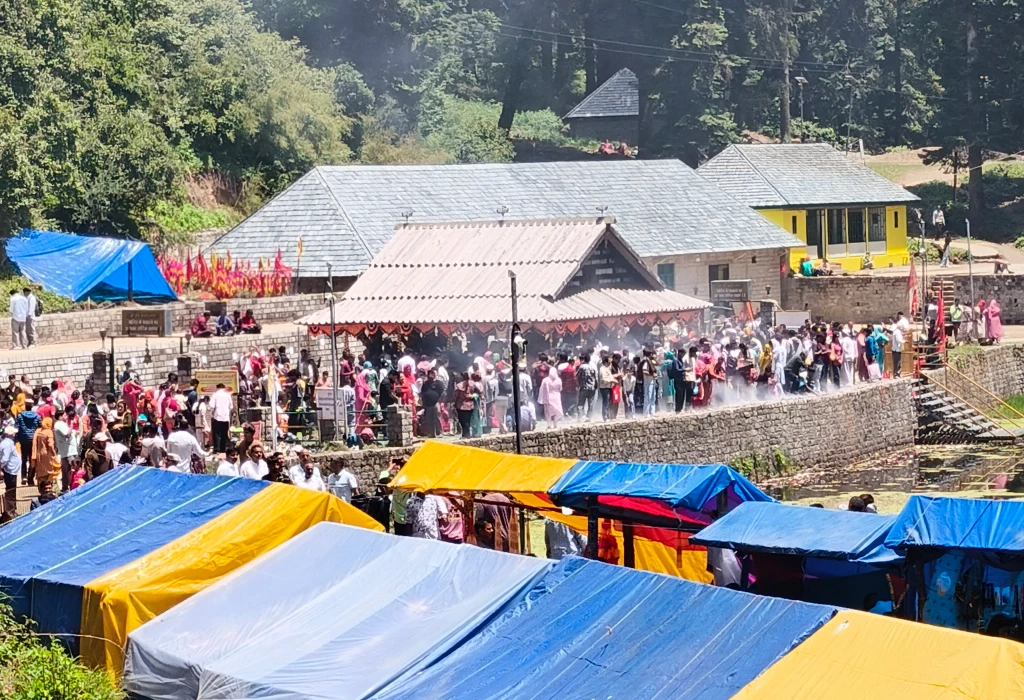

High in Himachal’s Mandi district, the Kamrunag Temple sits beside a small, still lake that locals treat as one of the most sacred spots in the state. People come for the deity Kamrunag also called Bada Dev and for the strange sight of a lake said to hold gold and silver that no one will touch.
I made the climb myself in June 2026, partly because the details online didn’t add up. Distances, timings, even the temple’s exact location were listed differently on almost every website.
This guide fixes that. You’ll get the history, the Mahabharata legend, the real trek facts, the weather, and honest tips written from the ground, not copied from a brochure.
ALSO AVAILABLE IN HINDI
कमरूनाग मंदिर गाइड हिंदी में:- हिंदी में पढ़ें →
Table of Contents
What Is Kamrunag Temple and Lake?
Quick answer: Kamrunag Temple is a high-altitude shrine in Mandi district, Himachal Pradesh, dedicated to Kamrunag Devta (Bada Dev), a rain deity linked to the Mahabharata. Beside it lies the sacred Kamrunag Lake at about 3,334 m, where devotees offer coins and jewellery for their wishes.
In July 2020, the Himachal Pradesh State Biodiversity Board began the process to designate Kamrunag Lake and its surroundings a Biodiversity Heritage Site, to protect the area’s rare alpine plants and trees. The temple and lake together form one of Mandi’s most visited pilgrim and trekking destinations.
Mandi itself is often called “Chhoti Kashi” for its sheer number of temples, and within Himachal Pradesh tourism, Kamru Nag ranks among the most revered of the district’s hill deities.
Where Is Kamrunag in Mandi District?
Kamrunag lies in the Mandi district of Himachal Pradesh, roughly 46 km from Mandi town, reached from the small road-head village of Rohanda.
The temple sits near 31.47°N, 77.05°E not the 31.78°N figure several travel sites still copy. Getting this right matters if you’re plotting the route on a map.
Rohanda to Kamrunag Temple Trek Route
The real trek to Kamru Nag starts at Rohanda village and climbs to the temple and sacred lake at 3,334 m. This is the accurate route, using verified coordinates — not the conflicting figures travel sites publish.
Open route7:00 AM
Rohanda (Trek Start)
Locality
The trailhead. Last point reachable by road — park here, and a board marks the temple 5.5 km uphill.
11:00 AM
Bada Dev – Kamrunag Temple
Temple & sacred lake
The shrine of Kamru Nag beside the lake, about a 3-hour climb through deodar and oak forest.
Map: Guides of Heaven · Google My Maps.
Kamrunag Temple vs Kamrunag Lake: Same Place?
Yes they are the same destination. The temple and the lake sit side by side at the top of the trek. “Kamrunag” refers both to the deity and to the place, which is why the two names get used interchangeably online.
Who Is Kamrunag Devta (Bada Dev)?
Kamrunag Devta, respectfully called Bada Dev (“the great god”), is worshipped across Mandi as a rain deity and a guardian believed to grant honest wishes.
Like other “Nag” (serpent) deities of Himachal for example the serpent god honoured at Bhagsu Nag Temple Kamru Nag holds a senior place among the region’s village gods.
✦ In Mandi’s famous Shivratri fair, the order in which deities arrive carries real weight and Kamru Nag is traditionally among the most respected, a status most travel guides skip entirely.
How High Is Kamrunag Lake?
Kamrunag Lake sits at about 3,334 metres (10,938 feet) above sea level. That altitude is why the air feels thin and the wind stays cold even on a summer afternoon.
Which god is Kamrunag? (कमरुनाग कौन सा भगवान है?) A revered rain deity, Bada Dev, identified with the Mahabharata warrior Barbarika.
Kamrunag Temple History and Legend
Quick answer: Kamrunag’s story reaches back to the Mahabharata. The deity is widely believed to be Barbarika the mighty warrior whose head was granted the boon to witness the great war from above.
The Mahabharata Connection of Kamrunag
Local belief ties this lake to the Pandavas, and especially to Bhima, during their long exile in the hills. The legend gives the spot its deep, ancient pull for pilgrims.
The same exile-era thread runs through other Himachal sites, such as the Pandava-linked Masroor Rock-cut Temple in Kangra.
Barbarika: The Warrior Who Became Bada Dev
Barbarika (also spelled Barbrik), the grandson of Bhima, pledged his head to Lord Krishna before the Kurukshetra war. Granted the sight to watch the battle, he is revered as Kamru Nag in Himachal and as Khatu Shyam in Rajasthan.
✦ This is why some devotees ask “Kamrunag kiska avatar hai?” the deity belongs to the Krishna–Barbarika tradition, not a separate local-only god.
For another legend-rich temple-trek nearby, see Bijli Mahadev Temple in Kullu.
कमरूनाग मंदिर का इतिहास (History in Hindi)
कमरूनाग मंदिर हिमाचल प्रदेश के मंडी ज़िले में स्थित एक प्राचीन देव-स्थल है। मान्यता है कि कमरूनाग देवता वर्षा के देवता हैं और महाभारत काल से जुड़े हैं। कथाओं के अनुसार कमरूनाग असल में बर्बरीक हैं — भीम के पौत्र जिन्होंने युद्ध से पहले अपना शीश दान कर दिया था। श्रद्धालु झील में सोना-चाँदी और सिक्के अर्पित करते हैं और मानते हैं कि सच्चे मन की मुराद यहाँ पूरी होती है। हर साल जून में यहाँ बड़ा मेला लगता है, जिसमें दूर-दूर से लोग दर्शन के लिए आते हैं।
Kamrunag and Khatu Shyam: Are They the Same?
Quick answer: Partly. Both Kamrunag and Khatu Shyam come from the same figure the Mahabharata warrior Barbarika but they are worshipped as two different shrines in two different states.
How One Story Created Two Shrines
In the legend, after Barbarika offered his head, it was honoured at Khatu in Rajasthan, where he became Khatu Shyam. In the Himachal hills, the same warrior-deity is revered as Kamru Nag, the rain god of Mandi.
What Makes Kamrunag Different from Khatu Shyam
| Aspect | Kamrunag (Himachal) | Khatu Shyam (Rajasthan) |
| Location | Mandi hills; shrine beside a lake | Sikar; large temple town |
| Worshipped as | Rain deity, Bada Dev | Shyam Baba (Krishna’s boon) |
| Getting there | About 5.5 km forest trek | Easy road access |
✦ Most “are they the same” articles answer only yes or no. The fuller truth is one story with two regional identities which is exactly why both names surface in the same Mahabharata searches.
The Mystery of Kamrunag Lake
Quick answer: The mystery of Kamrunag Lake is its “treasure“: devotees have dropped gold, silver and coins into the water for generations, yet no one ever removes any of it.
Himachal has several revered alpine lakes — from Kamrunag to the trekking favourite Kareri Lake — but few carry a treasure legend quite like this one.
Why Devotees Offer Gold and Silver
Offerings are how a vow is completed. The belief is simple: you ask Kamru Nag revered as the lord of rain for a wish, and once it is granted you return to drop gold, silver or coins into the lake in thanks. Taking anything back is unthinkable, because locals believe the deity himself guards the water.
Simple aarti and prayers are offered at the shrine through the day. There’s no ticketed, elaborate ritual it stays very much a community affair.
The Lake’s Guardian: Shesha Naga
Folklore says the lake is watched over by a serpent guardian, often linked to Shesha Naga. That belief is the reason the water and its offerings are left completely untouched.
Fact vs Faith: What I Saw at the Lake
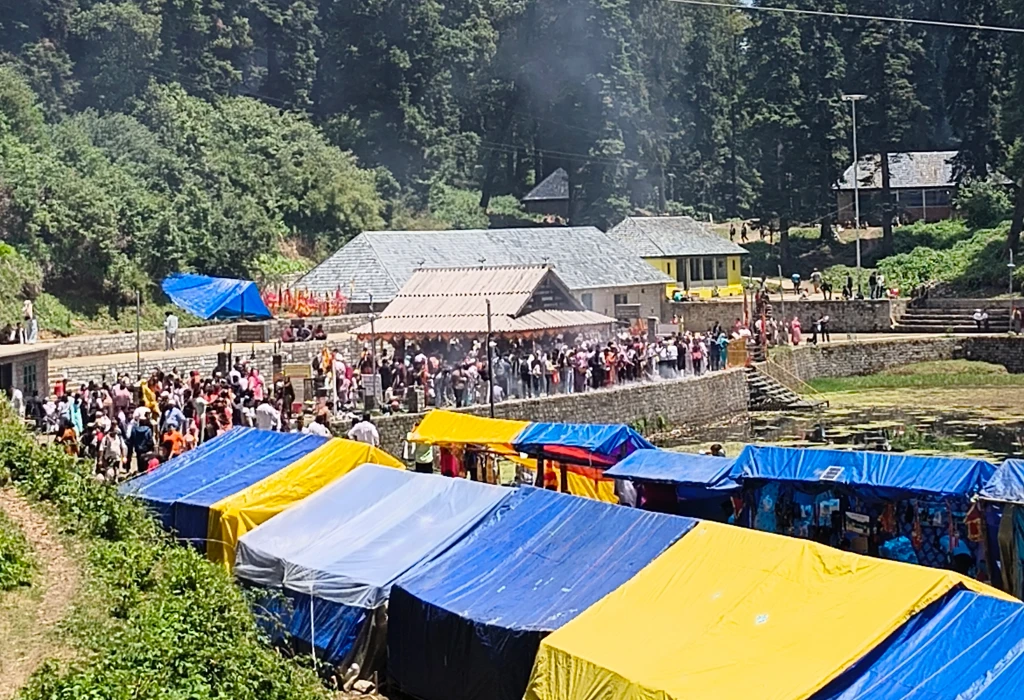
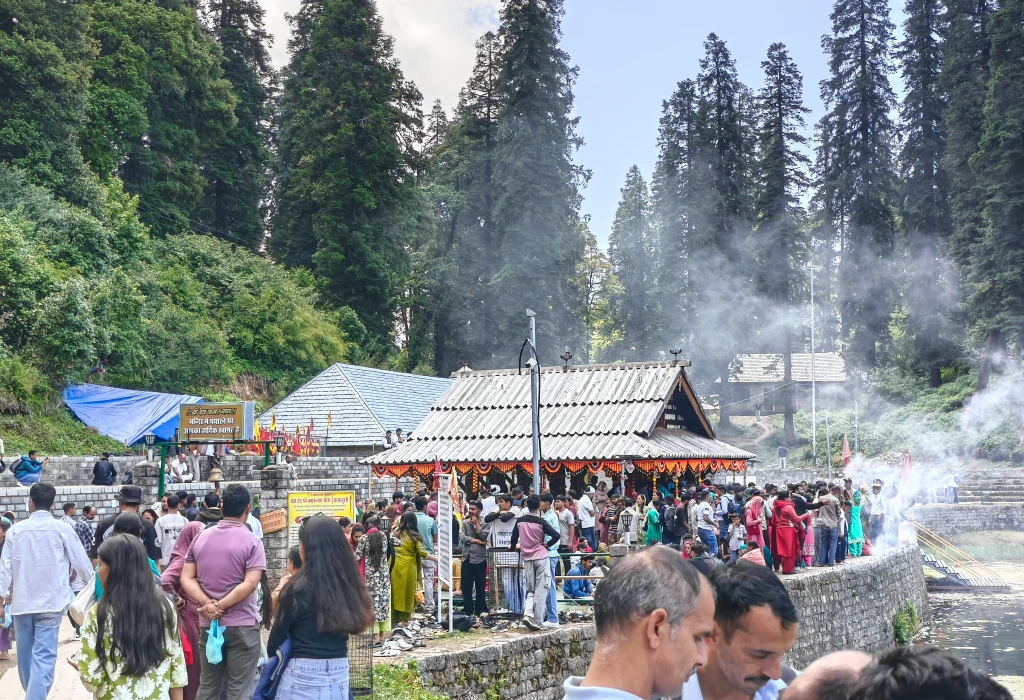
When we reached the top it was packed with devotees, and we did darshan at the shrine. The lake itself is smaller and calmer than the “crores of treasure” headlines suggest what is unmistakably real is the discipline of belief.
People add a coin and step back without a second glance. Whether a fortune truly lies beneath is faith not a verified fact.
One moment stayed with me. Soon after we ate, the sky right above the temple suddenly darkened and clouded over only over the shrine before clearing again a little later. For a deity known as the lord of rain, the timing was hard to ignore.
What is the mystery of Kamrunag Lake? (कमरुनाग झील का रहस्य क्या है?) Untouched offerings of gold and silver, protected by generations of belief.
How to Reach Kamrunag Temple
| Quick answer: To reach Kamrunag, travel to Mandi, drive to Rohanda village (the road-head), then trek uphill through forest to the temple and lake at the top. |
Getting to Rohanda: Air, Rail and Road
Many pilgrims pair the trip with other Kangra–Mandi temples, such as Baijnath Temple, on the way in.
- By road: Rohanda is about 46 km from Mandi; shared taxis and local buses run from Mandi town.
- From Chandigarh: roughly 200 km via Sundernagar to the Rohanda road-head the route we rode in on.
- Alternative trail: a second route begins near Chail Chowk for those approaching from that side, roughly a 2–3 hour climb.
- Distance from your location: search “Kamrunag Temple” on Google Maps and set your own city as the start most apps route you to Rohanda, the last motorable point.
Nearest Airport, Station and Bus Stops
- Airport: Bhuntar (Kullu), about 60–70 km away.
- Railway: Joginder Nagar narrow-gauge line; most travellers come via Chandigarh.
- Bus: HRTC buses to Mandi, then local transport to Rohanda.
Treat all distances as approximate mountain roads and diversions change travel times.
Rohanda to Kamrunag: The Trek Stage by Stage
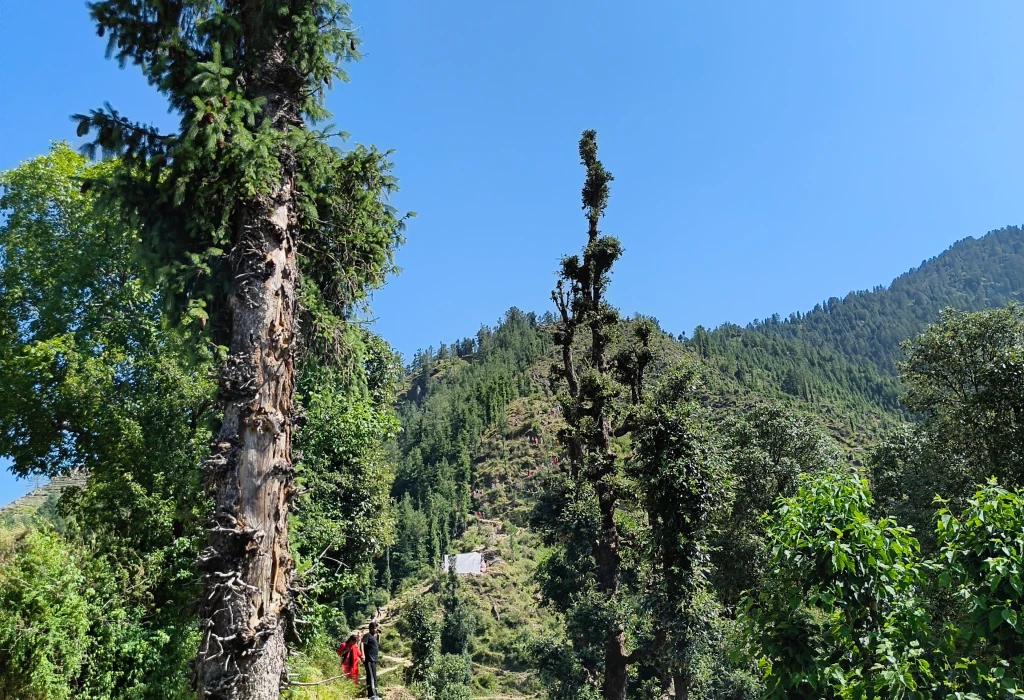
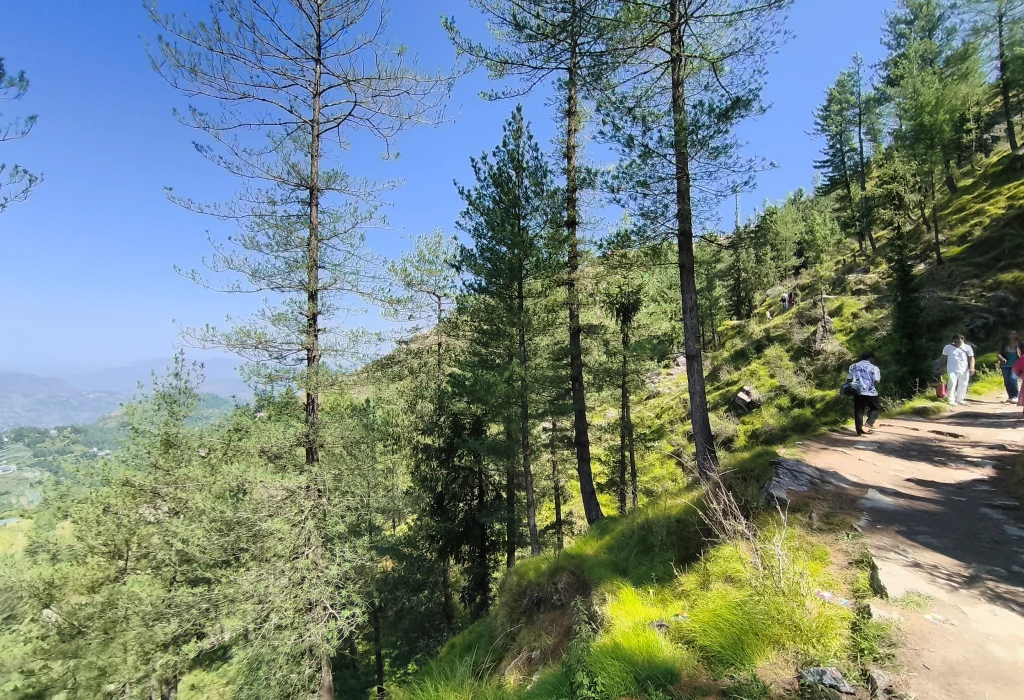
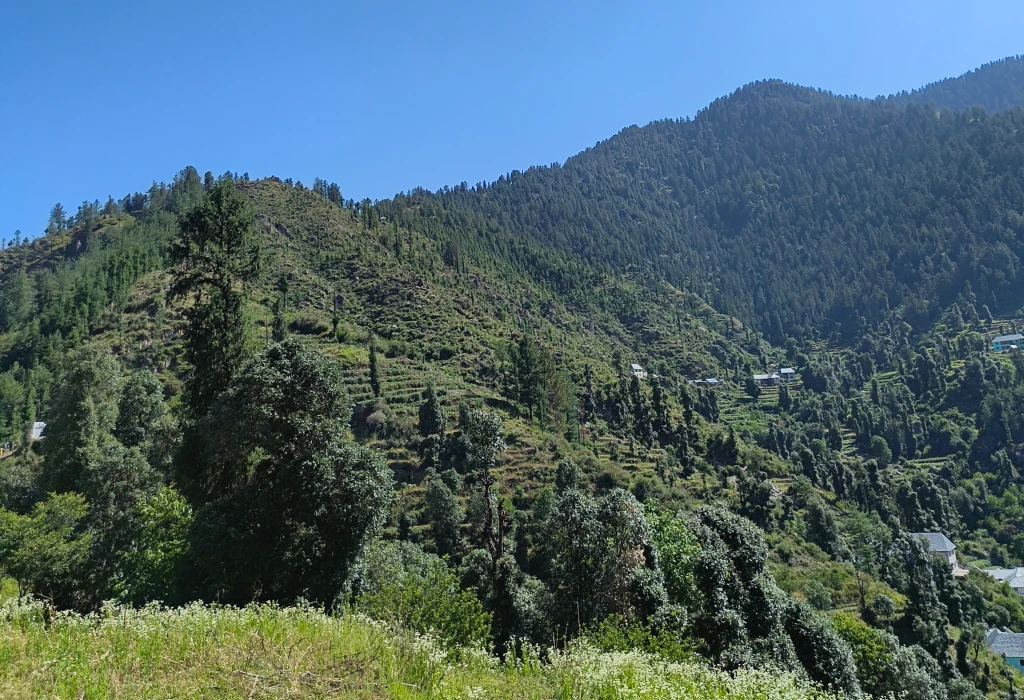
We rode up from Chandigarh through Sundernagar to Rohanda and parked at the bus stand, where a board marks the temple 5.5 km uphill. From there the trail climbs steadily through deodar and oak forest before opening onto a high meadow where the lake and the Bada Dev temple wait.
A few trekkers camp near the meadow overnight to catch the dawn, but there are no facilities up here you have to be completely self-sufficient.
The Climb, Step by Step
- Start early from Rohanda and fill your water before leaving the village.
- Climb through forest a steady, continuous ascent (this is the part people underestimate).
- Cross the open meadows near the top and pace yourself in the thin air.
- Reach the lake and temple, rest, then leave enough daylight for the descent.
The Real Trek Distance: Clearing the Confusion
Quick answer: The trail board at Rohanda marks it 5.5 km one way, and on foot it’s a steady three-hour climb. GPS apps often log 12–14 km for the round trip because of the switchbacks, which is where the bigger numbers come from.
Why Sources Say 6 km, 8 km and 14 km
| Source | Distance | What it likely measures |
| Board at Rohanda trailhead | 5.5 km | One-way, officially marked |
| Official / Wikipedia | ~6 km | One-way trail |
| Travel blogs | 7–8 km | Rounded one-way |
| Visitor GPS logs | 13–14 km | Round trip with switchbacks |
The straight-line distance is barely 2–3 km, so no single figure is truly “wrong” — they are simply measuring different things.
What I Actually Walked and Tracked
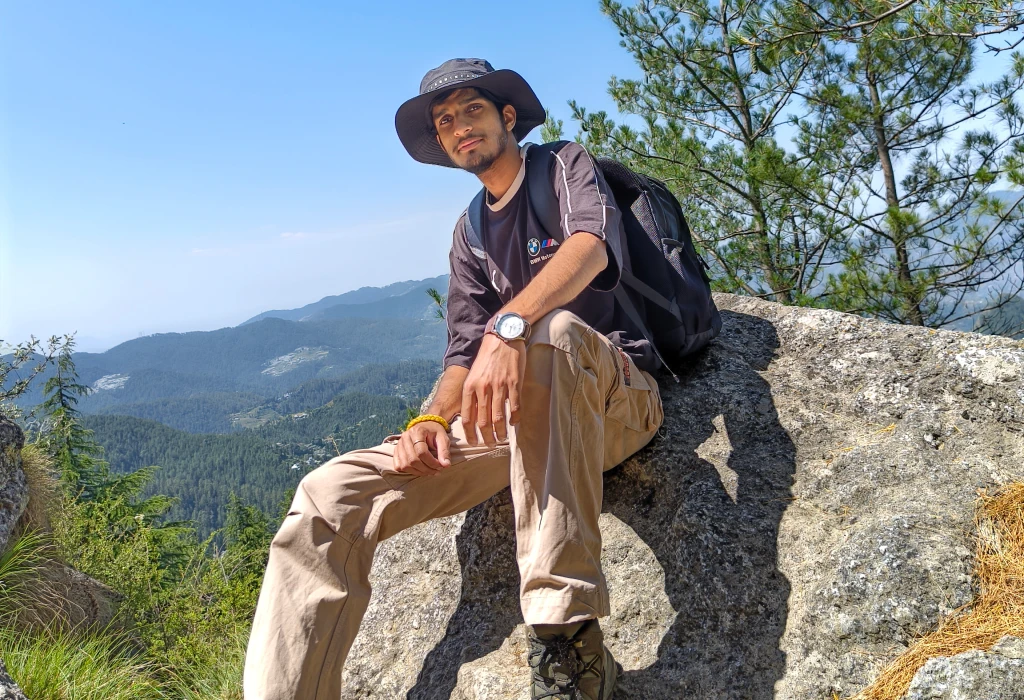
Here is what it was for us. Six of us started from the 5.5 km board at Rohanda bus stand, and the climb took about three hours. The path is properly built, so you won’t lose the way, but the steady gain in height makes a few stretches genuinely hard on the legs and lungs. We reached the top around noon tired, but it’s well within reach for anyone who walks a little.
Realistic Time and Difficulty for Beginners
Plan a full day. It’s a moderate trek not technical, but genuinely tiring if you don’t walk much.
If this is your first Himachal trek, an easier warm-up like the Triund Trek helps build confidence first.
✦ The real difficulty here isn’t the path it’s the altitude and the complete lack of facilities at the top, which day-trippers rarely plan for.
Best Time, Weather and Live Conditions (2026)
Quick answer: The best time to visit Kamrunag is May to early November, when the trail is open and skies are mostly clear. The shrine is very hard to reach in deep winter.
Kamrunag Weather and Temperature by Season
- Summer (May–June): pleasant days, cool nights the ideal window for the trek.
- Monsoon (July–Sept): lush but slippery, with leeches and the odd landslip.
- Autumn (Oct–early Nov): crisp, clear air and the best mountain views.
- Winter (Dec–March): snow, biting cold, and the trail often closed.
Live Weather at Kamrunag Right Now
Mountain weather shifts fast. In mid-June 2026, conditions near the temple were around 24°C with light rain typical early-monsoon. Always check the live weather panel on this page before you set out.
If you’ve come straight from the plains, give yourself a slow start the altitude can leave you breathless before you expect it.
When the Temple Closes for Winter
Heavy snowfall from December can cut off the trail completely. The main fair and the pilgrim season sit firmly in the warmer months.
The Kamrunag Fair: What Happens in June
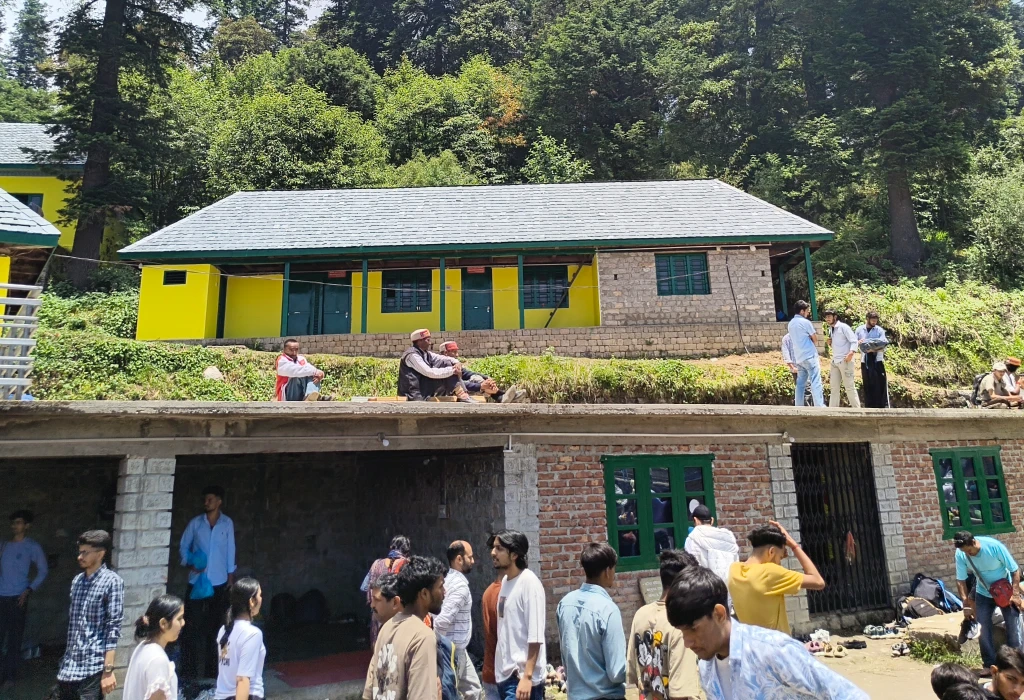
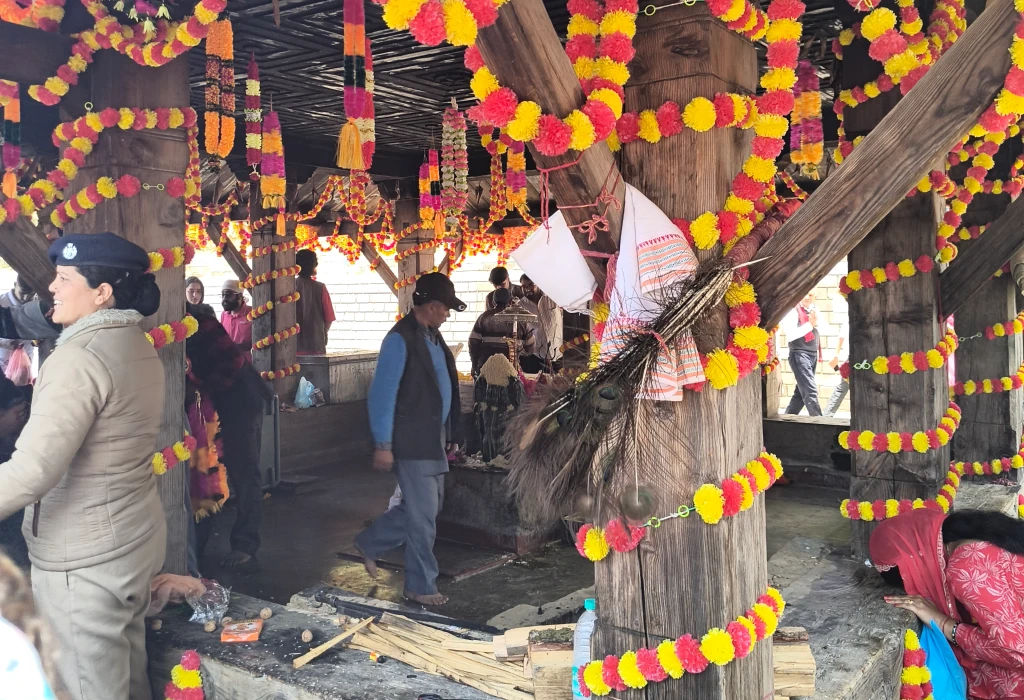
Each June, the Kamrunag fair draws thousands. We climbed on 14 June 2026, the season’s first mela, and the whole mountain felt alive families everywhere and free langars (community meals) laid out at spot after spot along the trail and at the top. We stopped and ate at one ourselves.
Deities are honoured through the day and the quiet meadow turns into a warm, crowded camp for a few days. If you don’t mind the crowds, the fair is the most atmospheric time to visit.
How far is Kamrunag from Rohanda? (रोहंडा से कमरुनाग कितनी दूर है?) The Rohanda board marks it 5.5 km one way; expect 12–14 km on a GPS for the round trip.
What to Carry and Plan Before You Go
Quick answer: Pack for a cold, facility-free mountaintop even in summer: water, warm layers, sturdy shoes, snacks, cash and basic medicine.
Trek Packing Checklist
- 1.5–2 litres of water (sources on the trail are limited)
- A warm layer plus a light rain jacket
- Comfortable trekking shoes with good grip
- Snacks or packed food for the day
- Basic medicine, sunscreen and a cap
- Cash there are no shops or ATMs at the top
- A power bank, as mobile network is patchy
Mistakes I Saw First-Timers Make
- Starting too late and ending up descending in the dark
- Wearing flat city shoes on a slippery climb
- Carrying no water, expecting stalls at the top
- Underestimating the cold and wind on the open meadow
Is the Trek Right for You?
If you can walk uphill steadily for a few hours, yes. If you have serious knee or heart trouble, reconsider there is no quick exit once you’re on the trail.
From the ridge, some paths connect toward Shikari Devi, another high Mandi shrine. It’s tempting, but easy to lose the trail, so don’t wander off without a local who knows the way.
For a tougher pilgrimage climb, see the Churdhar Trek 2026; for another temple-and-trek combo, try Hatu Peak Temple.
✦ There’s no formal ticket office or contact desk at the top — plan through Rohanda locals or Mandi tourism, not a booking line.
Frequently Asked Questions
Are Kamrunag and Khatu Shyam the same?
Not exactly, though they share one origin. Both come from Barbarika, the Mahabharata warrior who gave up his head before the Kurukshetra war. After Krishna’s blessing, his head came to be worshipped as Khatu Shyam in Rajasthan, while in Himachal the same deity is revered as Kamru Nag, the rain god of Mandi. One story, two separate shrines in two different states.
How far is Kamrunag from Rohanda?
The board at Rohanda bus stand marks the temple 5.5 km uphill, and that’s the figure to trust. On the ground it’s a steady three-hour climb through forest. If you check a GPS app afterwards it may show 12–14 km for the full round trip that’s the switchbacks adding up, not a different route. Plan for a full day either way.
How do I reach Kamrunag Temple?
First reach Mandi town, then drive about 46 km to Rohanda village, the last point reachable by road. From there it’s a 5.5 km trek uphill through deodar and oak forest to the temple and lake. From Chandigarh it’s roughly 200 km via Sundernagar. There’s also a second trail from near Chail Chowk if you’re coming from that side.
What is the mystery of Kamrunag Lake?
The mystery is the lake’s untouched treasure. For generations, devotees have dropped gold, silver and coins into the water as thanks for granted wishes yet nobody ever takes anything back. Locals believe the deity himself, often linked to a serpent guardian, protects it. Whether real riches lie beneath is faith rather than proven fact, but the belief around it is strikingly real.
Which god is Kamrunag Devta?
Kamrunag Devta, respectfully called Bada Dev or “The Lord of Rain”, is worshipped across Mandi as a rain deity who grants honest wishes. In legend he is identified with Barbarika, the grandson of Bhima from the Mahabharata. Among Himachal’s many village gods he holds a senior, deeply respected place something you’ll notice at big events like Mandi’s famous Shivratri fair.
Is the temple open all year round?
In practice, no. The shrine sits at about 3,334 m, and heavy snowfall from December can cut off the trail completely through the coldest months. The realistic season is May to early November, when the path is open and the weather is mostly clear. June, around the annual fair, is the busiest and most atmospheric time to visit.
Conclusion
Kamrunag rewards the climb. It’s part legend, part pilgrimage and part quiet mountain walk and far more interesting once you separate the real details from the copied ones.
Go in the warmer months, start early, carry your own water and warmth, and let the place speak for itself. Whether or not a treasure lies under the lake, the faith around it is very real.


Omggg this is exactly the guide I needed!! I’ve been planning a Kamrunag trip with my friends for weeks and every other site had different km figures, was so confusing. This one actually cleared it up starts from Rohanda, board says 5.5 km, properly marked trail so no chance of getting lost which was my biggest worry tbh. And the langar bit at the June mela?? Sold. We’re literally finalizing dates now, team is ready, just need to fix the Chandigarh-Sundernagar route timing. Thank you for writing this from the ground and not just copy-pasting like everyone else.
Thank you so much — this genuinely means a lot. The distance confusion is exactly what pushed me to write this guide in the first place. I’d seen so many sites quoting different numbers that I just went and walked the trail myself, and the board at Rohanda settles it: 5.5 km, marked properly the whole way up, so getting lost really won’t be a worry for you and your team.
And yes — if you can line your dates up with the June mela, do it. The langar there is one of those things you’ll be talking about long after the trip is over.
For the Chandigarh–Sundernagar leg, the main thing is to start early enough to reach Rohanda with daylight in hand for the climb up and back, and carry water for the way up. Tell me your travel dates and rough departure time and I’ll help you sort the exact route timing so it all lines up cleanly. Have a brilliant trip — and do come back and let me know how it went.
We visited Kamrunag Temple on 16 June 2026 during the annual mela and this guide was very useful for our visit. Prior to visiting, we looked up the information on how to get to Kamrunag Temple, the distance from Mandi and the trek from Rohanda. The information in this article was spot on with our experience.
The directions were correct, the route was easy to follow and the information regarding the Kamrunag trek helped us plan our trip without any confusion. The location information and temple information were also correct when we arrived at the site.
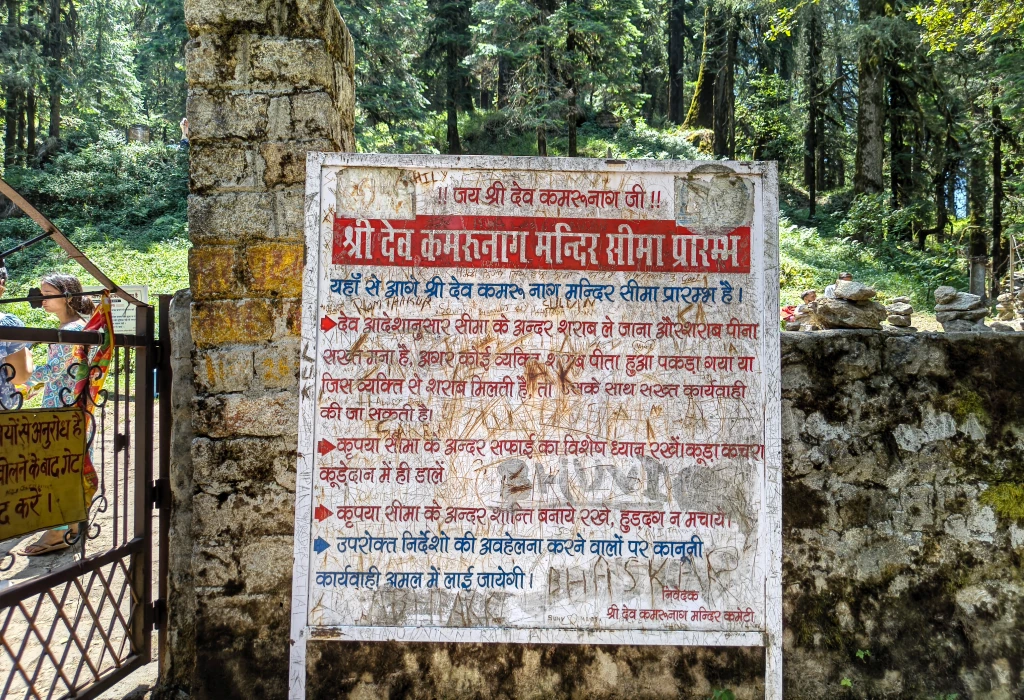
We liked the fact that the article was based on actual photos and information. The signboards, the trekking route and the surroundings of the temple were exactly as described. The guide seemed to have been written by someone who had been there.
This is a very reliable guide for those who are planning to visit Kamrunag Temple, Mandi district, particularly during the mela season. It responded to most of our questions prior to the trip and made the trip much easier.
Thank you for providing such a well researched article. We will definitely come back to read more travel and temple guides from your website.
Namaste Vinod ji, thank you so much for this wonderful review. We are delighted the guide matched your mela visit so perfectly, that is exactly what we aim for. Do keep visiting for more Himachal temple guides. Jai Bada Dev.
Team Guides of Heaven
I’m from Solan, Himachal Pradesh, and I came across this article while looking for a temple for our next family trip. I have to say it’s one of the best-written pieces I’ve read on Bada Dev Kamru Nag. The history is explained so clearly, and the part about the relationship between Kamru Nag and Khatu Shyam genuinely moved me, it feels real, not just retold. I’d heard bits of the legend before, but reading it all in one place the sacrifice, the lake full of offerings no one ever takes back, the trek through the forest gave me goosebumps. This article is the reason we’ve now decided to visit Kamrunag temple. Thank you for putting so much care into it.
Namaste, and thank you so much for these kind words. Coming from someone in Solan who knows Himachal well, this truly means a lot to all of us at Guides of Heaven.
The bond between Bada Dev Kamru Nag and Khatu Shyam is one of those stories that stays with you, so we are really happy that part touched you the way it did. That sacred lake, with all its offerings that no one ever takes back, and the quiet forest trek up to the darbar are exactly the kind of experiences we hoped to capture honestly rather than just retell.
It genuinely makes our day to know this article helped your family decide to visit Kamrunag. When you go, do plan for the trek and the weather, carry your offerings with shraddha, and take a moment at the lake to soak in the silence. It is special.
Wishing you and your family a blessed and safe yatra. Do come back and tell us how it went, we would love to hear about your trip. Jai Bada Dev.
Team Guides of Heaven